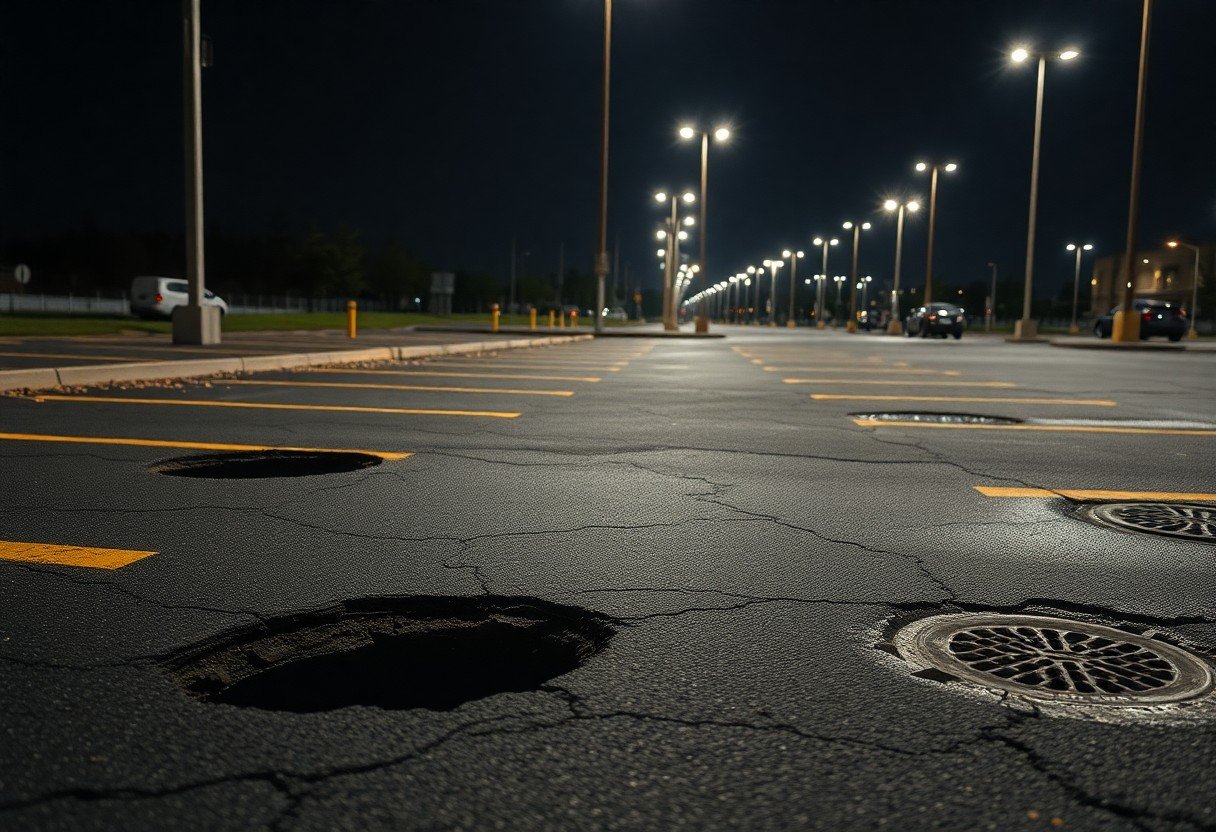
Over 1,000 parking lot falls are reported annually; understanding how potholes, uneven curbs, and inadequate lighting increase trip-and-fall risk helps you spot hazards, protect your mobility, and take practical steps to improve safety for yourself and others.
Key Takeaways:
- Common causes of parking-lot falls include potholes, uneven pavement, raised or unmarked curbs, and poor lighting that hides trip hazards.
- Conduct regular inspections and promptly repair potholes, cracks, and broken pavement to reduce trip risks.
- Mark curbs and level changes with high-contrast paint or reflective tape and install ramps where needed to improve accessibility.
- Maintain consistent, glare-free lighting to eliminate dark spots and shadows; upgrade to LED fixtures and replace burnt-out bulbs quickly.
- Document hazards and repairs, post temporary warnings until fixes are complete, and train staff to report and address walkway defects.
Understanding Parking Lot Hazards
You encounter multiple layered dangers in a lot: surface depressions, abrupt curb edges, fading striping, standing water and poor illumination. Potholes often form after freeze-thaw cycles or inadequate patching and can be as little as 1-2 inches deep yet still twist an ankle or snag a cane; deeper voids damage tires and suspension. Scan for irregularities near entryways, crosswalks and curb ramps where pedestrian traffic concentrates.
Potholes and Their Impact
Potholes directly affect both pedestrians and vehicles; you face trip-and-fall risk while drivers risk tire blowouts, bent rims and misaligned steering. Typical repairs after hitting a pothole include tire replacement, wheel straightening and suspension work, and even low-speed impacts of 15-25 mph can start costly damage. Property managers who ignore recurring depressions see higher maintenance and liability exposure over time.
Safety Risks Associated with Potholes
You can suffer sprains, wrist fractures from trying to brace a fall, or head injuries if a trip causes a direct strike. Mobility-device users are especially vulnerable: a 1-2 inch depression can catch a wheelchair caster, causing a tip or abrupt stop that throws the occupant forward. Nighttime visibility compounds the danger when lighting fails to reveal surface hazards.
Beyond individual injuries, potholes trigger cascading risks you should anticipate: drivers swerving to avoid a depression can collide with pedestrians or other vehicles, and sudden vehicle damage can strand users in traffic aisles where trip hazards are concentrated. Legal claims and emergency repairs often run into the thousands, so proactive identification and repair reduce both human harm and downstream costs.
The Role of Curbs in Parking Lot Safety
Types of Curbs and Their Functions
You’ll encounter several curb styles that shape vehicle flow and pedestrian safety: vertical curbs (4-8 inches high) mark limits, mountable curbs allow low-speed vehicle access for deliveries, barrier curbs block vehicle overrun, and rolled curbs provide gentler transitions for wheelchairs and bikes. Practical choices depend on traffic patterns, emergency access needs, and local codes; plan curbing to match expected vehicle speed and pedestrian volumes.
- Vertical curb – defines edges, protects sidewalks from overrun.
- Mountable curb – permits occasional vehicle mounting for deliveries or landscaping equipment.
- Barrier curb – prevents cars from encroaching on pedestrian areas or falling into slopes.
- Any blended or rolled curb – smooths transitions for wheelchairs, bikes, and stroller traffic.
| Vertical Curb (4-8 in) | Creates a clear barrier; you use it to protect walkways and landscaping from vehicles. |
| Mountable Curb (lower profile) | Allows controlled vehicle access for deliveries and emergency vehicles when needed. |
| Barrier Curb (taller, continuous) | Stops vehicles from leaving the lot or entering sensitive zones you must protect. |
| Rolled/Blended Curb | Provides gentler transitions to improve ADA access and reduce trip edges for pedestrians. |
| Granite or Reinforced Curb | Resists wear in high-traffic areas you expect heavy loads or frequent impact. |
Potential Dangers of Inadequate Curbing
If your curbing is missing, damaged, or the wrong height, pedestrians face uneven edges, overhang into walkways, and unpredictable vehicle paths; older adults and children are especially at risk. Poor curbing also redirects runoff, creating standing water that increases slip hazards and accelerates surface decay, so inspect curbs after winter and heavy rains to reduce incidents and liability.
Broken or absent curbs let tires migrate onto sidewalks, increasing vehicle-pedestrian conflicts and causing soft spots that evolve into potholes within months. You’ll also see drainage failures: a misaligned curb can cause ponding along a 10-20 ft curb line, freeze in cold weather, and generate concentrated freeze-thaw damage that shortens pavement life and raises repair costs.
Importance of Proper Lighting
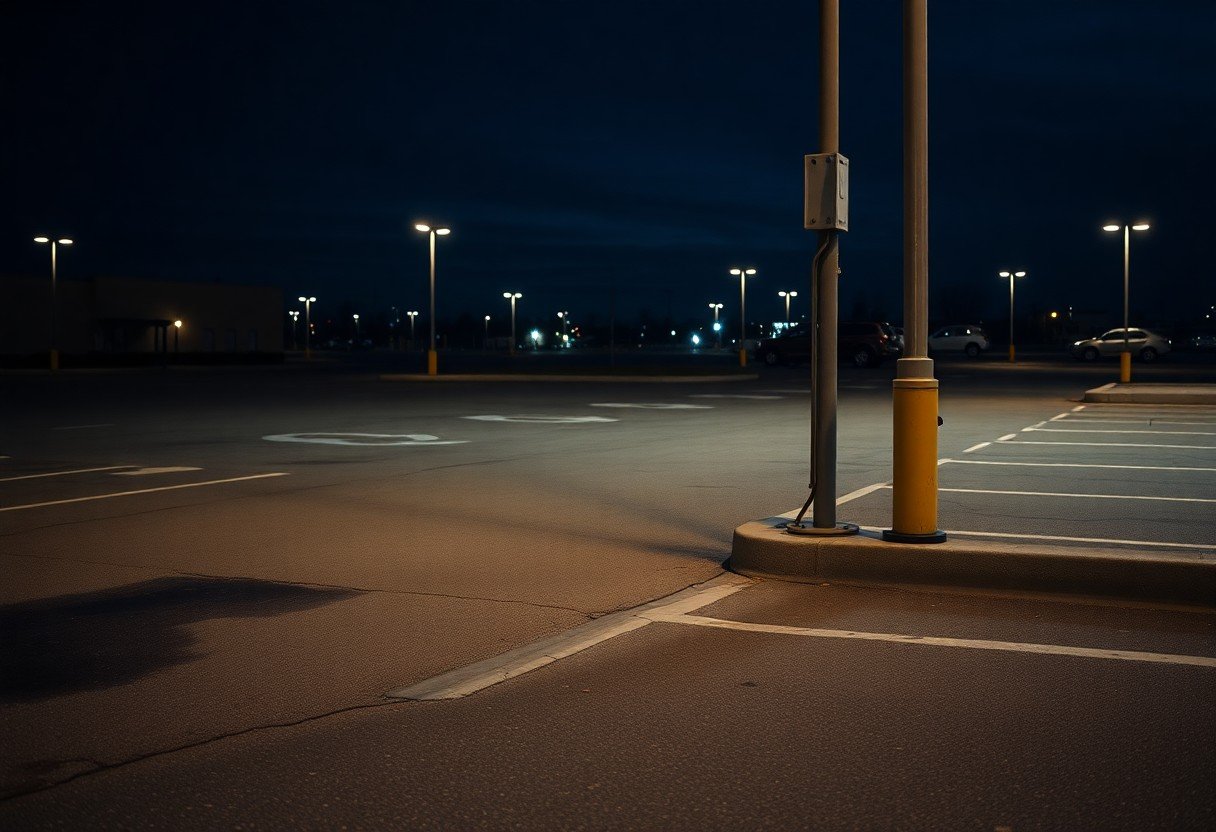
Proper lighting exposes potholes, uneven curbs, and surface depressions so you can avoid trips and vehicle damage before they occur. Upgrading to LEDs typically cuts energy use 50-70% and extends service life to ~50,000 hours versus 10,000-20,000 for older HID lamps, lowering downtime for repairs. You should balance average illuminance, uniformity, and color rendering (CRI 70-90) to reduce shadows that hide hazards and to improve detection distances at night.
Enhancing Visibility and Safety
Place fixtures to deliver about 0.5-1.0 foot-candle (5-10 lux) on walkways and higher levels in loading or high-traffic zones, keeping uniformity ratios below 6:1 so you avoid deep shadow pockets. Use full cut-off luminaires and glare control to reveal curb edges and potholes, and select 3000-4000K color temperatures with CRI ≥70 to sharpen surface contrast for pedestrians and drivers.
Evaluating Lighting Solutions
Assess options by comparing lumen output, photometric distributions, and L70 lumen-maintenance ratings-LEDs commonly provide 10,000-20,000 lumens per fixture and 50,000-hour L70. You should request IES photometric files, verify average illuminance and uniformity, estimate pole spacing relative to mounting height, and run a simple payback (many retrofits return in 3-7 years).
Begin with a night audit using a lux meter to record existing illuminance and uniformity across typical parking patterns; then model alternatives in lighting software to refine pole spacing (often 0.8-1.5× mounting height), aiming for even coverage and minimal glare. Factor in controls-scheduling, dimming to 20% during low use, or motion-based boosts-to cut operating hours. Evaluate lifecycle cost, including replacement frequency, energy, and rebate opportunities; for example, swapping a 400W HPS for a 120W LED can cut energy use roughly 60% and reduce fixture swaps from every 3-4 years to a multi-decade interval, improving both safety and total cost of ownership.
Maintenance Strategies for Parking Lots
Regular Inspections and Repairs
Schedule monthly walk‑throughs and quarterly audits so you catch wear before it worsens; flag potholes over 2 inches deep and cracks wider than 1/4 inch for priority repair. Photograph and timestamp defects, then address high‑traffic zone repairs within 48 hours using infrared or cold‑mix for rapid fixes and hot‑mix for permanent patches. You should keep a maintenance log to track recurring failures and inform when full resurfacing becomes more cost‑effective than repeated spot repairs.
Implementing Preventative Measures
Adopt a maintenance calendar: crack‑seal annually, sealcoat every 2-3 years, and restripe high‑use lanes every 12-18 months to preserve surface integrity and visibility. Upgrade to LED fixtures to reduce energy use by roughly 40-60% and add motion sensors for off‑peak savings. Ensure drainage slopes of 1-2% toward collectors, install wheel stops at 90° stalls, and use microsurfacing at the first sign of texture loss to extend service life.
Drill down: when you crack‑seal annually you block water intrusion and typically add 3-8 years to pavement life; sealcoating every 2-3 years adds another 3-5 years. If you apply microsurfacing, you can restore texture and gain 7-10 years, and targeted full‑depth repairs at recurring spots stop deterioration from spreading. In practice, combining annual crack sealing with biennial sealcoating and LED lighting often lowers maintenance costs and liability, allowing you to defer mill‑and‑fill projects by 5-8 years.
Legal Implications of Parking Lot Accidents
Premises liability, comparative negligence, and statutory deadlines shape outcomes: many states set statutes of limitation for personal injury between 1-6 years, commonly 2-3 years. You’ll face questions about notice and repair history-if a pothole was reported repeatedly over 90 days before your fall, that strengthens your claim. Courts often allocate fault percentages; a 40% finding against you reduces your recovery by 40%, so documentation and witness statements matter.
Liability and Responsibility
Property owners and operators owe a duty of reasonable maintenance; private lots, malls, and municipalities differ in notice requirements and immunity rules. You should gather inspection logs, maintenance bills, and photos: absence of routine inspections or a 30-90 day unaddressed repair ticket supports liability. Comparative negligence rules mean your actions-using your phone, ignoring signage-can reduce recovery by specific percentages in many jurisdictions.
Understanding Insurance Coverage
Auto liability, collision, uninsured/underinsured motorist (UM/UIM), and the property owner’s commercial liability all interplay: typical minimum auto limits are 25/50/25 in many states, collision deductibles commonly range $500-$1,000. If another driver causes the crash, their liability should cover your vehicle and medical costs; collision covers your repairs minus your deductible, and UM/UIM steps in when the other driver lacks sufficient coverage.
Start claims promptly: file a police report, notify your insurer within 24-72 hours, and submit photos, estimates, and medical records. Insurers will investigate and may pursue subrogation-if they recover from the at-fault party you can recoup your deductible. Rental reimbursement, medical payment coverage, and detailed receipts strengthen your position; if a claim is denied, consult an attorney before the statute of limitations-often 2-3 years in similar cases.
Best Practices for Parking Lot Design
Use proven dimensions-9 ft parking spaces and roughly 24 ft two-way aisles-to reduce squeeze points and conflicts, and keep accessible routes with running slopes ≤5% and ramps at 1:12 maximum. You should position entrances, crosswalks, and signage to minimize pedestrian crossings and glare. If a fall or injury occurs, understand liability and options; see Can You Sue for a Slip and Fall in a Parking Lot? for legal context.
Designing for Safety and Accessibility
Place accessible spaces on the shortest accessible route to the building and provide at least a 36‑inch clear path for pedestrian travel; locate curb ramps so they don’t direct pedestrians into vehicle flow. You should use high‑contrast striping, tactile warning surfaces at transitions, and visible signage mounted 60 inches above the finished surface, improving wayfinding and compliance without adding complexity.
Incorporating Safety Features
Install LED fixtures (around 4000K) on 20-30 ft spacing for even illumination, add bollards at sidewalks and 6‑inch curbs to protect pedestrians, and use speed humps 3-4 inches high and 10-12 ft long to slow traffic to roughly 10-15 mph in pedestrian zones. You should also specify non‑skid coatings at ramps and crosswalks.
Maintain a proactive repair program: inspect monthly, patch potholes promptly with cold‑patch for temporary fixes and schedule full‑depth repairs for long‑term durability; plan resurfacing every 10-20 years depending on traffic. You should ensure positive drainage away from walkways, keep paint contrast above 70% LRV for markings, and document inspections to reduce liability and improve response times.
Final Words
Ultimately, you should treat parking lot potholes, uneven curbs, and inadequate lighting as safety hazards that demand prompt action: inspect your routes, report defects to property managers, avoid shortcuts that expose you to trip risks, use well-lit paths at night, and advocate for timely repairs and clear signage to protect yourself and others.
FAQ
Q: What common hazards in parking lots lead to falls involving potholes, curbs, and lighting?
A: Potholes create uneven footing and unexpected depth; broken pavement edges and heaved slabs form trip points; raised or unmarked curbs and abrupt level changes cause missed steps; faded paint hides curb edges and step-downs; poor or uneven lighting produces deep shadows, glare, and blind spots that make it hard to see surface defects; standing water and ice hide potholes and slick surfaces. Combined, these factors increase slip, trip, and fall risk for pedestrians, cyclists, and people using mobility aids.
Q: What preventive maintenance and design measures reduce fall risk from potholes, curbs, and poor lighting?
A: Implement a scheduled inspection program to find and fix potholes, cracks, and uneven areas; use proper patching or full resurfacing where needed; maintain drainage to prevent pooling; bevel or add ramps to abrupt curbs and mark changes in grade with high-contrast paint or tactile indicators to meet ADA standards; ensure consistent, glare-controlled lighting with adequate lux levels and uniformity, replace burned-out fixtures promptly, and use photometric planning when installing fixtures. Keep painted markings refreshed, trim landscaping that blocks light, and document all maintenance.
Q: If I fall in a parking lot because of a pothole, curb, or poor lighting, what immediate steps should I take?
A: Prioritize your health-seek medical attention if injured. While at the scene, photograph the hazard from multiple angles, capture contextual shots (nearby signs, lighting poles, lines), and note time, weather, and footwear. Obtain contact details of witnesses and the property owner or manager, and file a written incident report with them. Preserve clothing or shoes involved, keep medical records and bills, and save communications about the incident. Early documentation strengthens any future insurance or legal claim.
Q: Who is responsible for falls in parking lots and what factors affect liability for potholes, curbs, and lighting issues?
A: Liability typically falls on the property owner or manager if they knew or should have known about the hazard and failed to act. Courts consider notice (actual or constructive), frequency and severity of inspections, maintenance records, the time between reported hazard and any repairs, and whether adequate warnings or temporary measures were provided. Municipalities, tenants, or contractors can share responsibility based on control and maintenance contracts. Comparative negligence by the injured party can reduce recoverable damages. Consult an attorney for case-specific guidance.
Q: What temporary measures can lower fall risk before permanent repairs for potholes, curbs, or inadequate lighting are completed?
A: Use high-visibility cones, barricades, or hazard signs to redirect pedestrians away from defects; apply cold-patch asphalt or compacted gravel as interim fills for potholes; lay steel plates over large voids with anti-slip surfacing; install temporary ramps or bright tape along abrupt curbs; deploy portable battery or solar-powered floodlights to illuminate dark areas; refresh or add reflective paint for curb edges and walkways; and maintain a log of temporary measures and repair scheduling to show proactive risk mitigation.