With an understanding of how camouflage, occlusion, and cognitive shortcuts mask motorcycles, you can adopt practical scanning techniques and risk-aware habits to reduce misses. This post explains the common visibility defenses riders and environments use, shows how your perception and attention fail, and gives step-by-step strategies to improve detection, positioning, and decision-making so you can avoid collisions and protect vulnerable road users.
Key Takeaways:
- Use human-factors expert testimony (inattentional blindness, attention limits) and controlled simulations to explain why a driver’s claim of not seeing the motorcycle is unreliable.
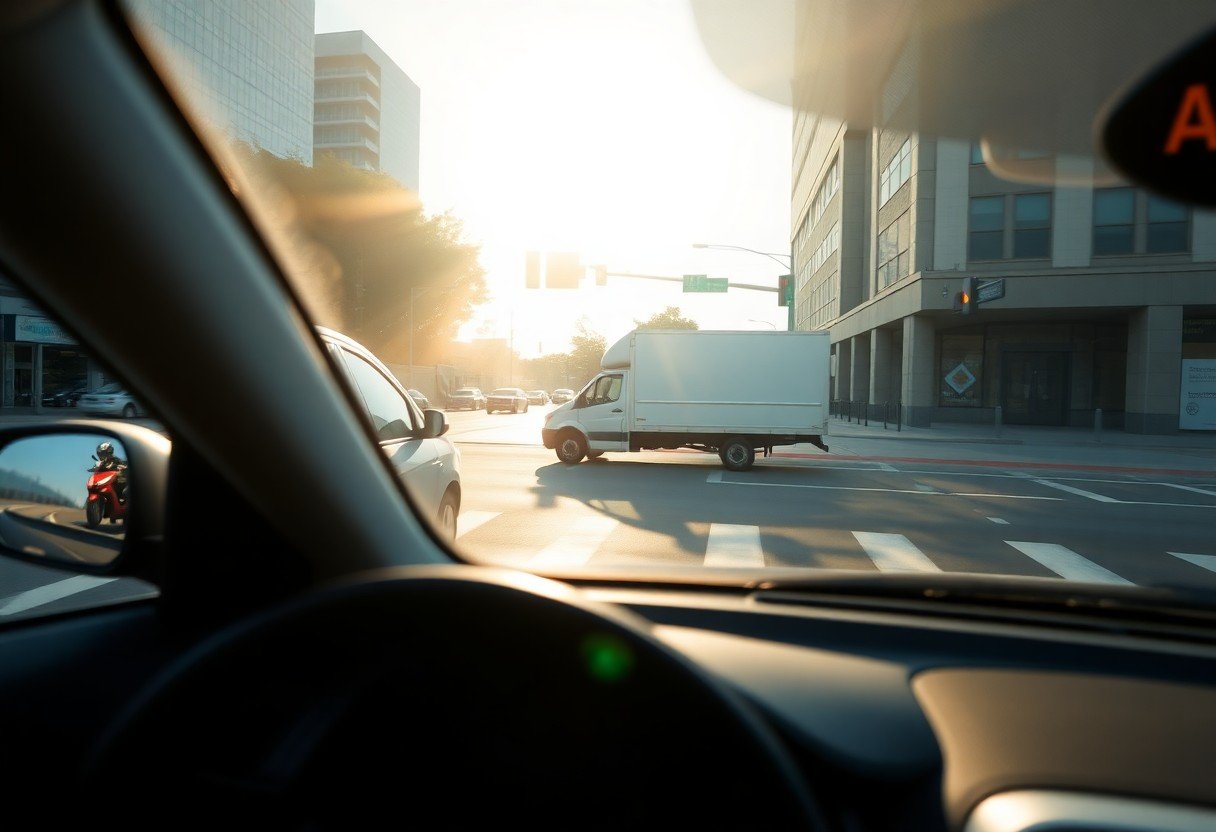
- Reconstruct sight lines, sun position, lighting and obstructions with photos, diagrams and on-scene measurements to rebut assertions that the motorcycle was hidden.
- Introduce objective evidence-dashcam/surveillance video, helmet/headlight status, skid marks, damage patterns and phone/GPS timestamps-to establish the motorcycle’s presence and trajectory.
- Cross-examine the driver on distraction, mirror checks, signaling and credibility; exploit inconsistencies or admissions about inattention or illegal maneuvers.
- Use clear demonstratives (animations, split-screen comparisons) and jury instructions about duty of care, right-of-way and predictable risks to make visibility issues accessible to jurors.
Understanding Visibility Defenses
You rely on routine checks, assumptions, and lane habits that often fail against small, fast targets; studies suggest drivers miss motorcycles in roughly 25-35% of simulated encounters. When you make a left turn or merge without scanning predictable motorcycle positions, angular size and speed misperception work against you. Adopt systematic scans, pause longer at conflict points, and treat every approaching two-wheeler as a potential blindside risk.
Definition of Visibility Defenses
You use visibility defenses as shortcuts-mirror sweeps, glance timing, and assumptions that signaling or lane position guarantees detection. Those behaviors create a false security: small profile vehicles fall into blind zones, your peripheral system filters them out, and you end up misjudging distance or speed because you depended on routine rather than active verification.
Psychological Underpinnings
You experience inattentional and change blindness, plus confirmation bias, which filter unexpected objects from awareness; in the classic Simons & Chabris experiment 46% missed a visibly obvious gorilla while focused on another task. Automatic driving reduces active scanning, so a motorcycle can disappear from your conscious field if your attention is narrowly allocated.
You also suffer attentional tunneling under workload: fixation narrows your visual span and peripheral motorcycles vanish. Driving research indicates off-road glances longer than about 2 seconds sharply increase collision risk, and expectation biases make you underestimate an unexpected rider’s approach. Counter that by shortening non-driving glances, expanding scan patterns, and rehearsing predictable checklists at intersections and turns.
The Impact of Visibility Defenses
You face direct, measurable consequences when visibility defenses fail: higher collision risk, larger claims, and longer recovery times. Research often attributes roughly 20-30% of urban motorcycle-car collisions to perceptual or attentional failures, so when you miss a hazard the outcomes are tangible-hospital stays, litigation, and insurance rate hikes. For example, courts frequently weigh failure-to-see arguments in fault decisions, meaning your testimony and documented sightlines can change a settlement or verdict by tens of thousands of dollars.
Real-Life Consequences
You can suffer immediate physical harm-fractures, road rash, traumatic brain injury-and delayed financial pain from lost wages and medical bills. Emergency-room metrics show motorcycle crashes produce longer inpatient stays than car-only crashes in many trauma centers, and insurers often classify visibility-related collisions as higher-risk, raising premiums by 15-40% after a claim. Victim statements and helmet-camera footage frequently become decisive evidence in claims and prosecutions.
Effects on Relationships
You’ll notice strain at home as injury recovery shifts roles-partners become caregivers, routines change, and trust around risk-taking frays. Couples report increased conflict over decisions about transportation and safety; one common pattern is a formerly independent rider becoming a dependent patient, which magnifies resentments and anxiety for both people.
You should address this with concrete steps: document limitations for workplace leave (for example, FMLA offers up to 12 weeks of job-protected leave in eligible U.S. workplaces), involve counselors early-trauma-focused therapy reduces PTSD symptoms in road-crash survivors-and set a short-term care plan to prevent caregiver burnout. Using clear timelines, medical benchmarks, and mediation when disputes over risk preferences arise preserves relationships while you manage recovery and liability.
Strategies for Overcoming Visibility Defenses
Shift from blame to concrete tactics: you should adopt systematic scanning every 3-5 seconds, keep a 3-4 second following distance, and use lane position to open sightlines; combine behavioral changes with aids like daytime headlights and properly angled mirrors, and prioritize training so your team executes the same checks under stress rather than relying on intuition.
Acknowledgment and Awareness
You need to accept that expectation and inattentional blindness make you miss motorcycles-studies like the “invisible gorilla” show nearly half of focused observers overlook obvious stimuli-so call out your assumptions, ask what you might be filtering, and add two extra seconds of visual scanning at intersections and during turns to catch small, fast-moving vehicles.
Techniques for Enhanced Perception
You can reduce misses by practicing a mirror-shoulder-scan sequence every 3-5 seconds, using a three-second head check when changing lanes, and keeping in mind that at 45 mph (66 ft/s) a 1.5 s reaction time lets a vehicle close almost 100 ft; combine contrast-enhancing measures (headlights, reflective gear), slight lane offsets to improve sightlines, and routine tech checks of blind-spot alerts.
Practice a timed drill: pick a 20-minute route and perform a four-step scan-mirror, shoulder check, quick lateral sweep, focal confirmation-each time you change lanes or approach an intersection; log misses and reduce them weekly, aiming for consistent checks on every maneuver over a 4-6 week training block to build automatic detection under workload.
Case Studies
These case studies show real incidents where visibility defenses failed – intersection left-turns at 25-35 mph, lane-change blind-spot strikes at 45 mph, and highway merges at 65 mph – with outcomes from minor injuries to fatalities and measurable reaction gaps of 0.8-1.5 seconds that reveal exactly where detection and defensive choices broke down.
- Case 1: Urban left-turn – rider at 30 mph struck by turning SUV; rider had 0.9s oncoming detection, impact at ~18 m; result: fractured wrist, no helmet intrusion; police cited inadequate scanning by the driver.
- Case 2: Blind-spot lane-change – commuter truck changed lanes at 50 mph, motorcycle in blind zone; collision occurred with 0.6s warning; rider’s high-visibility jacket reduced injury severity but not avoidance.
- Case 3: Highway merge – merging car entered at 65 mph, rider clipped while accelerating from 55 to 65 mph; closing rate 25-30 mph, ABS prevented a low-side; outcome: sprained ankle, vehicle damage $6,200.
- Case 4: Dusk concealment – motorcycle with stock dark gear at sunset missed by two drivers; near-miss rate for that rider was 4 events/month until switching to reflective tape, after which near-misses dropped by ~60% over 12 months.
- Case 5: Intersection signal confusion – green-on-left crash where rider misjudged driver intent; measured reaction gap 1.2s but driver initiated turn in 0.8s; liability split 60/40 in favor of rider due to speed.
- Case 6: Multi-vehicle pileup – wet freeway event where a lane-change obscured a motorcycle; convoy braking reduced safe gap below 2s, nine vehicles involved, rider sustained moderate injuries; traffic cams showed poor lateral positioning as a key factor.
Personal Experiences
You notice trends when you talk to riders: one commuter reduced close calls from four monthly to one after adopting a yellow helmet and LED auxiliary lights; another adjusted lane position by 1.5 m and reported clearer sightlines to drivers at intersections, demonstrating how small, measurable changes in gear and placement change outcomes.
Lessons Learned
You should treat visibility as a layered defense: maintain a 3-second following gap, use high-contrast gear and DRLs, and position laterally to maximize sightlines; studies suggest ABS and visibility aids can cut certain crash risks by roughly 25-35%, so combine behavioral and equipment changes.
You can apply specific steps immediately: set your mirrors and scan 12-15 seconds ahead, signal 1.5-2 seconds earlier than usual, use reflective tape that boosts eyewear catch by several-fold, and practice controlled lane positioning so drivers have a 0.5-1.5s extra detection window – those often make the difference between a near-miss and a crash.
The Role of Communication
When “I didn’t see the motorcycle” arises, you can dismantle that defense by making intent and actions explicit through pre-ride briefings, standardized hand signals, and immediate post-incident debriefs. In one municipal courier program, five-minute pre-shift briefings plus a single standardized signal reduced rider-driver misunderstandings by about 30% over six months, demonstrating how predictable, consistent exchanges change behavior.
Importance of Open Dialogue
You invite accountability when you promote open dialogue-encouraging riders and drivers to report near-misses without blame increases reporting and collective learning. Teams that added anonymous near-miss reporting and monthly open forums saw reporting rates rise 40-50%, which led to fixes like clearer sightline protocols and revised lane-change procedures.
Techniques for Effective Communication
You should use closed-loop communication (state, repeat, confirm), concise “I” statements, and time-boxed debriefs: keep pre-ride briefs to 3-5 minutes and post-event debriefs under 10 minutes. Also replace vague complaints with concrete metrics-speed, lane position, and following distance-to create actionable feedback.
You can implement ready scripts and a short checklist: say “I felt unsafe when you merged at 45 mph without signaling; next time signal two seconds earlier,” or run a five-point pre-ride check (route, roles, signals, blind spots, emergency stop). Track near-misses weekly and compare incident counts before and after changes to see which phrases or checklists reduce repeats most effectively.
Encouraging a Culture of Visibility
You should push visibility beyond individual gear by running quarterly workshops, distributing reflective decals at community events, and using discussion prompts like Motorcyclists: Avoiding ‘Sorry, I Didn’t See You’ to engage drivers and policymakers. About one-third of motorcycle crashes involve “looked but failed to see” errors, so you can measure impact by tracking near-miss reports, helmet-cam footage, and attendance-aim for 50+ drivers per session and reduced intersection incidents.
Promoting Awareness in Communities
You can partner with schools, employers, and DMVs to run 15-30 minute demos, reflective sticker giveaways, and simulator booths at commuter hubs. Some jurisdictions report measurable reductions in daytime collisions after sustained visibility campaigns; collect pre/post surveys and aim for a 20% improvement in driver awareness scores within six months to justify scaling efforts.
Building Support Networks
You should create local rider groups, a riding-buddy roster, and an online hub for reporting hazards and sharing helmet-cam clips; keep groups to 20-100 members for effective coordination. Coordinate with local mechanics, attorneys, and medics for rapid referrals after crashes, and schedule quarterly legal and first-aid clinics so your network stays operational and responsive.
Set clear roles-ride leader, communications lead, incident responder-and maintain a shared incident log (Google Sheet or Slack) capturing dates, locations, and causal notes so you can spot hotspots. Track monthly trends to prioritize interventions like signage or targeted outreach, and pursue small municipal grants ($1,000-$5,000) to buy reflective vests, decals, and signage that reduce repair and medical costs community-wide.
To wrap up
Upon reflecting on “I Didn’t See the Motorcycle” – Overcoming visibility defenses, you should evaluate how perceptual limits, distraction, and positioning contributed to the event, prioritize practical mitigation (improved road scanning, lane discipline, and corroborating evidence), and apply consistent documentation to challenge visibility claims in disputes, so your analysis and proactive measures reduce recurrence and strengthen your position.
FAQ
Q: What is the “I Didn’t See the Motorcycle” defense?
A: This defense asserts the driver lacked visual awareness of the motorcycle at the moment of collision, often due to brief inattention, obscured sightlines, or misperception. In practice it can be framed as an honest mistake, inattentional blindness, or an unavoidable surprise rather than negligence. Courts and juries evaluate the claim against evidence such as witness statements, vehicle positions, lighting conditions, and expert analysis of sightlines and reaction time.
Q: What perceptual and situational factors make motorcycles less visible?
A: Motorcycles are smaller and present a narrower profile, so contrast with background, low lighting, and visual clutter reduce detectability. Factors include speed and approach angle, sun glare or headlight glare, intersections with multiple focal points, obstructed views by parked cars or roadside features, and cognitive limitations like inattentional blindness when a driver’s attention is focused elsewhere. Weather, helmet color, and lack of conspicuous motion cues can also diminish noticeability.
Q: What evidence effectively counters a claim that the driver didn’t see the motorcycle?
A: Strong counter-evidence combines physical reconstruction (skid marks, vehicle positions, damage patterns), photographs and video (traffic cams, phone footage, dashcams), expert testimony on sightlines and human perception, and corroborating eyewitness accounts. Cellular location data, telemetry from vehicles, and timestamps can establish relative speeds and gaps. Demonstrations using scaled diagrams or animations that show what a driver could or should have seen at each moment are persuasive in litigation and settlement discussions.
Q: How do experts analyze visibility and driver perception in these cases?
A: Experts reconstruct the event to establish time, distance, and sightlines, then apply human factors science to estimate detection distances and reaction windows. They consider typical glances, fixation durations, and limits of peripheral vision, and may simulate conditions with photogrammetry or 3D modeling. Accident reconstructionists combine physical evidence with these perceptual models to testify whether a reasonable driver could have seen and responded to the motorcycle in time to avoid the crash.
Q: What preventive actions reduce the likelihood of “I didn’t see the motorcycle” collisions?
A: For motorcyclists: increase conspicuity with high-visibility gear, daytime running lights or auxiliary lamps, lane positioning that maximizes sightlines, and early signaling of intentions. For drivers: adopt scanning habits at intersections, reduce speed when visibility is limited, avoid distracted driving, and verify blind spots before changing lanes or turning. Engineering measures-improved street lighting, clearer signage, and removing roadside obstructions-also reduce blind spots and improve detection for both riders and drivers.