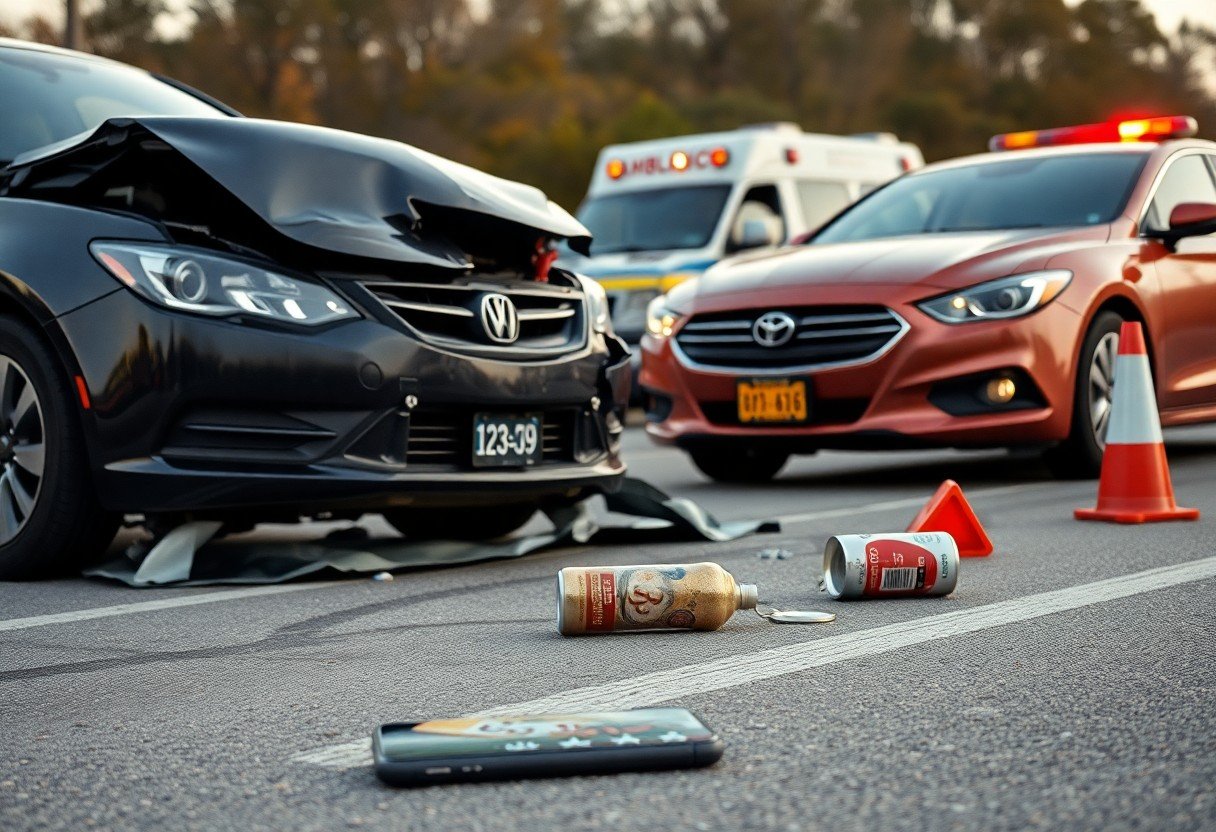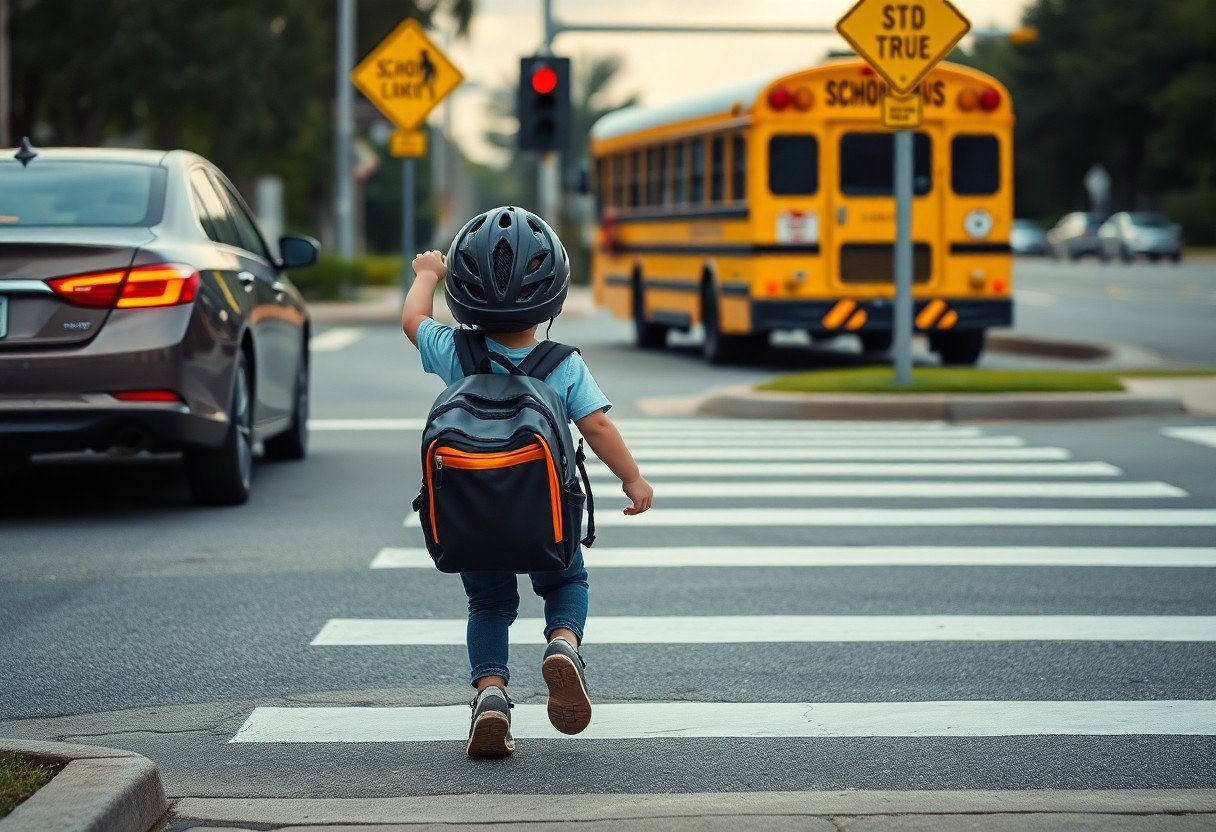
It’s important that you understand the risks, prevention strategies, and legal considerations surrounding child pedestrian accidents to protect your family. You should teach safe street-crossing habits, supervise young children near traffic, use visible clothing and reflective gear, and advocate for safer neighborhood design and speed controls. If an incident occurs, document evidence, seek prompt medical care, and consult a professional to ensure your child’s recovery and legal rights are addressed.
Key Takeaways:
- Supervise young children closely and choose walking routes with sidewalks, crosswalks, and signalized intersections.
- Teach and practice street-safety skills: stop at curbs, make eye contact with drivers, use crosswalks, and avoid distractions.
- Improve visibility with bright, reflective clothing and lights for low-light conditions.
- Prioritize routes and neighborhoods with lower vehicle speeds and traffic-calming measures; engage schools and local officials on safety improvements.
- If an accident occurs, get medical care immediately, document the scene (photos, witness names), report to authorities, and follow up with healthcare and legal advice as needed.
Understanding Child Pedestrian Accidents
You see patterns: younger children (under 10) misjudge vehicle speed and older kids (10-14) take more unsupervised risks; incidents concentrate near home, schools, and parks, especially during after-school hours (3-7 p.m.) and summer months. Vehicle speed, roadway design, and driver behavior interact to make short neighborhood trips disproportionately hazardous for your children, so targeted interventions on those fronts matter most.
Statistics and Trends
Recent urban reports show double-digit percentage increases in pedestrian fatalities in many U.S. cities over the past decade, with children under 15 remaining a significant share of injuries. You should watch for late-afternoon spikes and summer surges; local crash maps often identify hotspots within a half-mile of schools and residences where your prevention efforts will have the greatest impact.
Common Causes
Driver distraction (phone use), excessive speed, low light or poor sightlines, absence of sidewalks or marked crossings, and complex driveway/intersection movements are the primary factors you’ll encounter; impaired driving and inadequate traffic-calming measures further elevate risk on routine routes to school or play.
Phone-related distraction can roughly triple crash risk because reaction times increase by about half to one second, turning a 25-30 mph approach into a much narrower window to avoid impact; likewise, each 5-10 mph of extra speed sharply raises injury severity. You should also assess design failures-missing curb extensions, faded crosswalks, and wide turning radii-that encourage faster vehicle movements and reduce driver visibility where children walk.
Factors Affecting Child Safety
If your child is under 8, they often misjudge vehicle speed and distance; studies show children take 1.5-2 seconds longer to decide to cross than adults. Traffic speed over 25 mph triples injury-severity risk, and poor lighting increases pedestrian crashes by ~30% at dusk. Supervision lapses during 3-5 pm after-school hours raise exposure. Thou must factor these dynamics when planning routes, choosing crossings, and timing walks.
- Your child’s age and developmental stage (attention, vision, judgment)
- Your supervision patterns and caregiver distraction during peak times
- Built environment: presence of sidewalks, crosswalks, curb ramps, and lighting
- Traffic factors: vehicle speeds, sightlines, parked cars and peak traffic volumes
Age and Developmental Considerations
Children aged 4-9 are still developing peripheral vision, gap judgment, and impulse control, so you should avoid expecting independent street-crossing before about age 10; many safety programs advise supervising children under 10 on multi-lane roads. You can build skills with short, repeated drills-route rehearsals, crossing practice at slow-speed local streets, and role-play about driver behavior-to reduce risky decisions during unsupervised moments.
Environmental Influences
Road design and surroundings directly change risk: missing sidewalks force children onto the roadway, while parked cars and landscaping can hide a 3-5 ft child until a driver is just feet away. You should prioritize routes with continuous sidewalks, marked crosswalks, and good nighttime lighting, and avoid streets with high-speed traffic or limited sightlines during school arrival and dismissal.
Interventions you can look for include 20 mph school-zone limits, curb extensions that shorten crossing distance, pedestrian refuge islands, and flashing beacons at busy crossings. You should favor routes with crossing guards during peak times and continuous sidewalks; engineering changes like curb extensions and marked crossings have reduced pedestrian conflicts in many local studies, so advocate to your municipality when routes lack these protections.
Prevention Strategies for Families
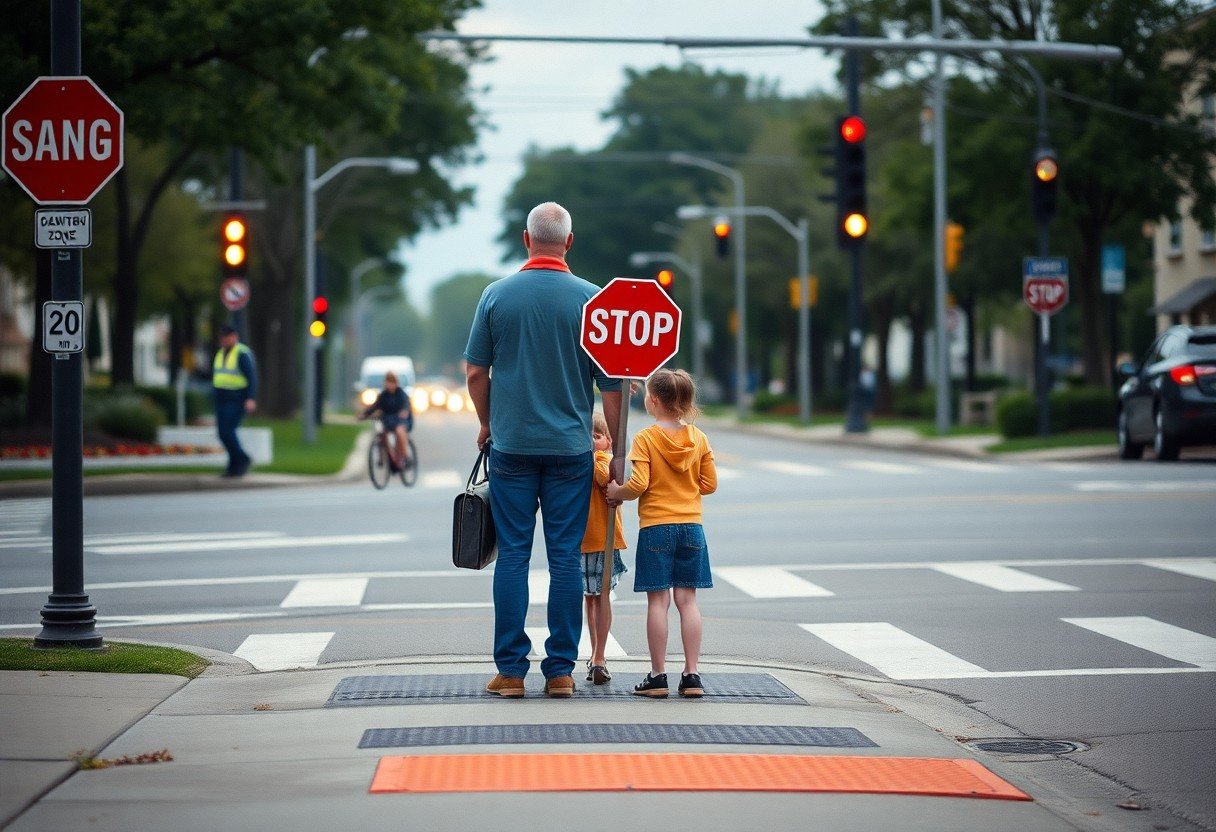
Prioritize a layered approach: supervise, educate, and modify environment. You should supervise children under 10 when crossing streets and hold hands in parking lots and near busy roads. Use bright clothing or reflective strips during low light, and plan routes that use sidewalks and marked crosswalks; a 10-15 minute detour often cuts exposure to high-speed traffic. Enroll in a local “walking school bus” or work with your PTA to add crossing guards at high-traffic intersections.
Education and Awareness
Teach your child the “stop, look, listen, think” steps and practice at least ten supervised crossings in different settings-residential, intersections, and parking lots. Use role-play and video modeling; one 20-minute weekly session for four weeks builds skills quickly. Coach older siblings and teen drivers to avoid phones and yield to pedestrians; model crossing behavior yourself, because children copy adult habits.
Safe Walking Practices
Choose routes with sidewalks and marked crosswalks; if none exist, walk facing traffic and keep children close. You should have children under 10 cross only with an adult; older kids should make eye contact with drivers before stepping off curb. Use reflective clothing after dusk and carry a flashlight. Practice crossing at three types of intersections-uncontrolled, stop-sign, and signalized-so your child learns cues for each.
Drill the five-step crossing routine: stop at the curb, remove headphones, look left-right-left, make eye contact with drivers, and cross when cars are stopped. Train your child to pause two steps back from the curb until it’s safe and to scan for turning vehicles within 10-20 feet. For routes where vehicles exceed 30 mph, pick a route with traffic calming or a signalized crossing; supplement with a reflective vest and a small LED light for visibility.
Role of Drivers in Ensuring Safety
You influence child pedestrian risk every time you drive; applying proven measures from Preventing Child Pedestrian Injury: A Guide for Practitioners-such as traffic-calming, clear crosswalks, and targeted education-reduces incidents in neighborhoods and school zones and supports broader community interventions you can advocate for.
Awareness and Vigilance
When you approach areas where children congregate, scan at least 12-15 seconds ahead for play, bicycles, and vehicles reversing; check sidewalks, driveways, and between parked cars where a child can suddenly appear. Use low-beam headlights at dusk, avoid distractions, and anticipate unpredictable behavior from children under 10 who often misjudge vehicle speed and gaps.
Adherence to Speed Limits
Obey posted limits and slow further in residential streets and school zones-dropping speed from 30 to 20 mph dramatically shortens your travel-per-reaction and gives you more time to stop for a child entering the roadway.
Quantitatively, the difference is clear: 20 mph equals about 29 ft/sec while 30 mph is ~44 ft/sec, so during a typical 1.5-second reaction you travel roughly 44 ft at 20 mph versus 66 ft at 30 mph-about 50% farther. Braking distance then compounds that gap. Practical steps you can take include using cruise control in long urban stretches to avoid creeping over limits, actively slowing to 15-20 mph in play streets, and supporting local 20 mph zone policies shown to lower pedestrian injuries.
Legal Considerations
You should act quickly after a child pedestrian injury since statutes of limitations typically run 1-3 years (most commonly two years) and municipal notice rules can be as short as 30-90 days; missing deadlines often bars recovery. Insurers frequently limit payouts, so document injuries, witness statements, and scene photos immediately. Courts apply comparative-negligence rules in many states-if you are found 25% at fault, your award is reduced by 25%-so early legal review matters for maximizing recovery and preserving evidence.
Liability in Pedestrian Accidents
Drivers owe a duty of care to pedestrians and can be liable for violations like distracted or speeding driving; municipalities may be liable when poor lighting, missing crosswalks, or defective signals cause harm, though sovereign-immunity and notice requirements vary. You can pursue claims against drivers, vehicle owners, schools, or manufacturers of faulty equipment. Courts often treat child fault differently-some jurisdictions limit attributing negligence to young children-so age and local law significantly affect liability allocation.
Resources for Affected Families
You can access support from national organizations such as Safe Kids Worldwide, the NHTSA, and the CDC for prevention data and guidance, while the Brain Injury Association and local children’s hospitals offer care coordination. Contact 2‑1‑1 for community services and your state Victim Compensation Program for emergency expenses. Legal aid groups and trauma center social workers frequently provide free referrals; early use of these resources helps manage medical bills and nonmedical needs during recovery.
When pursuing recovery, gather medical records, police reports, photos, and witness names immediately and track expenses-rehab and long‑term care can run into tens of thousands of dollars. You should consult an attorney experienced in child pedestrian cases; many work on contingency and offer a free consultation. Also check for hospital lien negotiations and timely file any municipal claim within its short notice window (often 30-180 days) to preserve your ability to seek damages for future care.
Community and School Involvement
You can amplify family efforts by partnering with schools and neighbors: Safe Routes to School programs, walking school buses and trained crossing guards, for example, have been associated with injury reductions up to 30% in participating districts. Parents who organize monthly safety audits, coordinate with PTAs, and share pedestrian counts with local planners make it easier to secure engineering changes and funding while boosting supervised walking rates and consistent child-safety messaging across the neighborhood.
Initiatives for Child Safety
You should push for concrete measures such as 20 mph school-zone limits, raised crosswalks, curb extensions and high-visibility continental striping, which shorten crossing distance and lower vehicle speeds. Schools can run 4-6 week pedestrian-training modules for K-5 students, organize parent-led walking routes, and require annual crossing-guard certification, all of which reduce unsafe crossings and increase adult supervision during arrival and dismissal.
Collaborating with Local Authorities
You should engage police, public works and your school board to request speed studies, targeted enforcement during school hours and pilots for speed or red-light cameras; ask for an 85th-percentile speed analysis and consider traffic calming like speed cushions or chicanes. Bring documented counts or near-miss logs to council meetings and pursue state or federal Safe Routes to School grants to fund engineering, education and enforcement packages.
You can prepare a focused packet for officials: two-week pedestrian and vehicle counts, a short conflict video, a near-miss log and a 100-signature petition to present to traffic engineers; request a formal traffic-calming study (often completed within 3-6 months) and recommend specific fixes-20 mph school-zone signage, a median refuge or a raised crosswalk-so staff have measurable evidence and clear, fundable options.
Final Words
Drawing together the safety steps and legal considerations helps you protect your child and respond effectively if an accident occurs. Stay proactive about teaching safe crossing habits, supervising younger pedestrians, securing appropriate safety gear, and understanding local traffic laws and emergency procedures. If an incident happens, seek medical care and legal advice promptly to safeguard your child’s recovery and rights.
FAQ
Q: What immediate actions should a family take after a child pedestrian accident?
A: Ensure scene safety, call emergency services, and avoid moving a child with suspected head, neck, or spine injuries. Provide basic first aid for bleeding or shock if trained, obtain the driver’s contact and insurance information, collect witness names and phone numbers, take photos of vehicles, road conditions, and injuries, and request a police report at the scene. Seek medical evaluation promptly even if injuries appear minor, and keep all documentation and receipts.
Q: When should a child see medical professionals and what follow-up care is commonly needed?
A: Any head impact, loss of consciousness, severe pain, visible fractures, or ongoing symptoms (headache, dizziness, nausea, behavioral changes) warrants emergency care. Follow-up with a pediatrician and specialists (orthopedics, neurology, physical therapy) as indicated. Track symptoms, medications, therapy sessions, and clinical notes. Be alert for delayed signs such as concussion symptoms or emotional changes and schedule timely reassessments.
Q: What legal and insurance steps should parents take after the accident?
A: Notify your insurance company and obtain the driver’s insurance details; secure the police report and keep copies of all medical records, invoices, and repair estimates. Preserve clothing and other physical evidence. Avoid giving recorded statements to insurers without reviewing facts and consider consulting an attorney experienced in child pedestrian injuries before signing releases or accepting settlements. Document all communication and out-of-pocket expenses.
Q: How can families reduce the risk of future pedestrian accidents for children?
A: Teach age-appropriate road-safety skills: hold hands for young children, stop at curbs, look both ways, make eye contact with drivers, and use marked crosswalks. Choose safe walking routes, practice crossings repeatedly, ensure high-visibility clothing and lights at dusk, limit distractions (no phones or headphones), supervise near traffic, and secure play areas away from streets. Advocate for traffic-calming measures and safe routes to school with local authorities.
Q: How should parents support a child’s emotional recovery after a pedestrian accident?
A: Acknowledge the child’s feelings and provide consistent routines and reassurance. Monitor for anxiety, sleep disturbances, regression, or avoidance of walking near roads. Use age-appropriate explanations, gradual re-exposure to walking tasks, and role-play to rebuild confidence. Engage school counselors and consider trauma-focused therapy if symptoms persist or interfere with daily life. Maintain open communication and involve siblings or caregivers in the recovery plan.