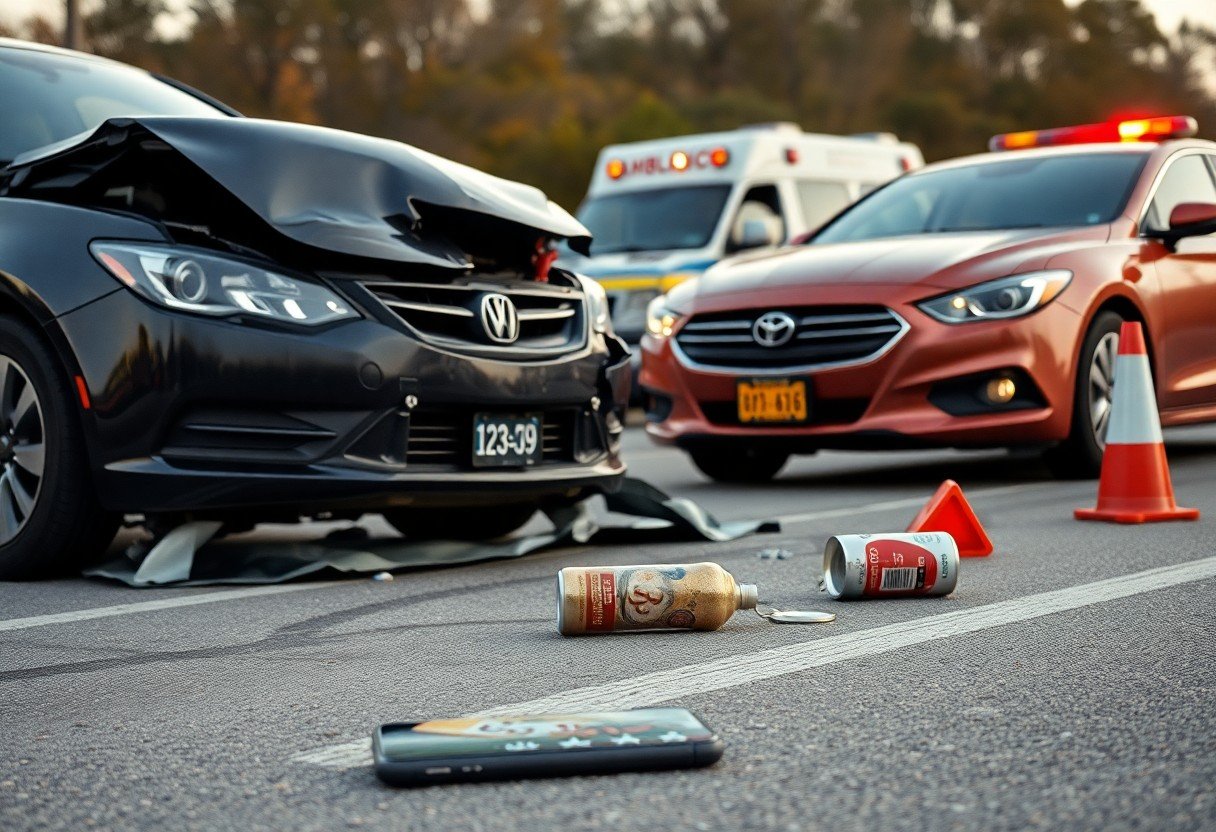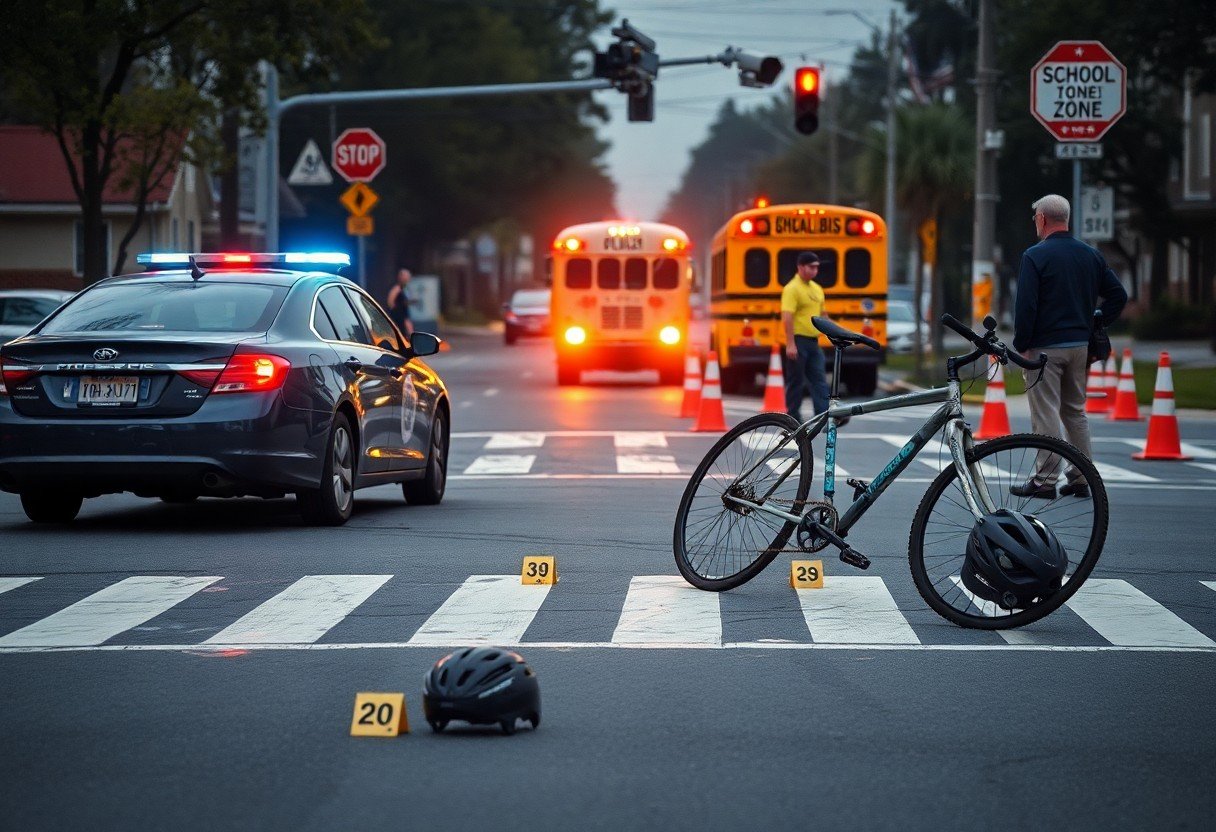
School zones impose reduced speed limits and special traffic controls that change liability and evidence standards, so you need to know how signage, crossing guards, bus stop rules, and pedestrian right-of-way for children affect fault; gather dashcam or surveillance footage, witness statements, speed or telematics data, police reports, and scene measurements to build a strong case in the event of an accident.
Key Takeaways:
- Statutory school‑zone rules (reduced speed limits, flashing beacons, posted hours, crossing‑guard directives) create specific duties and can establish per se violations when disregarded.
- Drivers owe a heightened duty of care because children’s unpredictable behavior increases foreseeability of harm; courts often apply stricter standards in school‑zone cases.
- Preserve and collect time‑sensitive evidence immediately: video (dashcam, school/bus/city CCTV), eyewitness statements (students, staff), police reports, skid marks, vehicle damage, and medical records.
- Use expert evidence early-accident reconstruction, traffic‑engineering and visibility analyses, speed/device calibration, and school‑zone timing logs-to establish causation and visibility conditions.
- Legal consequences are amplified: enhanced civil and criminal penalties, potential municipal liability for inadequate signage/maintenance, comparative‑fault assessments, and strict chain‑of‑custody requirements for evidence.
Overview of School Zone Accidents
You see school zones as compressed risk environments: posted limits typically drop to 15-25 mph and two daily peaks (roughly 7-9 AM and 2-4 PM) concentrate pedestrians, buses, and cars. Your decisions and micro-environment factors – crossing design, sightlines, and curbside management – determine whether near-misses escalate into collisions.
Common Causes
You often encounter a mix of driver behaviors and infrastructure failures: distraction from phones, speeding even 5-10 mph over the limit, blocked sightlines from parked SUVs, poorly managed drop-off lanes, and children darting between cars. Backing incidents in congested loading zones and inadequate crossing control are recurring mechanisms in case files you review.
Statistics and Impact
You should note that risk concentrates in short windows: many jurisdictions report most school-zone crashes happen within 30-60 minute arrival/dismissal periods. Lowering speeds matters – evaluations of 20 mph/30 km/h zones routinely show injury reductions up to about 60% – and that translates directly into fewer severe child injuries in your caseload.
You can look to municipal program results for sharper detail: combined fixes (reduced limits, curb extensions, high-visibility crossings) commonly cut child pedestrian incidents by roughly 35-60% within one to three years, while automated speed enforcement often increases compliance and trims average speeds by about 5-10 mph, reducing both crash frequency and severity.
Special Traffic Rules in School Zones
You must follow a tighter set of rules around schools: reduced speed, no passing, strict school bus stopping laws and often bans on cellphone use during school hours. Speed reductions typically apply within marked school zone boundaries and during posted times, while bus stop rules usually require you to stop at least 20 feet from a stopped school bus. Enforcement can include cameras, increased fines, and targeted patrols to protect high pedestrian volumes and loading/unloading areas.
Speed Limits and Signage
You will commonly see school speed limits set between 15-25 mph, with signed hours like 7-9 AM and 2-4 PM or when flashing beacons are active. Fluorescent yellow‑green signs, pavement markings and electronic speed feedback signs define the zone and remind you when reduced limits start and end. Obeying posted limits matters: automated cameras and active patrols often ticket even modest excesses to deter risky passing and improve reaction time for children.
School Crossing Guards and Their Role
You must obey crossing guards who manage pedestrian movement at busy intersections, using high‑visibility ANSI/ISEA 107 vests and 18‑inch stop paddles to halt traffic and escort children. Guards typically operate at peak arrival/dismissal times, directing groups of students across multi‑lane roads and coordinating with bus and parent traffic to minimize conflicts; failing to stop for a guard can lead to citations in many jurisdictions.
Training and program rules vary, but many districts require annual background checks, refresher training and written crossing procedures so you get consistent, lawful control at crossings. Guards relay hazards and near‑misses to schools or police, trigger temporary traffic controls when needed, and help you by creating predictable crossing patterns; where districts expanded guard coverage, administrators often cite measurable drops in near‑collision reports during peak periods.
Legal Responsibility in School Zone Accidents
Courts and law enforcement treat school-zone violations with heightened scrutiny: speed limits often drop to 15-25 mph during peak hours (commonly 7-9 AM and 2-4 PM), and penalties can be enhanced. You should expect evidence like dashcam footage, bus stop logs, and witness statements to determine fault quickly. For detailed guidance on handling these claims see Car Accidents in School Zones.
Liability Issues
Negligence is the primary legal theory, but many states apply comparative fault so your recovery may be reduced if you share blame; some jurisdictions even recognize strict duties for school bus operators. Municipal or school liability can arise from missing signage, poorly maintained crosswalks, or absent crossing guards. Statutes of limitation typically run 2-3 years, so you must preserve evidence-photographs, maintenance records, and officer reports-early in the process.
Role of Drivers and Pedestrians
Drivers carry a heightened duty in school zones: you must obey reduced limits, stop for school buses with flashing lights (often required to stop at least 20 feet away), and follow crossing guards’ directions; many areas ban handheld device use in these zones. Pedestrians, especially children, behave unpredictably, so you should reduce speed and increase vigilance during drop-off and pick-up times.
Investigators rely on objective data to assess behavior: your vehicle’s event data recorder or dashcam, cell-phone records showing texting timestamps, school bell schedules, and witness accounts. If you were distracted or failed to yield, those records typically shape comparative-fault allocations and influence settlement values or jury awards.
Importance of Evidence in School Zone Cases
When you build a claim in a school zone, documentary proof often determines fault and damages: time-stamped video, police reports, medical bills, and measured skid marks frequently sway judges and insurers; for example, dashcam clips of 10-20 seconds before impact can show signal timing and obstruction, while 2-5 witness accounts corroborate child movements. Collecting these elements promptly strengthens your position and preserves perishable facts you will later rely on in negotiations or court.
Types of Evidence
You should prioritize several evidence streams: objective electronic data, physical scene measurements, and contemporaneous human accounts, since each addresses different liability elements-speed, visibility, duty of care, and proximate cause. Video and EDR records document timing and speeds to 0.1‑second resolution in many devices, skid marks measured in feet provide stopping distance context, and medical records quantify injuries and treatment costs.
- Surveillance and dashcam video showing vehicle approach, signal status, and pedestrian location.
- Witness statements from 2-5 people, including crossing guards, parents, and other drivers.
- Physical evidence such as skid marks, vehicle damage patterns, and debris fields measured in feet.
- Medical records, billing statements, and school attendance logs establishing injury and interruption.
- The vehicle’s event data recorder (EDR) capturing pre‑impact speed and brake input.
| Surveillance / Dashcam | Timestamped crosswalk footage, 10-30s before impact used to verify signals |
| Witness Statements | Names, contact info, consistent accounts from crossing guards or parents |
| Physical Scene | Skid marks (measured in feet), vehicle damage, and debris mapping |
| Vehicle Data (EDR) | Speed, throttle, brake application recorded at 0.1s intervals |
| Official Records | Police report, school logs, maintenance/traffic sign records |
Gathering Evidence Post-Accident
You should act within 24-72 hours: photograph the scene from multiple angles (include a ruler or tape for scale), record video of sightlines, get names and phones of 2-5 witnesses, and ask police for a report number; preserve dashcam footage and request the school or municipality to secure any CCTV. Prompt steps prevent loss of perishable data and make later reconstruction far more reliable.
Next, formally preserve evidence: send a written preservation request to the school district and municipality to prevent routine overwriting of surveillance, ask your provider or a certified technician to download EDR data (often required within days to weeks), and obtain medical records and billing codes (CPT/ICD) to document injury treatment; if needed, retain an accident reconstructionist to measure skid marks and calculate speed using established formulas so you have quantified expert opinion for settlement or trial.
Preventative Measures to Reduce Accidents
Implement targeted engineering, enforcement, and education: lower posted speeds to 15-20 mph at peak times, install high-visibility crosswalks, raised medians, curb extensions, and flashing beacons, and pair them with timed camera enforcement or increased patrols. You should coordinate staggered arrival/dismissal times and permanent infrastructure funded through programs like Safe Routes to School to reduce vehicle-pedestrian interactions and measurably lower crash rates around campuses.
Community Initiatives
You can mobilize neighborhood action through Safe Routes to School grants, volunteer crossing-guard programs, and block-level traffic-calming projects such as speed humps and chicanes. Partner with your PTA and local officials to run data-driven campaigns-installing automated speed feedback signs often cuts speeding by double-digit percentages-and organize community audits to identify the top 5 hazardous spots for immediate fixes.
Parental Involvement
Establish and model safe routines: set a single drop-off point 1-2 blocks from campus, stagger arrival times to avoid congestion, walk with younger children or join a walking school bus, and insist on seatbelt and booster-seat use for car rides. You should volunteer for crossing duty, share real-time updates in parent groups, and reinforce crossing rules with consistent practice.
For practical steps, you can map a 2-3 minute walking radius, assign rotating parent chaperones, and use apps to coordinate carpools to reduce idling and curbside chaos. Practice crossings with your child-making eye contact with drivers and using painted crosswalks-and document problem areas with photos to present to traffic engineers; concrete evidence and a volunteer plan often unlock municipal traffic-calming resources faster.
Case Studies and Legal Outcomes
- Case A (City X, 2017): driver recorded at 34 mph in a 20 mph school zone; two children injured, one with permanent disability; speed camera and crosswalk video used; jury awarded $2.1 million, defendant 85% liable after comparative negligence reduction.
- Case B (County Y, 2019): school bus stop-arm violation at 25 mph; collision with bicyclist age 12; criminal citation plus $450,000 civil settlement; municipal signage audit cited as contributing factor.
- Case C (State Z, 2020): nighttime hit-and-run in 15 mph zone, driver later identified via phone GPS; fatality led to $3.4 million wrongful-death verdict and 10-year suspended license revocation.
- Case D (Metro, 2018): intersection visibility issue, driver at posted 20 mph but pedestrian in crosswalk struck; city admitted inadequate signage, settlement $600,000 with 60% municipal liability.
- Case E (Suburb, 2021): driver distracted by phone, recorded at 28 mph, single-child serious injury; dashcam and cellular records produced $1.05 million settlement and driver license points totaling 12.
- Case F (School District, 2016): defective speed-limit flashers nonfunctional for 14 months; three incidents, combined payouts $1.8 million; repairs mandated and district adopted automated enforcement within 9 months.
Notable Cases
Several high-profile rulings show how evidence shapes outcomes: a 2017 verdict of $2.1M where speed-camera and crosswalk video established 34 mph in a 20 mph zone, and a 2020 GPS-confirmed hit-and-run that produced a $3.4M wrongful-death award. You can expect settlements to range from hundreds of thousands to multi-millions depending on injury severity, liability split, and availability of objective data like video, phone records, or municipal maintenance logs.
Lessons Learned
From these outcomes, practical steps rise to the top: preserve video, secure phone and telematics data, document signage and lighting, and obtain medical and reconstruction experts early. You improve your position significantly when authoritative timestamps, speed logs, and maintenance records back your claims.
Digging deeper, you should prioritize immediate evidence preservation-ask for camera footage preservation letters within days and subpoena cell provider and vehicle-event-data records quickly. Expert reconstruction can convert a disputed speed or impact point into quantifiable metrics; in cases above, reconstruction reports shifted liability by 20-40%. Also evaluate municipal culpability: patrol logs, maintenance schedules, and prior complaints often determine whether you can pursue a city or school district alongside an individual driver.
Summing up
Taking this into account you must be aware that school zones impose stricter rules-lower speed limits, enhanced signage, and sometimes heightened driver responsibility-and that evidence such as dashcam footage, witness statements, traffic signals, and official crash reports will shape fault and liability determinations; preserve physical and digital evidence, document injuries and scene conditions, and consult legal or safety professionals promptly so your rights, claims, and the safety of children are effectively protected.
FAQ
Q: What special traffic rules apply in school zones and how do they affect liability?
A: School zones typically impose reduced speed limits during posted hours, require drivers to yield to pedestrians at crosswalks, make it illegal to pass stopped school buses with flashing lights or extended stop-arms, and often impose heightened fines or criminal penalties for violations. Violating a school-zone rule can create statutory or prima facie evidence of negligence, increase fault in civil claims, and trigger enhanced criminal or administrative sanctions. Employers and school bus contractors can be vicariously liable for employee drivers, and municipalities may have special notice or immunity rules that affect claims against government entities.
Q: What on-scene evidence is most important after a school-zone collision?
A: Photograph and video the vehicles, road surface, skid marks, point(s) of impact, crosswalks, traffic signs/signals, school-zone markings, bus stop locations, lighting and weather conditions, and visible injuries. Preserve vehicle positions before they are moved, note exact times, collect contact information for drivers, passengers, witnesses, school staff and crossing guards, and obtain police crash reports. Document clothing, school bags, and shoes of child pedestrians; record vehicle speeds if measured by bystanders or dashcams; and obtain medical records and EMS run sheets that show injuries and timing.
Q: How do you preserve and obtain video and data from schools, buses, traffic cameras and phones?
A: Act immediately: send written preservation requests to the school district, bus company, and any businesses or municipalities that operate cameras because many systems overwrite footage in days to weeks. Request police to collect on-scene dashcam or bodycam footage and ask EMS for run-sheet video if available. Send letters to preserve electronic data and follow up with formal public-records or subpoena requests when litigation is contemplated. For vehicle data recorders or bus telematics, request download logs and calibration records; for speed enforcement devices, obtain calibration and maintenance records.
Q: What special issues arise when witnesses are children or school staff?
A: Children may have limited recall and require careful, non-leading interviews; contemporaneous statements to parents, teachers, or emergency responders can qualify under hearsay exceptions in many jurisdictions. Obtain teacher, crossing-guard and bus-driver statements as early as possible and preserve school attendance or supervision logs. Secure parental authorization for medical or school records for minors. Be mindful of mandated reporter duties and privacy laws (FERPA/HIPAA) when seeking school or health records; use proper legal processes to obtain those records if needed.
Q: Which expert evidence and procedural steps strengthen a school-zone accident case at trial?
A: Use accident-reconstruction experts to map impact points, vehicle speeds, and sight lines; pediatric biomechanics or medical experts to explain injury mechanisms in children; and traffic-engineering experts to evaluate signage, striping, signal timing and whether the zone complied with applicable standards. Maintain strict chain-of-custody for digital and physical evidence and obtain calibration logs for speed devices and cameras. If evidence is destroyed or not preserved, move for spoliation sanctions and document all preservation requests and responses. Check municipal notice-of-claim deadlines and jurisdictional immunities early to avoid procedural dismissal.