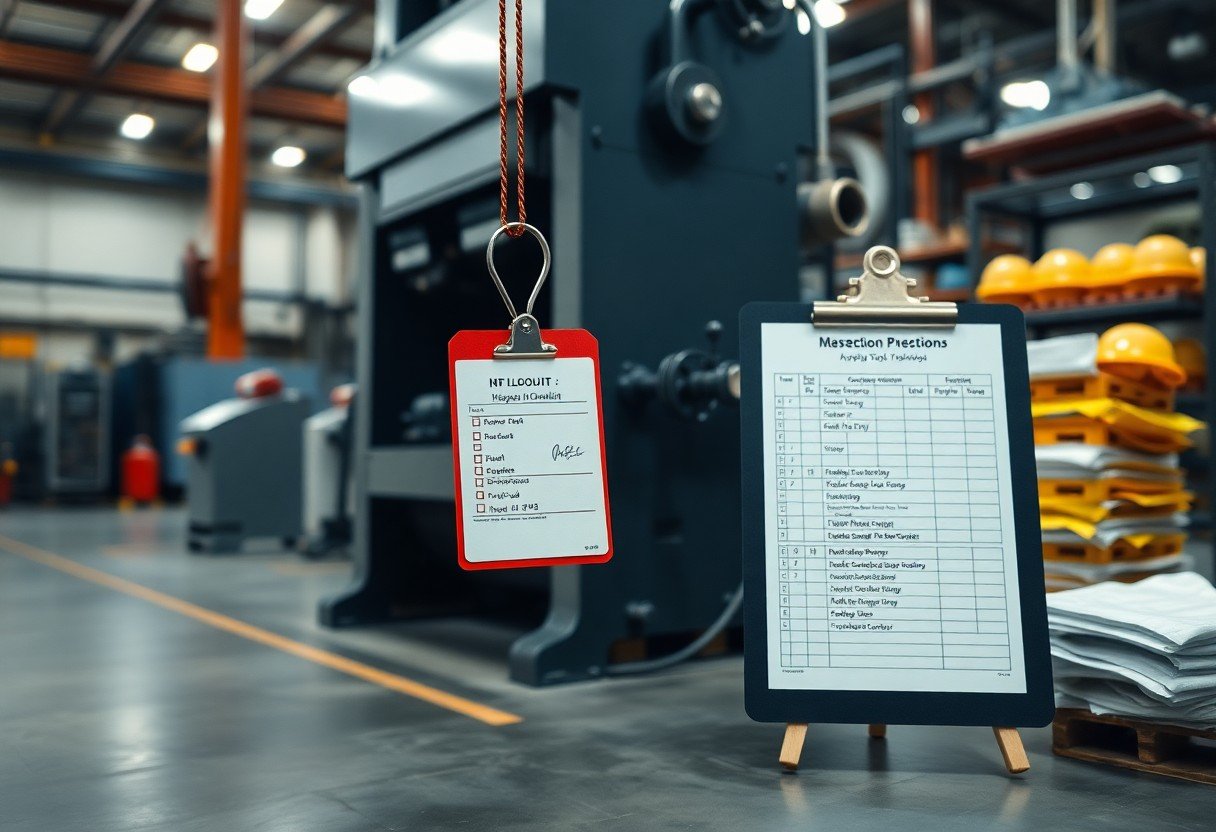
With any machinery injury, you must immediately secure the scene, preserve evidence, and document injuries, equipment condition, and witness statements; your prompt records establish timeline and severity. Notify supervisors and safety officers, follow internal reporting procedures and regulatory requirements, and ensure maintenance and incident reports are completed. Identify responsible parties-operators, supervisors, employers, or manufacturers-by correlating documentation with training records, maintenance logs, and safety policies so liability and corrective actions are clear and enforceable.
Key Takeaways:
- Secure the scene and provide medical aid while preserving evidence (equipment position, guards, controls) and using lockout/tagout to prevent further harm.
- Document incident details immediately: date/time, location, equipment ID/serial, operator actions, injury description, PPE used, and photographic/video evidence.
- Collect witness statements and relevant records (training, maintenance logs, inspection reports, safety procedures) to establish context and root causes.
- Assign clear responsibilities: employer/supervisor for reporting and corrective actions, safety/HS manager to lead the investigation, maintenance for equipment repairs, and injured workers to cooperate with inquiries.
- Follow regulatory reporting timelines (e.g., OSHA/workers’ compensation), implement corrective actions, track effectiveness, and retain investigation records for compliance and prevention.
Overview of Machinery Injuries
You should document mechanical failures, guarding status, maintenance history, and operator actions immediately after an incident; OSHA standards 29 CFR 1910 Subpart O and 1910.147 often apply. Typical outcomes you’ll log include amputations, crush injuries, lacerations, entanglements and burns. Photographs, timestamped maintenance logs, serial numbers, and witness statements collected within 48-72 hours strengthen causal analysis and downstream liability assessments.
Types of Machinery Injuries
You’ll encounter five recurring injury patterns: amputations from point-of-operation contact, crush/compression from rollers or presses, lacerations from saws and blades, entanglement with rotating parts, and thermal or chemical burns during processing or maintenance.
- Amputation – presses, punch machines, table saws.
- Crush/compression – conveyors, balers, compactors.
- Laceration/puncture – circular saws, shears, cutting knives.
- Entanglement – PTO shafts, rotating shafts, belt drives.
- Recognizing thermal and chemical burns during cleaning, welding, or hydraulic failures is vital.
| Amputation | Mechanical presses, circular/table saws, hydraulic shears |
| Crush/Compression | Conveyors, balers, compactors, roll mills |
| Laceration/Puncture | Grinders, hand-fed saws, metal shears |
| Entanglement | PTO shafts, exposed couplings, open belt drives |
| Thermal/Chemical Burn | Welding stations, hot presses, chemical baths |
Common Industries Affected
You’ll see the highest machine-related injury rates in manufacturing (metalworking, stamping), construction (saws, crushers), agriculture (combines, PTOs), warehousing (conveyors), and forestry (sawmills); these sectors account for the bulk of reported amputations and entanglements in regulatory reviews.
In manufacturing, punch presses and stamping lines frequently produce amputations during point-of-operation tasks; in agriculture, PTO entanglements persist during equipment hookup and maintenance. Shift changes and maintenance windows are common incident windows you should monitor-OSHA citations often cite missing guards, inadequate lockout/tagout, and insufficient training. Mitigation you can enforce includes verified guarding, written LOTO procedures, task-based training, routine inspection checklists, and documented corrective actions tied to serial-numbered equipment.
Importance of Documentation
When you document a machinery incident, record date/time, machine ID, guard status, photographs, witness statements, training history and maintenance logs immediately; doing so supports root-cause analysis, speeds corrective actions, and strengthens insurance or legal defenses. For example, noting that a press had a missing guard and a last inspection three months earlier gives investigators clear starting points and lets you track corrective measures and recurrence rates over time.
Legal Implications
Failing to document properly exposes you to citations and higher penalties during OSHA inspections; OSHA requires employers to report fatalities within 8 hours and inpatient hospitalization, amputations, or loss of an eye within 24 hours, and to retain injury and illness records under 29 CFR 1904 for five years. You should expect regulators and counsel to request timestamps, repair orders, and training logs as evidence in dispute resolution or litigation.
Medical Record Keeping
You must record clinical details such as diagnosis, treatment provided, medications, provider notes, work restrictions, return-to-work clearances, and follow-up plans while keeping records secure and HIPAA-compliant. Maintain incident-linked medical documentation alongside occupational health surveillance files; general incident records typically require five-year retention while medical surveillance records may need up to 30 years depending on exposure.
Use standardized templates and electronic case files with time-stamped entries, scanned ER reports, and signed witness statements to create an audit trail you can produce quickly. Cross-reference the medical entry with the machine serial number, last maintenance date, lockout/tagout tickets, and photographic evidence; doing so helps you quantify lost-time, justify accommodations, and rebut claims by showing timely treatment and corrective actions. Keep strict access controls and logs so only authorized personnel can view sensitive health data.
Identifying Responsible Parties
You should map liability across the chain: employers, contractors, maintenance crews, and manufacturers. OSHA consistently lists machine guarding among the top 10 cited standards, and courts often split fault when a design defect and poor maintenance combine. If a manufacturing defect is suspected, read When Equipment Manufacturers Are Liable for Workplace … for Clarksburg-specific examples of manufacturer accountability.
Employers and Their Responsibilities
You must provide training, routine inspections, and enforce lockout/tagout; OSHA requires reporting fatalities within 8 hours and inpatient hospitalizations within 24 hours. Conduct documented monthly inspections, keep maintenance logs for at least three years, and ensure guards meet ANSI B11 series standards. Failure to train 100 employees or more properly or to replace worn guards can shift significant liability to your organization.
Equipment Manufacturers
You are responsible for safe design, clear warnings, and thorough instructions; compliance with standards like ANSI B11 and ISO 12100 reduces risk. Manufacturers face strict product liability for design or manufacturing defects and for failures to warn; courts evaluate prototype testing, quality-control records, and user manuals when determining fault.
You should know manufacturers can still be liable even if the employer altered equipment; courts examine foreseeability of modification, adequacy of warnings, and whether post-sale notices or recalls were issued. Statutes of limitations for product claims usually run 2-6 years, while statutes of repose can bar suits after about 10 years in some states, so preserve evidence and act promptly.
Legal Framework
Workers’ Compensation Laws
Under most jurisdictions, workers’ compensation is a no‑fault system: you file a claim for medical care and wage replacement-typically about two‑thirds of pay-and avoid suing your employer. Reporting deadlines commonly range 30-90 days, so you should report injuries promptly. If an operator is amputated by an unguarded press, you pursue workers’ comp for immediate benefits while preserving the machine, maintenance logs, and witness statements for any third‑party actions.
Liability and Negligence
When you pursue liability, courts apply duty, breach, causation, and damages; OSHA rules and ANSI B11 standards often define the duty of care. Statutes of limitations usually run 1-3 years, and comparative negligence can reduce recovery. For example, if a defective conveyor causes amputation, you can sue the manufacturer for design or warning defects while a contractor might be liable for negligent maintenance.
Product‑liability claims against manufacturers can be strict liability, negligence, or breach of warranty, and employer claims focus on training, inspection, and lockout/tagout failures. You should preserve the machine, serial numbers, training records, inspection reports, photos, and maintenance logs immediately; such evidence drives settlement leverage and supports claims for compensatory-and in rare cases of gross misconduct-punitive damages.
Best Practices for Prevention
You should implement layered controls: engineering guards, administrative procedures, and PPE. Enforce lockout/tagout for energy isolation with written LOTO steps and authorized-operator lists. Perform daily pre-shift checks, weekly function tests, and preventive maintenance on a 250-500 operating-hour or quarterly cadence depending on manufacturer guidance. Track incidents and near-misses in a centralized log to spot trends; facilities that act on trend data typically cut repeat incidents substantially within a year.
Safety Training and Protocols
You must provide formal initial operator training plus annual refreshers, including hands-on competency assessments and written exams. Run 10-15 minute weekly toolbox talks on hazards like entanglement and pinch points, and conduct full LOTO drills quarterly. Assign only authorized personnel to tasks, document certifications, and retrain promptly after equipment changes or after any incident to close knowledge gaps.
Regular Maintenance and Inspections
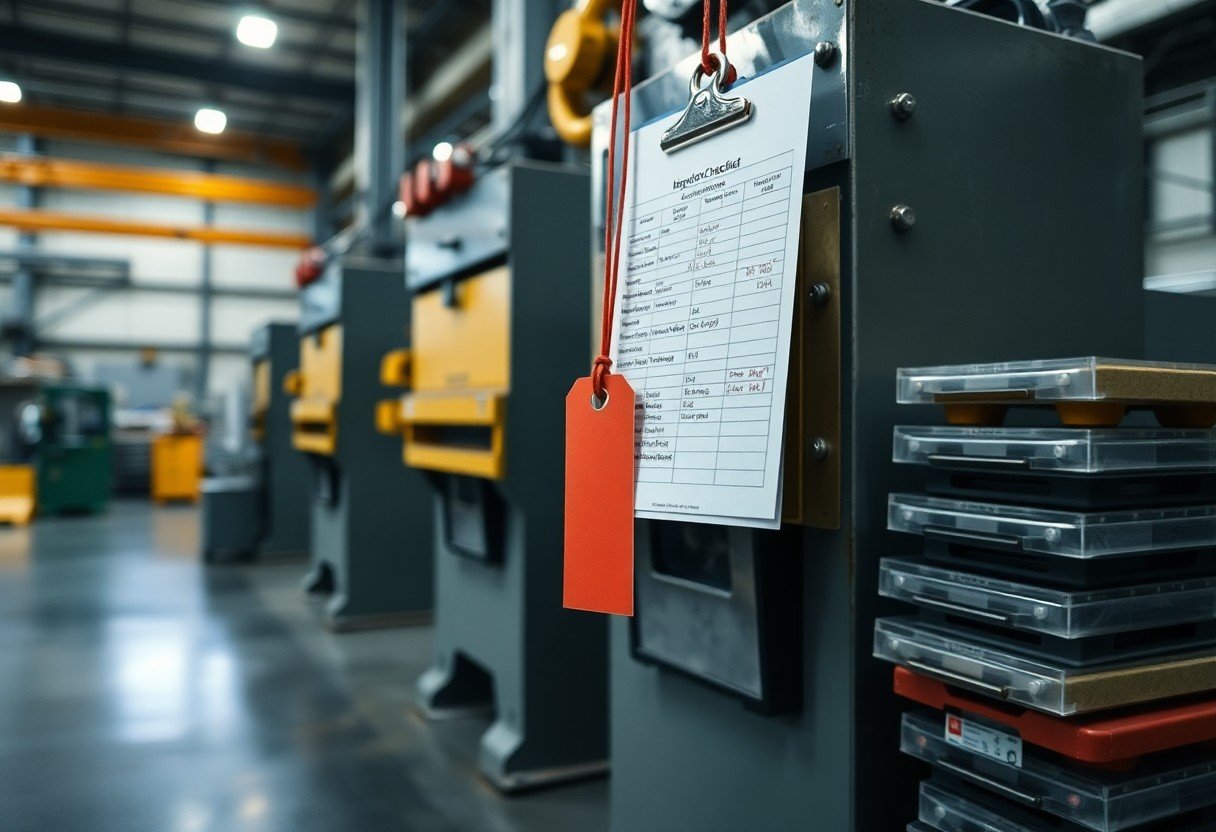
You should use standardized checklists for daily, weekly, and monthly inspections covering guards, interlocks, emergency stops, belts, hydraulics, and sensors. Schedule preventive maintenance per manufacturer intervals-often 250-500 hours-or at least quarterly, and record every action in a CMMS. Implement vibration analysis and infrared thermography for predictive checks to catch bearing or electrical faults before failure.
For deeper control, define measurable inspection criteria (e.g., belt tension within ±5%, guard fasteners torqued to spec, sensor response times <100 ms) and require sign-off by a qualified technician. Automate PM scheduling in your CMMS with alerts at set operating-hour thresholds, attach photos and serial numbers to records, and keep inspection histories per regulatory requirements so you can correlate maintenance actions with incident reductions.
Case Studies
- Case 1 – 2018 lathe amputation: 35-year-old operator lost two fingers after guard removal for faster loading; OSHA cited 29 CFR 1910, $150,000 fine, 120 lost workdays, settlement $300,000.
- Case 2 – 2020 conveyor entanglement: single fatality (age 42) when pull-cord E-stop was disconnected; company fined $220,000, three additional serious injuries in 24 months, root cause: inadequate training and missing guards.
- Case 3 – 2016 hydraulic press crush: two operators injured, one permanent disability; interlock bypassed, 14-day production halt, $75,000 repairs, insurer payout $1.2M.
- Case 4 – 2019 robotic arm collision: three workers injured due to disabled safety mat and removed fencing; manufacturer issued software recall, $450,000 medical/repair costs, 60 days corrective action.
- Case 5 – 2021 paper mill cutter laceration: 27-year-old technician cut during blade change without LOTO; OSHA willful violation, $95,000 penalty, plant implemented 6-point LOTO program.
Notable Machinery Injury Cases
Examine the 2018 lathe amputation and 2020 conveyor fatality: together they generated over $370,000 in fines, 120+ lost workdays, and more than $1.5M in settlements and claims. You can see how guard removal, disabled E-stops, and deficient training repeatedly correlate with highest-cost incidents, signaling where your compliance and engineering controls must focus first.
Lessons Learned
From these cases you must enforce lockout-tagout, maintain guards, and verify interlocks via documented inspections; studies show similar interventions cut incident rates by roughly 65%. You should integrate mandatory training, clear accountability for corrective actions, and vendor controls to reduce recurrence and lower both human and financial tolls.
Implement measurable controls: track inspection frequency, percent of machines with functional E-stops, and corrective-action closure within 30 days; aim for 100% closure on high-risk findings. You can bolster this with incident dashboards, root-cause coding (equipment, human, management), and quarterly tabletop drills to validate that your procedural changes tangibly reduce near-misses and claims.
Final Words
With these considerations you should thoroughly document machinery injuries with detailed incident reports, photos, maintenance and medical records, and witness statements, and promptly notify your supervisors and regulators. Proper documentation preserves evidence and helps determine responsibility among operators, employers, maintenance personnel, and manufacturers. Maintain organized records, follow reporting protocols, and work with safety or legal advisors to ensure responsibility is assigned and corrective actions are implemented.
FAQ
Q: What immediate documentation should be gathered after a machinery injury?
A: Record the date, time and exact location; full name, job title and contact of the injured worker; names and contact details of witnesses; description of the injury, immediate first aid or medical treatment given and transport details. Photograph and video the machine, work area, any damaged guards or components, and the worker’s PPE. Note machine identification (make, model, serial number), last maintenance date, current operating settings and lockout/tagout status. Complete the employer’s incident report form promptly and collect any existing work instructions, risk assessments and training records related to the task.
Q: Who is responsible for reporting a machinery injury and to whom must it be reported?
A: The employer is legally responsible for reporting serious work-related injuries to regulatory authorities and for maintaining incident records. Supervisors must notify the employer’s safety manager or designated reporter immediately so regulatory deadlines are met (for example, federal OSHA requires fatality reports within 8 hours and inpatient hospitalization/amputation/loss of an eye within 24 hours). Contractors must notify their client if contractual duties or site rules require it. Internal responsibilities (supervisor, safety officer, HR, maintenance) should be predefined so reports, medical follow-up and regulatory notifications occur without delay.
Q: How should an employer document the investigation and assign responsibility after a machinery injury?
A: Secure and preserve the scene, then document a chronological investigation: who, what, when, where, how and why. Collect witness statements, operator statements, machine data (PLC logs, safety interlock states), maintenance and training records. Perform a root-cause analysis to identify direct causes and systemic failures. Record corrective actions with specific owners, completion deadlines and verification steps. Produce a written investigation report that lists findings, assigned corrective actions, implementation dates and follow-up checks; retain the report with the incident file for audits and regulatory review.
Q: What steps should be taken to preserve machine evidence and maintenance records?
A: Immediately secure the machine and apply lockout/tagout to prevent use. Photograph and document machine condition, guard positions, toolings and control settings before any maintenance or adjustment. Preserve electronic logs and download PLC/safety controller data. Retrieve maintenance history, service tickets, inspection records and replacement part invoices. Establish and document chain-of-custody for physical and electronic evidence; log who accessed the machine or records and when. Coordinate with insurer or regulators before altering evidence if required by policy or law.
Q: What confidentiality, retention and access rules apply to machinery-injury documentation?
A: Treat medical and sensitive personal information as confidential and limit access to authorized personnel (HR, safety, treating clinicians). Comply with applicable laws and standards: keep OSHA injury/illness logs and related forms for five years from the end of the year to which they relate, and retain employee medical/exposure records according to governing statute or standard (for example, federal OSHA medical records requirements can require long-term retention). Provide injured workers access to their own records; respond to regulatory requests promptly. Apply secure storage, controlled electronic access and documented retention and destruction schedules consistent with legal and contractual obligations.