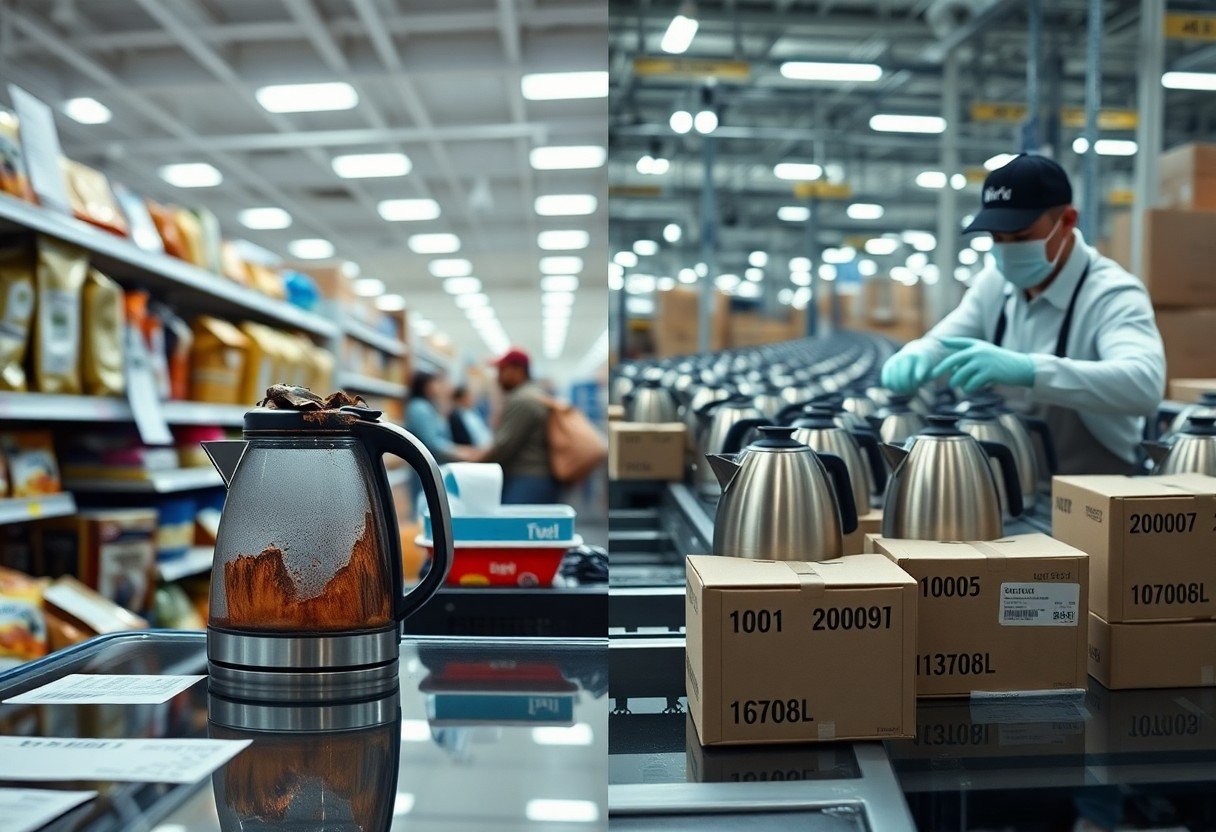
With product injuries or defects, you need to understand how liability may fall on a manufacturer, a retailer, or both, depending on design, manufacturing, distribution, and warnings; you should assess evidence of defect, negligence, breach of warranty, and the chain of commerce to determine whom to hold accountable and how your legal remedies may differ by jurisdiction.
Key Takeaways:
- Manufacturers commonly face strict liability for design, manufacturing, and warning defects; injured parties often need not prove negligence to recover.
- Retailers and distributors can be liable when they knew or should have known of a defect, failed to inspect, altered the product, or breached implied warranties.
- Liability may be joint and several across the supply chain, so plaintiffs frequently sue manufacturers, distributors, and retailers to secure recovery.
- Contracts, warranties, and indemnity clauses frequently shift financial responsibility among manufacturers, wholesalers, and retailers.
- Defenses include product misuse, compliance with applicable standards, lack of causation, and statutes of limitations; evidence tying the defect to design, manufacture, or distribution determines fault.
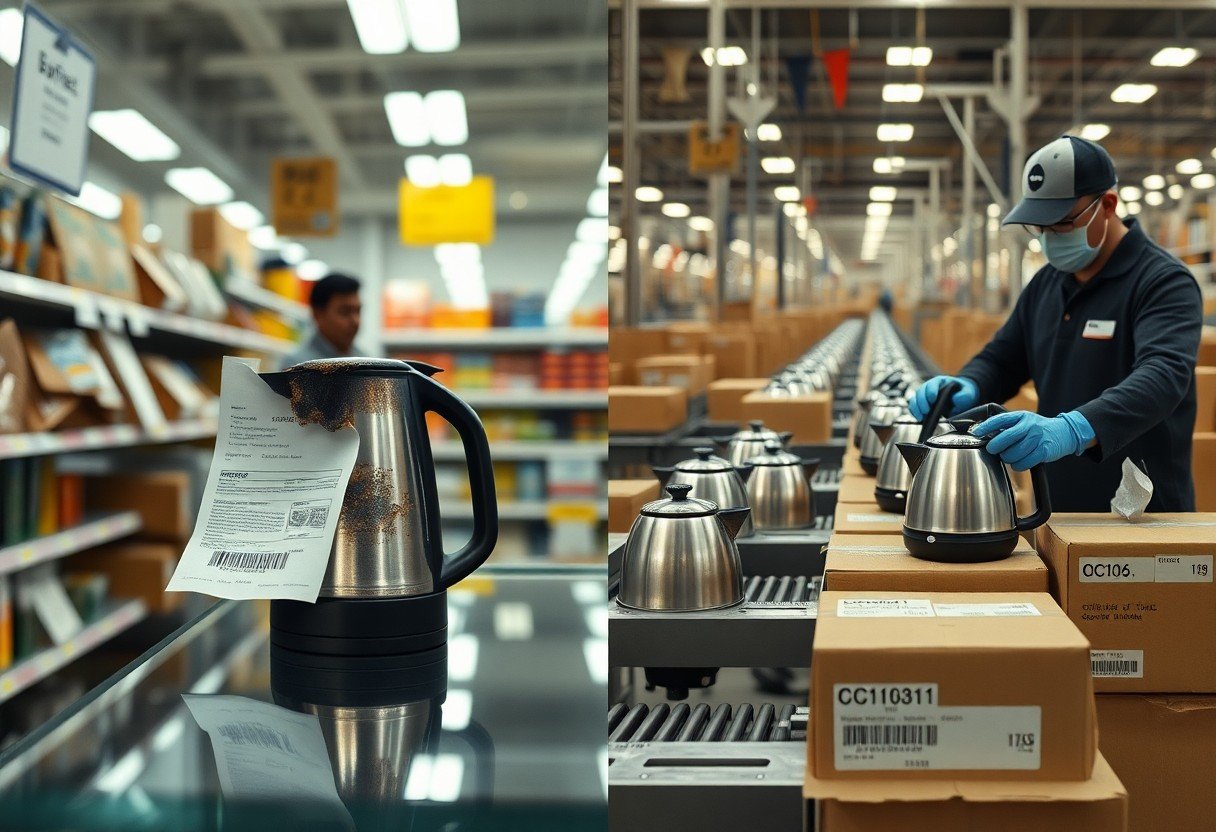
Understanding Retailer Liability
When you sell goods or operate a storefront, liability often reaches beyond the manufacturer to encompass your policies, inspections, and warnings. Retailer responsibility can be imposed under strict product liability, negligence, breach of warranty, and premises-liability doctrines, and plaintiffs commonly name both retailer and maker so recovery remains possible if the manufacturer is insolvent or out of jurisdiction.
Definition and Scope
You are liable when your conduct or omissions contribute to consumer harm-this covers selling a defective item, failing to remove recalled stock, improper labeling, or not remedying a hazardous condition on-site. Strict liability treats you as part of the commercial chain regardless of fault, while negligence requires proof that you breached a duty of care; warranty claims create contractual exposure when products don’t perform as sold.
Common Scenarios of Retailer Liability
Typical situations include offering recalled products, selling items with manufacturing defects (like batteries that overheat), providing inadequate or altered warnings, negligent store maintenance leading to slip-and-fall injuries, and security failures causing customer assaults. Marketplace platforms face added risk when third-party sellers present products through your storefront, since courts often connect liability to the entity presenting the product to consumers.
For example, retailers sued over 2019 infant sleeper recalls faced allegations they failed to quarantine or warn customers after notice; some courts have treated post-recall inaction as negligence. You can mitigate exposure by documenting recall removals, keeping inspection logs, training staff on hazard response, and auditing third-party listings-measures that empirical loss-control programs show reduce claim frequency and severity.
Understanding Manufacturer Liability
Definition and Scope
Manufacturer liability holds the party that designed, manufactured, or assembled a product responsible when defects cause injury or loss; you can face claims under strict liability, negligence, or breach of warranty. Courts examine the product’s intended use, applicable federal standards (e.g., CPSC rules), and adequacy of warnings. If you label, modify, or import the item, your exposure broadens and regulators or class-action plaintiffs may target your business.
Types of Manufacturer Liability Claims
Claims typically allege design defects, manufacturing defects, failure to warn, breach of warranty, or negligent testing and quality control. You’ll see how failures scale: the Takata airbag recall impacted over 60 million vehicles worldwide and Samsung’s Note 7 battery defects prompted a ~2.5 million‑unit recall, showing how design or component faults drive massive liability and regulatory action.
| Design defect | Defect present across a model; you may face recalls and redesign obligations (e.g., Takata airbags). |
| Manufacturing defect | Isolated production error; you should produce batch records, QC logs, and inspection reports. |
| Failure to warn | Inadequate instructions or labeling; you must compare warnings to OSHA/CPSC norms and incident histories. |
| Breach of warranty | Express or implied warranty claims when product fails to meet promised performance; you handle repairs, replacements, or damages. |
| Negligent testing/QA | Omitted or flawed tests; you need test protocols, lab reports, and third‑party audit findings to defend or attack causation. |
To prove a manufacturer claim, you must show the defect existed when the product left the manufacturer and that it caused your injury; courts typically require expert analysis, failure‑rate statistics, and production documentation. You should preserve the product, serial numbers, and chain‑of‑custody evidence immediately, because timely testing and preserved records often determine whether you can link harm to a specific design, batch, or omission.
- Preserve the product, packaging, and any serial or lot numbers you can find.
- Collect photos, usage logs, and witness statements that document how the product was used.
- Secure medical records, repair invoices, and any prior complaints tied to the same SKU.
- Obtain production and QC records, test reports, and supplier invoices to trace responsibility.
- Recognizing the time‑sensitive nature of evidence, you must notify counsel and halt disposal or repairs immediately to protect your claim.
Factors Influencing Liability
Several variables shift responsibility: where a defect originated, whether warnings were adequate, who modified or repaired the item, and applicable statutes of limitations (often 2-6 years for personal injury claims).
- Design vs. manufacturing origin
- Warning adequacy and label accuracy
- Post-sale modifications or repairs
- Length and documentation of the distribution chain
- Contractual indemnities between parties
Assume that you review resources like Product Liability FAQs for jurisdiction specifics.
Product Defects
You should distinguish design defects (flaws inherent to the model) from manufacturing defects (errors in a specific unit); courts apply strict liability to manufacturers in most states, making them primary targets, while retailers are liable if they sold an altered or obviously dangerous product. For example, if a smartphone battery explodes due to a manufacturing fault traced to an assembler, you’ll typically sue the manufacturer and any distributor who failed to inspect or warn.
Negligence and Misrepresentation
You can pursue negligence by proving duty, breach, causation and damages, and misrepresentation by showing false statements you relied on; negligent mislabeling or a seller’s false safety claim on packaging can expose both manufacturer and retailer to liability, with damages covering economic loss and personal injury, and punitive awards possible where recklessness is shown.
In practice you often need documentary proof-test reports, QC records, emails or warranty disclaimers-and expert testimony to link defect to injury, especially for complex products; comparative-fault rules may reduce your recovery if you contributed, while indemnity clauses and federal preemption (e.g., certain FDA-regulated devices) can shift or limit who ultimately pays.
Comparative Liability: Retailers vs Manufacturers
You frequently find retailers liable for failure to inspect, warn, or honor express warranties, while manufacturers are typically targeted for design or manufacturing defects and inadequate warnings. Courts focus on your level of control, access to internal design data, and contractual terms; evidence such as purchase records, testing reports, and distribution logs often shifts responsibility toward the party with greater control over the defect.
Comparative Summary
| Retailer | Manufacturer |
|---|---|
| Liability basis: negligent sale, breach of warranty | Liability basis: design/manufacturing defect, failure to warn |
| Typical defenses: lack of knowledge, mere reseller | Typical defenses: state-of-the-art, warning sufficiency |
| Evidence focus: handling, storage, sales records | Evidence focus: design specs, quality control, testing |
| Practical remedies: refund, recall participation | Practical remedies: redesign, large-scale recalls, indemnity |
Legal Precedents and Case Studies
When you assess precedents, Donoghue v Stevenson (1932) established the modern duty of care, Greenman v Yuba Power Products, 59 Cal.2d 57 (1963) entrenched strict product liability in the U.S., and Restatement (Second) of Torts §402A (1965) provided doctrine many courts follow; these authorities determine whether your claim targets the manufacturer, the retailer, or both.
- Donoghue v Stevenson, [1932] AC 562 (HL) – foundation for manufacturer duty of care across common-law jurisdictions.
- Greenman v. Yuba Power Products, 59 Cal.2d 57 (1963) – California adopted strict liability for defective products, influencing U.S. state courts.
- Restatement (Second) of Torts §402A (1965) – codified strict liability for sellers; widely cited in U.S. appellate decisions.
- Escola v. Coca‑Cola Bottling Co., 24 Cal.2d 453 (1944) – Traynor’s concurrence advocated strict liability later adopted widely.
- EU Product Liability Directive 85/374/EEC (1985) – imposed producer strict liability across member states; prompted increased manufacturer litigation in the following decade.
Jurisdictional Variations
Where you bring a claim matters: some jurisdictions impose statutory strict liability (many U.S. states, EU Directive), others emphasize negligence or warranty frameworks, and procedural rules like notice periods or damage caps can shift exposure from manufacturers to retailers or vice versa, so your strategy must align with local law.
For example, you’ll see most U.S. states apply §402A-derived strict-liability principles after Greenman, while courts in the UK and Commonwealth weigh negligence and consumer-protection statutes alongside common law; the EU’s Directive 85/374/EEC uniformly assigns producer liability but leaves national rules on implementation, affecting how your claims are framed and who you name as defendants.
Risk Management Strategies
You should combine contractual indemnities, supplier audits every 6-12 months, and end-to-end traceability to reduce exposure; for example, require batch-level GS1 barcodes and retain 1% sampling or 100 units per lot for 24 months. Implement a recall playbook with defined roles and 48-hour notification targets to regulators and retailers, and use corrective action metrics (CAPA closure within 30 days) to drive continuous improvement.
Insurance Considerations
You need layered coverage: primary product liability (commonly $1M per occurrence/$2M aggregate), directors and officers for governance risks, and standalone recall/contamination policies that can range from $500k to $10M depending on product category. Expect premiums of roughly 0.5-3% of annual revenue for consumer goods; higher for toys, electronics, or medical devices. Negotiate insurers’ subrogation and named-insured clauses to protect contractual recoveries.
Best Practices for Compliance
You must maintain documented quality systems (ISO 9001 or ISO 13485 for medical devices), pre-market testing records, and supplier qualification files; require third-party test reports (UL, CE, FDA 510(k) where applicable) and enforce corrective action timelines. Use electronic batch records, annual tabletop recall drills, and integrate compliance KPIs into supplier scorecards to ensure sustained adherence.
You can learn from high-profile recalls-Samsung’s 2016 Note7 loss exceeded $5 billion-to justify investments in pre-release testing and supplier control. Apply FDA recall classifications (Class I/II/III) to prioritize risks, conduct annual on-site audits plus quarterly remote reviews for critical suppliers, and keep CAPA logs and retention samples for at least two years to expedite investigations and limit liability.
Final Words
Conclusively, who is responsible depends on defect type, role in the supply chain, and your jurisdiction; manufacturers often bear liability for design or production defects, retailers can be liable for negligent inspection, improper storage, or failing to warn, and both may share fault where evidence supports it. To protect your claim you should preserve evidence, document your injuries, and consult an attorney to advise you.
FAQ
Q: How is liability allocated between a retailer and a manufacturer?
A: Liability depends on legal theory and the role each party played. Manufacturers are typically responsible for design and manufacturing defects and for providing adequate warnings. Retailers can be liable under strict liability if they sell a defective product, under negligence if they fail to exercise reasonable care in storage, inspection, or sale, or under breach of warranty as the seller. Courts often allow claims against any party in the distribution chain so injured parties can recover from the most practical source of compensation; allocation among defendants may be determined later through contribution or indemnity.
Q: Can both a retailer and a manufacturer be held responsible for the same injury?
A: Yes. Multiple defendants can be jointly or severally liable when their actions combined to cause harm. For example, a design defect by the manufacturer and negligent repackaging by the retailer can both contribute. State law governs whether liability is joint and several or allocated by comparative fault. Contracts between retailer and manufacturer (indemnity clauses) may shift financial responsibility, but those agreements do not bar a plaintiff’s suit against either party.
Q: How do different defect types affect who is likely to be liable?
A: Defect type matters: manufacturing defects (errors in making a product) are usually the manufacturer’s responsibility; design defects (unsafe design choices) are typically attributable to the manufacturer or designer; failure-to-warn or labeling defects often fall to the manufacturer, but a retailer who alters packaging, fails to pass on warnings, or sells without required notices can also be liable. If a retailer sells an expired, contaminated, or altered item, or conceals a known hazard, liability can attach to the retailer even when it did not make the product.
Q: What does a consumer need to prove to establish liability against a retailer or manufacturer?
A: The consumer must show: (1) the product was defective under the applicable legal standard (design, manufacture, or warning), (2) the defect existed when the product left the defendant’s control or that the defendant’s conduct caused the defect, (3) causation linking the defect to the injury, and (4) measurable damages. Evidence can include the product itself, photos, medical records, expert testimony, purchase receipts, and maintenance/use history. The required proof and standards (strict liability, negligence, warranty) vary by jurisdiction.
Q: How can retailers limit liability, and what steps should consumers take after an injury?
A: Retailers can reduce risk by enforcing supplier vetting, requiring indemnity and insurance from manufacturers, keeping quality-control and inspection records, training staff, maintaining recall procedures, preserving original packaging and warnings, and avoiding unlawful disclaimers. Consumers should preserve the product and packaging, document the scene and injuries, seek medical care, keep purchase records, report the incident to the seller and appropriate regulatory agency (e.g., CPSC or FDA), and consult an attorney promptly because statutes of limitations and preservation of evidence can be time-sensitive.