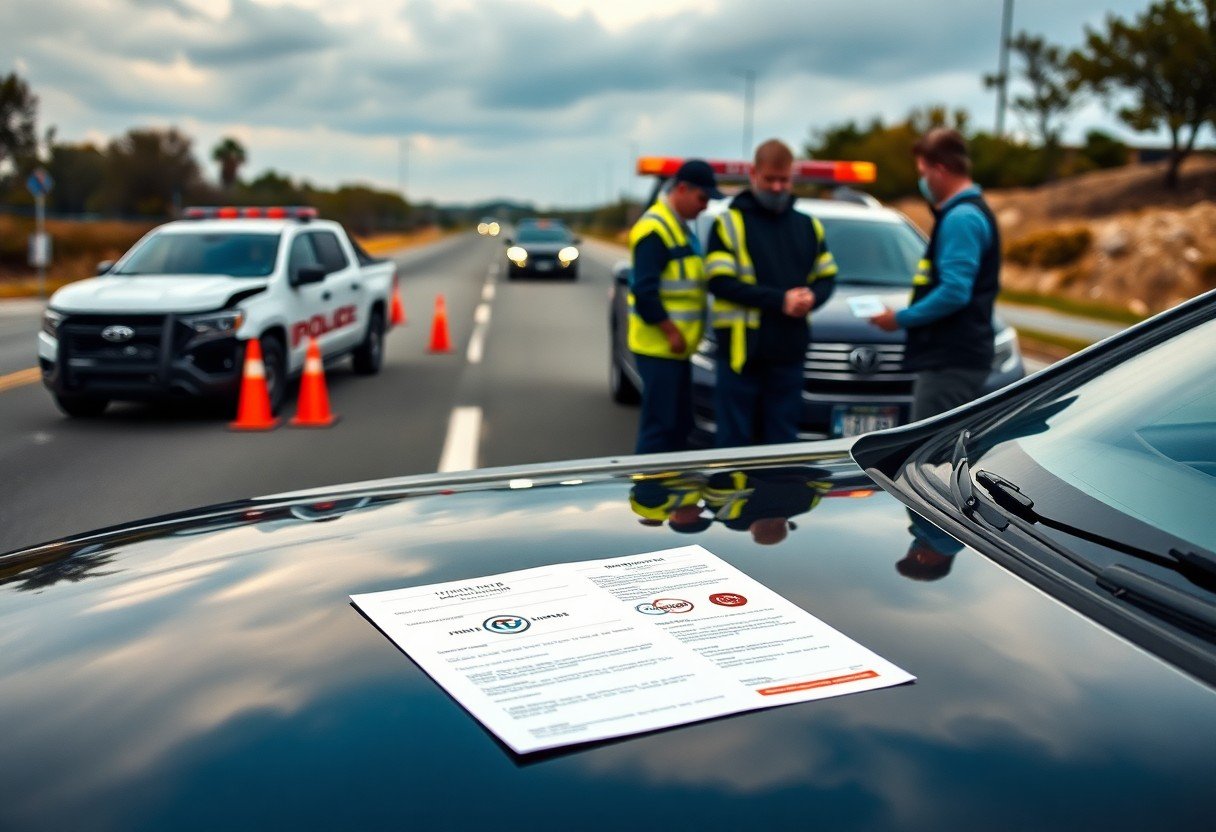
Workplace vehicle accidents can create overlapping insurance obligations, and you must know which policies respond first. This post explains how workers’ compensation, your personal auto policy, and an employer’s commercial auto coverage interact, how liability and medical payments differ, and when one carrier becomes primary or secondary. Understanding these basics helps you protect your rights, speed claims processing, and avoid gaps or duplicate coverage after an on-the-job collision.
Key Takeaways:
- Employer commercial auto liability usually responds first for work-related driving; personal auto policies often act as excess or may deny coverage for work use.
- Workers’ compensation covers employee injury on the job regardless of fault, while auto liability addresses third-party claims and vehicle/property damage.
- Permissive use, dual-purpose trips, and commuting exclusions dictate whether a personal policy contributes; specific policy language controls overlap.
- Insurers coordinate benefits, pursue contribution or subrogation, and assess priority-timely notice and cooperation preserve recovery rights.
- After a crash: report promptly to employer and insurers, secure police and medical records, document vehicle damage, and consult coverage counsel if disputes arise.
Understanding On-the-Job Vehicle Accidents
You must handle on-the-job vehicle accidents knowing they frequently trigger overlapping coverage: motor-vehicle incidents account for roughly 40% of workplace fatalities, and claims often pull in workers’ compensation, commercial auto, and general liability policies, complicating liability allocation and claim timelines.
Definition and Types of On-the-Job Vehicle Accidents
You can categorize incidents by who is driving and whose vehicle is involved: employer-owned, employee-owned on company business, hired/non-owned, contractor-operated, and pedestrian or property strikes. The classification determines which insurer you target first and the likely subrogation and defense strategy.
- Employer-owned vehicle – you drive a company fleet vehicle.
- Employee’s personal vehicle – you use your car for work errands or deliveries.
- Hired/non-owned vehicle – you rent or lease a vehicle for business tasks.
- Contractor/third-party vehicle – you work with subcontractors who supply vehicles.
- Parking, loading dock, and pedestrian strikes – you face varied liability exposures.
| Employer-owned | You drive a company van – commercial auto often leads, workers’ comp covers your injuries. |
| Employee personal | You use your car for deliveries – your personal policy and the employer’s CGL may dispute primacy. |
| Hired/non-owned | You rent a truck – hired auto or rental coverage can be primary for physical damage. |
| Contractor-operated | A subcontractor causes a crash – their insurer is normally the first responder for liability. |
| Pedestrian/property strike | You strike a pedestrian on site – both auto and premises policies may be implicated. |
Common Causes and Statistics
You see distraction in roughly 20-30% of work-vehicle crashes, speeding in about 25-30%, plus fatigue, vehicle maintenance failures, and improper loading; delivery, ride-hail, and construction drivers typically report higher claim frequencies than office-based staff.
When you dig deeper, studies of urban delivery fleets show annual claim frequencies often above 10-15% and average paid claims in the low tens of thousands; you should expect coverage disputes to extend investigations by weeks, increase defense costs, and reduce net recoveries through subrogation.

Types of Insurance Coverage
| Personal Auto | Liability limits like 50/100/25 are common; collision/comprehensive with $500 deductibles; often excludes routine business use. |
| Commercial Auto | Designed for business vehicles and drivers; primary liability often $500,000-$1,000,000; required for GVWR >10,000 lbs or regular deliveries. |
| Hired & Non-Owned Auto (HNOA) | Covers liability when you rent vehicles or employees use personal cars for company tasks; typically backed by $1M umbrella limits. |
| Employer/Vicarious Liability | Employers can be liable for employee driving within scope of work; fleets and delivery operations increase exposure and claim frequency. |
| Workers’ Compensation | Pays medical and lost wages when injuries arise out of employment; interplay with auto coverage matters when determining primary payer. |
- Check business-use endorsements and named-driver exclusions on personal policies.
- Verify GVWR and cargo exposures to determine commercial-class requirements.
- Compare primary vs. excess wording when you have HNOA or umbrella layers.
- Track mileage and driver lists monthly to support underwriting and claims.
Personal Auto Insurance
You typically carry 50/100/25 liability limits, collision and comprehensive with a $250-$1,000 deductible, and optional MedPay or PIP; if you use your car for scheduled deliveries or regular client visits, your carrier often excludes those losses, and a denied claim can force you to rely on employer coverage or out-of-pocket payments.
Commercial Auto Insurance
You should expect commercial policies to name your business as insured, include higher liability limits (commonly $500,000-$1,000,000), and cover employee drivers on-the-job; fleets, heavy trucks over 10,000 lbs GVWR, or vehicles carrying goods typically trigger commercial classification and different premiums and endorsements.
You also need to watch endorsements like hired/non-owned, employee use clauses, and drive-other-car wording; for example, a courier with three vans may buy primary commercial liability and a $1M umbrella, while a salesperson who occasionally uses a personal car will often need HNOA or business-use endorsement to avoid gaps in payment for bodily injury and property damage claims.
Thou should confirm your endorsements and coordination of primary versus excess coverage so you do not face uncovered losses when an on-the-job collision occurs.
Coverage Overlap Scenarios
Employee vs. Employer Liability
When an employee injures a third party while driving on your business, you often face vicarious liability under respondeat superior if the act occurred within the scope of employment. In practice insurers allocate primary responsibility to the employer’s commercial auto policy for sales routes, deliveries, or scheduled pickups. For example, a delivery driver making 8 stops per day will typically trigger the employer’s policy rather than the driver’s personal auto policy.
When Multiple Policies Apply
When multiple policies potentially apply, you can expect a primary/excess determination, pro-rata contribution, or insurer litigation over allocation. If your employee uses a personal vehicle for work-related errands, the employer’s commercial policy commonly acts as primary; the employee’s PAP becomes excess. A $150,000 liability claim might see the primary insurer pay first and the excess insurer cover remaining limits or contribution based on policy language and state law.
Insurers frequently file declaratory judgment actions when allocation is contested, so you should expect litigation risk and subrogation demands. If the employer’s policy limit is $1,000,000 and the employee’s PAP limit is $100,000, the larger policy will often shoulder defense obligations and most payouts; the smaller insurer may reimburse defense costs or settle contributions later. Documenting work instructions, mileage logs, and dispatch records immediately improves your position in allocation disputes.
Filing Claims After an Accident
After an on-the-job accident you should act fast: notify emergency services if needed, file a police report at the scene or within 24 hours, and tell your employer and both personal and commercial insurers within 24-72 hours to preserve coverage. Provide clear details about vehicle use (delivery, commute, errand) since that determines which policy responds. Keep all claim numbers and note points of contact to avoid duplicate denials or delayed payments.
Reporting Procedures
If injuries or hazards exist call 911 first, then file a police report and get the report number. Next, notify your supervisor and submit an incident report per company policy-many fleets require notification within 24 hours and a written report within 72. Contact insurers via phone or their app to create a claim and obtain a claim number. Provide route details, cargo or passengers, and any dispatch or job order numbers to clarify coverage responsibility.
Documentation Requirements
Collect photographic evidence (8-12 images: scene, vehicle damage, skid marks, signage), a copy of the police report, witness statements with contact info, your driver log or GPS telematics timestamps, vehicle registration, insurance cards, odometer reading, and any delivery manifests or job orders. For injuries include medical reports, bills, and work-status notes you receive. Insurers commonly flag missing police reports or inconsistent GPS logs as reasons for delay or denial.
Organize your files with clear filenames and timestamps, upload them to your insurer’s portal or a shared company folder within 48-72 hours, and preserve originals. If you have dashcam or telematics data export the raw file and save a screenshot of the playback to prove authenticity. For example, a courier’s claim was approved after the driver submitted GPS route logs, a signed manifest, and a dashcam clip showing the stop sequence, resolving disputed liability within two weeks.
Implications for Employers and Employees
When a work-related crash occurs, your workers’ compensation often covers medical costs while the employer’s commercial auto policy addresses third-party liability, producing overlap that can delay payments for weeks to months as insurers sort responsibility. You should document assignments, mileage, and authorization, and consult the Work-Related Car Accident Coverage Guide – Legal Insights to align reporting, benefits, and defense strategies promptly.
Liability Considerations
Whether you or your employer faces liability turns on scope of employment, negligence, and vehicle ownership-courts apply respondeat superior when an employee acts within job duties. You must evaluate negligent hiring, training gaps, and maintenance failures; for example, courts have assigned employer liability when a delivery driver lacked route supervision. Keep detailed logs to shift or limit exposure.
Preventive Measures and Best Practices
You can reduce overlap and exposure by implementing written driving policies, mandatory annual driver training, routine MVR checks, and telematics for trip verification. Insist on Hired and Non-Owned Auto coverage for contractors, set vehicle maintenance intervals, and require incident reporting within 24-48 hours to preserve coverage positions.
You should start with a fleet audit to identify coverage gaps, then set specific controls: require drug/alcohol testing, annual defensive-driving courses, MVR reviews every 6-12 months, maintenance records every 5,000-7,500 miles, and GPS logs retained for 90 days. Negotiate indemnity and insurance clauses in contractor agreements, raise liability limits for high-risk routes, and assemble an on-call claim-response team to file timely notices and collect witness statements, reducing insurer disputes and speeding resolution.
Legal Considerations
Expect overlapping liability rules when a vehicle accident occurs during work: you must weigh respondeat superior, workers’ compensation exclusivity, and separate commercial auto coverage with limits commonly between $500,000-$2,000,000 for fleets. Federal FMCSA/DOT rules apply to interstate carriers while state statutes govern tort claims and comp benefits; subrogation, indemnity clauses, and contractual hold-harmless terms often shift financial responsibility among employers, drivers, and insurers.
Relevant Laws and Regulations
Federal and state law intersect in coverage disputes, so you should monitor FMCSA and DOT rules for commercial drivers, state workers’ compensation statutes that can bar tort suits, and doctrines like respondeat superior or the dual-purpose rule allocating employer liability. Statutes of limitations typically range from one to six years depending on jurisdiction, which affects how quickly you must preserve claims and evidence.
Consulting Legal Experts
Engage counsel experienced in insurance coverage, workers’ comp, and transportation law as soon as a liability or coverage conflict arises; you can often get a free initial consult, and specialist hourly rates commonly fall between $200-$500 or can be handled on contingency for claimants. Attorneys will issue coverage opinions, demand reserve adjustments, or file declaratory relief to protect your interests.
Prepare documentation before meeting counsel: police reports, policy numbers, payroll and dispatch records, GPS/ELD logs, dashcam footage, training and hiring files, plus insurer correspondence. You should expect attorneys to request reservation-of-rights letters, coverage position statements, and to pursue subrogation or contribution; often electronic evidence such as ELD or dashcam footage resolves coverage questions within days of formal discovery requests.
Conclusion
With this in mind, when a vehicle accident occurs on the job you should quickly determine which policies-your employer’s commercial auto, your personal auto, and workers’ compensation-apply, identify primary versus secondary coverage, notify insurers, and coordinate claims to avoid gaps or duplicate payments; proactive documentation and clear communication ensure you secure proper liability protection and timely benefits under overlapping coverages.
FAQ
Q: How do workers’ compensation and auto insurance interact when an employee is injured while driving on the job?
A: Workers’ compensation typically provides the employee’s medical and wage-replacement benefits regardless of fault. Commercial auto liability covers the employer’s legal liability to third parties and often covers employees as insureds when driving a company vehicle. If a third party caused the crash, the workers’ comp carrier may exercise subrogation rights against the at-fault party’s auto insurer. Personal auto policies often exclude coverage for accidents that occur in the course of employment, so the injured employee’s personal policy may be secondary or inapplicable; state law and specific policy language determine priority.
Q: Which policy is primary when an employee drives a company vehicle versus when using a personal vehicle for work?
A: When the employee drives a company-owned or leased vehicle, the employer’s commercial auto policy is normally primary for liability and physical damage. When the employee uses a personal vehicle for work tasks, the employee’s personal auto policy is often primary for liability to third parties unless the policy has a business-use exclusion; the employer’s hired and non-owned auto (HNOA) or commercial policy may be excess or contribute depending on endorsements and state rules. Control, assignment of the vehicle, and whether the trip was within the scope of employment can shift priority, so the exact order depends on policy terms and applicable law.
Q: How do uninsured/underinsured motorist (UM/UIM) and medical payments coverages apply to on-the-job vehicle accidents?
A: UM/UIM availability depends on which policy applies and whether a business-use exclusion exists. An employee’s personal UM/UIM may be barred if the policy excludes business use; conversely, a commercial policy that includes UM/UIM can protect employees on employer business. Medical payments (MedPay) often provide immediate, no-fault medical expense coverage but may coordinate with workers’ comp benefits-workers’ comp can be primary for employee medical care and may limit or preclude MedPay recovery under some state rules. Policy language and state statutes govern interaction and stacking rules.
Q: What actions preserve coverage and subrogation rights after an on-the-job vehicle accident?
A: Promptly notify all relevant insurers and the employer, obtain and preserve the police report and witness information, document who had control of the vehicle and the work assignment, seek and document medical treatment, avoid admissions of fault, preserve vehicle and scene evidence, and cooperate with insurer investigations. Employers should preserve payroll and assignment records that establish scope of employment. Timely notice preserves coverage defenses and protects subrogation and reimbursement rights between carriers.
Q: How can employers reduce coverage overlap and fill gaps for employees who drive while working?
A: Maintain commercial auto liability and physical-damage policies for company vehicles, purchase hired-and-non-owned (HNOA) and non-owned liability endorsements, include or endorse employees as insureds where appropriate, require evidence of minimum personal auto limits and business-use riders for employees who use personal vehicles, obtain indemnity and primary/waiver-of-subrogation endorsements from contractors, implement clear vehicle-use policies and driver screening, require reporting procedures, and coordinate UM/UIM and MedPay options to match risk. Regularly review policy declarations and endorsements to close gaps and specify which policy is primary.