With crosswalk encounters you must understand right-of-way rules, how they vary by jurisdiction, and what actions protect your safety and legal position; you should document scene details, collect witness information, photograph skid marks, vehicle positions and injuries, and preserve clothing and medical records, while promptly reporting to police and consulting an attorney to ensure your evidence is preserved and your rights are protected.
Key Takeaways:
- Pedestrian right-of-way: pedestrians in marked crosswalks are typically granted right-of-way and drivers must yield, but statutes vary by jurisdiction.
- Secure and document the scene: photograph crosswalk markings, signage, traffic signals, lighting, vehicle positions, skid marks, and nearby cameras; collect witness names and contact details.
- Preserve electronic evidence: obtain vehicle event data recorder (EDR) information, dashcam or surveillance footage, and relevant phone records or app timestamps.
- Document injuries and losses: obtain prompt medical evaluation, retain medical records and bills, repair estimates, and proof of lost wages.
- Liability factors: visibility, lighting, weather, driver speed or impairment, signaling, and pedestrian actions (including jaywalking) all affect fault determinations.
Understanding Right-of-Way Laws
You should know that right-of-way rules determine who must yield and strongly influence liability and evidence needs after a crosswalk incident. In many jurisdictions marked crosswalks and pedestrian signals give you legal priority, while unmarked crossings and intersections without controls create gray areas; that distinction guides which witnesses, citations, and scene measurements you should gather.
Definition of Right-of-Way
Right-of-way means the legal entitlement to proceed in a traffic situation; for you, it defines whether drivers had a legal duty to yield. Statutes and ordinances assign that duty-often placing it on motorists when a pedestrian is in a marked crosswalk or has a pedestrian signal-and courts evaluate who had lawful precedence when apportioning fault.
Factors Affecting Right-of-Way in Crosswalks
Several concrete factors change who has right-of-way: whether the crossing is marked or signalized, presence of stop or yield signs, a driver’s turning movement (especially right on red), road speed and sightlines, and pedestrian behavior like stepping outside a crosswalk. Each factor affects legal duties and what evidence-video, signal timing, or speed estimates-you need to support your claim.
- Marked vs unmarked: painted crosswalks and advance signage typically strengthen your priority.
- Traffic devices: pedestrian signals, stop signs, and school zone controls can override informal right-of-way expectations.
- Driver actions: turning, accelerating, or failing to signal often weighs against the motorist.
- Visibility: darkness, weather, and obstructions such as parked trucks reduce reaction time and shift fault analysis.
- Recognizing how a single factor, like a right-on-red, can change liability helps you focus evidence collection.
You should document specific, measurable details: note the signal phase and exact time (municipal traffic logs can confirm timing), photograph skid marks and distances (a car length is roughly 15 ft), record lighting and weather, and get witness statements about speed or whether the driver attempted to stop. If a driver claimed obstruction, measure sightlines from the driver’s perspective and mark object locations with tape or cones.
- Collect signal timing data from city records to verify whether the pedestrian had a full walk phase.
- Measure distances from curb to vehicle final position and take wide-angle photos showing context.
- Obtain repair estimates or dealer reports to corroborate impact location and force.
- Time-stamp phone photos and secure nearby surveillance footage for objective sequence evidence.
- Recognizing which pieces of evidence most directly tie to a specific factor speeds resolution and strengthens your case.
Common Causes of Crosswalk Accidents
You’ll see most crosswalk crashes stem from a handful of patterns: speeding, poor lighting, unclear markings, and conflicts over right-of-way-factors that make pedestrians about 17% of U.S. traffic fatalities. When you’re sorting evidence, check sight lines, lighting, and skid marks; for legal context about who must yield, review Crosswalk Accidents: Who Has the Right of Way?
Driver Negligence
You should look for distraction, impairment, and speeding as leading causes: drivers running red lights, failing to yield on turns, or not scanning crosswalks. At 30 mph your stopping distance can exceed 70 feet, so delayed reactions or phone use often make collisions unavoidable; examine dashcam, cell records, and vehicle event data recorder (EDR) downloads to document these failures.
Pedestrian Errors
You contribute to risk when you jaywalk, cross against signals, or use a phone while stepping into traffic; misjudging vehicle speed or assuming drivers see you leads to many close calls and collisions. Crosswalk compliance and clear sightlines often prevent escalation from near-miss to injury.
For deeper analysis, document where you crossed relative to markings, whether crosswalk signals were functioning, and visibility conditions-streetlight outages, parked cars blocking sightlines, or heavy rain. Collect witness statements and your own photo timestamps, note clothing or distractions, and log any steps you took to make eye contact; those details often distinguish negligent drivers from risky pedestrian behavior.
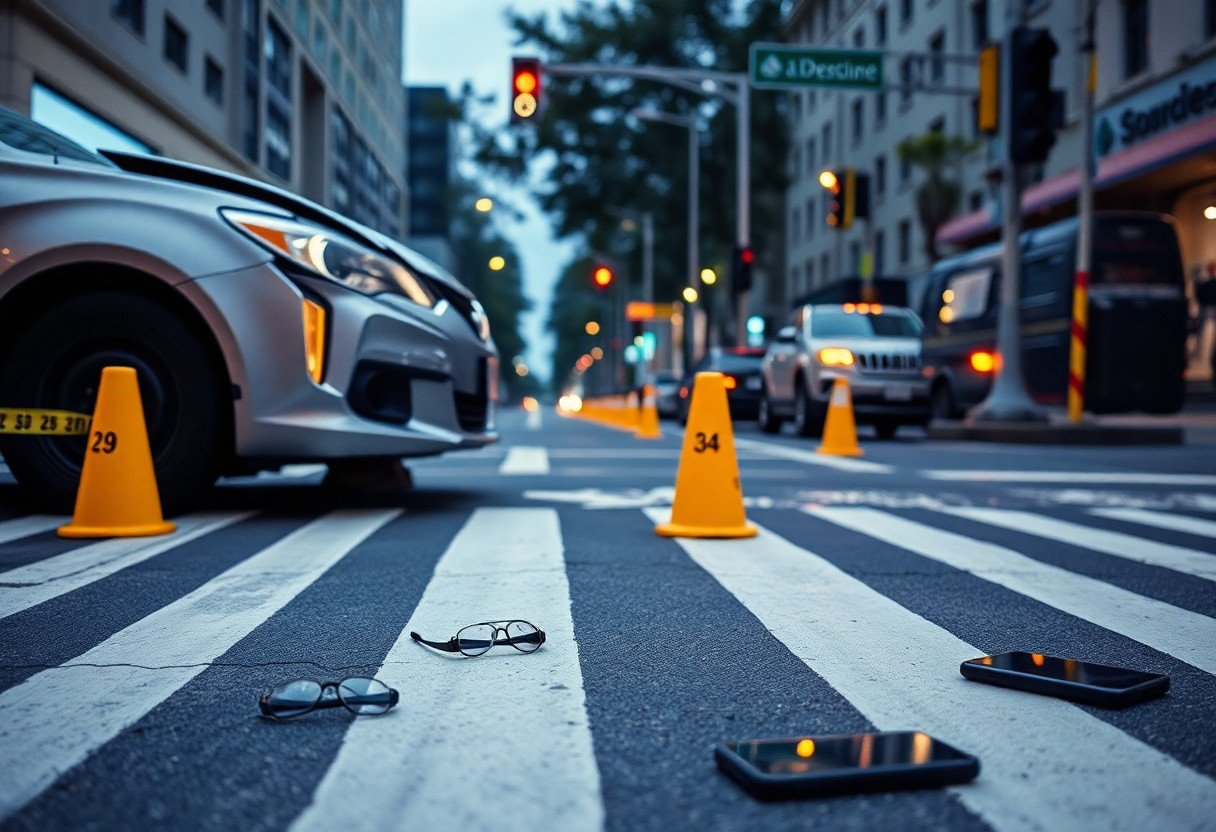
Importance of Evidence in Crosswalk Accidents
When you preserve evidence quickly you lock in facts that prove right-of-way, speed and visibility: photos with timestamps, video, skid-mark lengths in feet, witness contact details and vehicle event data (EDR). Acting within 24-72 hours is common advice because CCTV and phone footage are often overwritten and markings fade; prosecutors and insurers regularly rely on measurable data-like a 12‑ft skid or a dashcam timestamp-to assign liability, so your prompt collection can mean the difference between a settled claim and no recovery.
Types of Evidence
You should collect photographic/video evidence, physical scene marks, witness statements, vehicle electronic data, and official records (police and medical). Each type serves a different purpose: photos and video show position and lighting, skid marks and debris map movement, witnesses supply subjective behavior, EDR gives speed and braking data, and reports create an official timeline and injuries documented in medical records.
- Photographs and video: wide and close shots, timestamps, plate and VIN images.
- Physical evidence: skid-mark length (feet), paint transfer, clothing or debris location.
- Witness statements: names, phone numbers, short recorded accounts.
- Official records: police report number, EMS run sheet, hospital intake notes.
- Assume that you will need the vehicle’s EDR/dashcam data (often 30-60 seconds of pre/post‑impact) pulled quickly to preserve speed and brake inputs.
| Photographs / Video | Timestamps, multiple angles, license plate, crosswalk and lighting; phone and dashcam footage preserved within days |
| Physical Marks | Skid-mark length (feet), paint transfer, debris field and final rest positions to map trajectories |
| Witness Accounts | Names, contact info, short signed statements and consistency across 2-3 witnesses strengthen credibility |
| Vehicle Data (EDR) | Speed, brake/throttle/brake status and seconds of pre/post-impact data; request within days before loss |
| Official Records | Police report number, citations, EMS and hospital records documenting injuries and timelines |
Gathering Evidence at the Scene
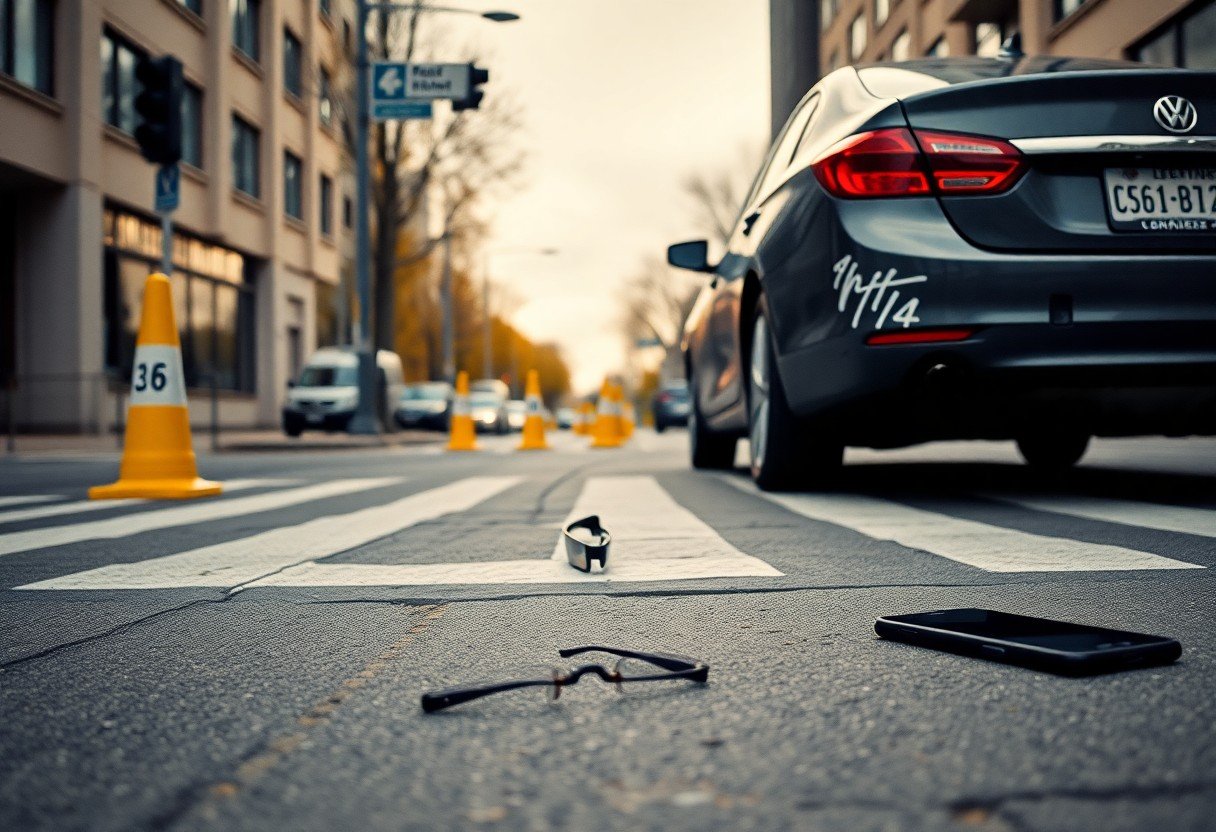
You should secure the scene, photograph the crosswalk and surrounding approach from multiple distances, record lighting and signage, measure skid marks in feet, get 3+ witness contacts, and note the vehicle’s plate and visible damage; if police respond, obtain the report number and officer name before leaving.
After initial photos, walk methodically: take a wide panorama, then 3-5 close shots of each focal point (plate, damage, paint, injuries). Use a measuring tape or phone app to log distances (skid mark 14 ft, pedestrian stop 6 ft from curb), note sun angle and weather, and record short video narration describing positions. Immediately request nearby CCTV from businesses and ask EMS/PD for the incident number-EDR pulls and CCTV are time-sensitive, so log who you contacted and the time you did it.
The Role of Traffic Signals and Signs
Traffic signals and signs assign and clarify right-of-way: pedestrian WALK indications, vehicle green lights, and marked crosswalk signs change who may legally proceed. You should note signal type – protected phase, permissive turn, or hybrid – because timing and phasing determine liability; for example, a protected left-turn arrow gives drivers exclusive right to move while a permissive arrow requires yielding to pedestrians and oncoming traffic.
Impact on Right-of-Way
When a pedestrian signal displays WALK, you have statutory right-of-way in many jurisdictions; conversely, a flashing DON’T WALK often signals the clearance interval when vehicles may legally enter if they began during steady green. You must also watch for sign-based yield requirements and marked vs. unmarked crosswalks, since a vehicle entering on a green while a pedestrian has a WALK or steady signal will typically bear primary fault.
Legal Implications for Violations
Violating signal or sign-controlled right-of-way can produce criminal charges, civil liability, and traffic citations; fines commonly range from about $100 to $1,000 depending on injury and locale, and serious collisions can escalate to felony charges like vehicular manslaughter. You should anticipate both a traffic ticket and potential personal injury claims if your actions ignored a controlling signal or sign.
Evidence matters: you can obtain traffic signal controller logs, intersection camera footage, 911 and police reports, witness statements, and maintenance records to prove signal status and timing. Prosecutors and civil plaintiffs often use timestamped video or controller phase data showing WALK/green timing, plus skid-mark measurements and medical records, to establish that a driver violated a specific signal phase and thus breached their duty to yield.
Legal Recourse for Victims
After a crosswalk collision you can pursue liability against the driver, a municipality for negligent maintenance, or equipment manufacturers; most states set a 2-3 year statute of limitations for personal injury suits, so file promptly. Preserve the police report, medical records, and witness contact info to establish negligence and damages. If the driver lacks insurance, check your own uninsured/underinsured motorist policy and explore municipal claims for poor signage or lighting. Early attorney involvement often increases settlement leverage and speeds recovery.
Filing a Claim
You should first report the crash to the at-fault driver’s insurer and your carrier, then keep claim numbers and adjuster contacts. Provide itemized medical bills, wage statements, and photos to substantiate damages; insurers commonly expect an initial demand package within weeks of treatment stabilization. If the insurer’s offer is inadequate, send a formal demand letter-many counsel set a 30-60 day response window-then consider filing suit in civil court if negotiations fail.
Compensation Considerations
Compensation typically covers economic losses-medical expenses, future care, and lost wages-and non-economic losses like pain and suffering; serious injuries such as fractures or surgeries can generate medical costs in the tens of thousands. You should document future-care needs with life-care plans and use wage records to calculate lost earning capacity. Insurers often apply multiplier or per-diem formulas for non-economic damages, and your award will be reduced by any percentage of comparative fault apportioned to you.
For planning, expect minor soft-tissue claims to settle in the low thousands while fractures, major surgeries, or traumatic brain injuries frequently push outcomes into six figures; policy limits are often the ceiling on recovery, so identify the at-fault driver’s liability limit immediately. You can retain vocational experts to quantify lost future earnings and medical economists to estimate lifetime care costs; submit treatment timelines, receipts, and billing ledgers to avoid reductions for alleged failure to mitigate. Personal Injury Protection, MedPay, or uninsured motorist benefits can also advance funds during claim resolution.
Preventive Measures for Crosswalk Safety
Use engineering, enforcement, and education together: curb extensions, refuge islands, high-visibility “ladder” markings, pedestrian countdown signals and improved lighting reduce conflict points; targeted speed limits of 20-25 mph near schools and retail corridors help too. Over 30 U.S. cities have adopted Vision Zero-style strategies to coordinate these actions. Because about 75% of pedestrian fatalities occur in low-light conditions, pairing lighting upgrades with targeted enforcement and active monitoring produces measurable declines in crashes and injuries.
Community Initiatives
You can organize neighborhood audits, walking-bus routes for students, and local petitions for signal timing or curb extensions. Safe Routes to School funding has supported projects in all 50 states, and community-led data collection using phone apps or volunteer counts helps prioritize problem crossings. Small interventions-temporary curb bump-outs, volunteer crossing guards during peak hours, and focused outreach-often convince agencies to fund permanent fixes.
Driver and Pedestrian Education
You should emphasize concrete behaviors: drivers scanning 10-15 seconds ahead, yielding the instant a pedestrian steps into a crosswalk, and reducing speed in dense areas; pedestrians should make eye contact, use visible clothing at night, and minimize distractions. Since many fatalities occur after dusk, teach night-visibility tactics and safe-route planning. Public campaigns, in-vehicle reminders, and school-based lessons reinforce these habits and raise awareness quickly.
You should back programs that blend classroom instruction, on-street practice, and driver refresher modules; states that fold pedestrian rules into licensing see higher baseline knowledge. In trials where high-visibility markings were paired with enforcement, driver yielding rose from roughly 20% to over 60%, and school walking curricula produced measurable improvements in children’s crossing decisions within a single semester.
Summing up
The right-of-way rules and diligent evidence collection determine outcomes after a crosswalk accident; you should document scene photos, witness contacts, vehicle damage, and medical records, notify law enforcement, and consult an attorney to protect your rights and strengthen your claim with clear timelines and preserved evidence.
FAQ
Q: Who has the right-of-way at marked and unmarked crosswalks?
A: In most jurisdictions drivers must yield to pedestrians crossing within marked crosswalks and at intersections where an unmarked crosswalk exists by law. Pedestrians have the right-of-way when they are lawfully within the crosswalk or beginning to step into it from the curb. Right-of-way can change if a pedestrian suddenly darts into traffic or ignores signals; local statutes and case law vary, so consult your state or municipal rules for specifics.
Q: How do traffic signals, pedestrian signals, and turning vehicles affect who must yield?
A: Pedestrian-control signals (WALK/DON’T WALK) generally govern pedestrian and driver obligations: a WALK or green pedestrian signal gives pedestrians priority; flashing or steady DON’T WALK and red signals limit pedestrian right-of-way. Turning vehicles must yield to pedestrians legally in the crosswalk even if the vehicle has a green turn arrow unless signage or signals direct otherwise. When signals are inoperative or ambiguous, follow local procedures (often treat the intersection as a stop-controlled area) and exercise extra caution.
Q: What on-scene evidence should a pedestrian collect after a crosswalk accident?
A: Photograph and video the entire scene (vehicle positions, crosswalk markings, skid marks, traffic signals, roadway signage, lighting, weather, and nearby obstructions). Capture multiple angles of injuries and clothing, damage to the vehicle, license plates, and timestamped GPS or phone data. Get the driver’s name, contact, license and insurance information; collect witness names and phone numbers; note the exact time, location, and any statements made. File or obtain the police report number before leaving.
Q: How can electronic and third-party footage be preserved and used as evidence?
A: Save your phone and dashcam files immediately with backups and keep original files intact. Identify nearby businesses, traffic cameras, doorbell or security cameras and request preservation of footage promptly-many systems overwrite quickly. Send written preservation requests to owners or use legal counsel to issue preservation subpoenas. Obtain vehicle telematics or event-data recorder information through the owner or insurer; export timestamps and metadata to corroborate sequence and speeds.
Q: What legal and medical steps should follow a crosswalk accident, and how fast must they be taken?
A: Seek medical attention right away and keep all treatment records and bills. Report the crash to police and your insurer and obtain the crash report. Document losses (wage statements, receipts, repair estimates). Consult a personal injury attorney early to preserve evidence and meet filing deadlines-statutes of limitation and insurance claim windows vary by state. Avoid giving recorded statements to insurers or signing releases before consulting counsel.