
ELD and logbook records give you precise timestamps, duty-status changes, GPS and vehicle movement data that help establish whether a driver violated hours-of-service rules, experienced fatigue, or departed from expected routes; your careful review of these records, compared with crash scene evidence and maintenance logs, can prove timelines, driver behavior, and company compliance in truck accident litigation.
Key Takeaways:
- ELDs and logbooks establish hours-of-service and duty status with time-stamped records that show driving periods and breaks.
- ELD data (GPS, engine on/off, mileage, speed/idle events) can corroborate location and timing of a crash; paper logs are less precise and more easily altered.
- Inconsistencies among ELD data, paper logs, and witness statements can indicate falsification, tampering, or noncompliance relevant to negligence or regulatory violations.
- Proper extraction, preservation, and chain-of-custody documentation are required for admissibility; forensic reports and metadata increase evidentiary weight.
- Logs and ELD histories reveal compliance patterns (fatigue, prior violations, dispatching practices) that help establish foreseeability and liability but do not alone prove fault.
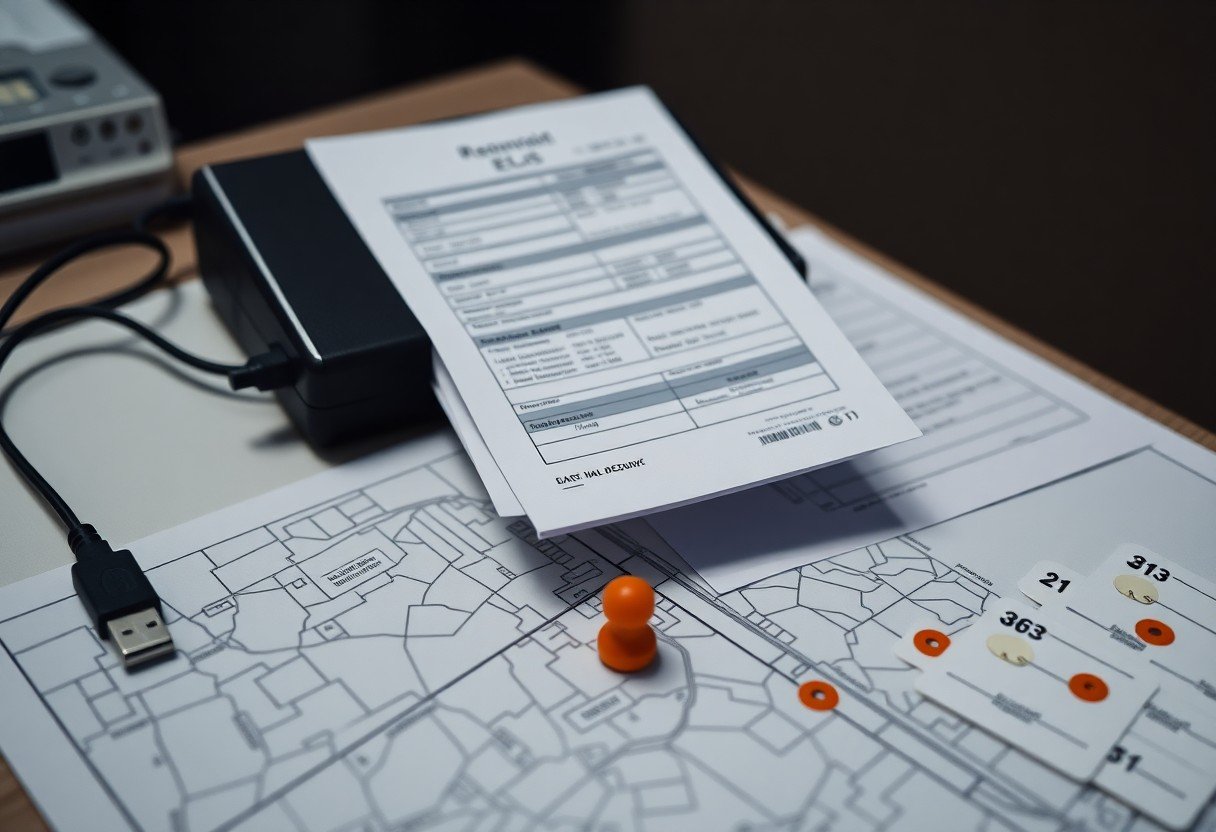
Understanding ELDs
Definition and Functionality
An ELD synchronizes with your vehicle’s engine to automatically record hours-of-service, engine hours, vehicle miles and location, producing a tamper-evident electronic log instead of paper RODS. It captures engine sync, driver ID, duty-status changes and GPS coordinates at engine start and status changes, and while driving records position and vehicle motion at roughly 60-second intervals, creating a continuous event history you can export for compliance, audits or crash reconstruction.
Legal Requirements for ELDs
Most carriers and drivers subject to federal HOS rules had to adopt FMCSA-certified ELDs by December 18, 2017, with legacy AOBRDs phased out by December 16, 2019. You must use a registered, compliant device if you electronically maintain RODS, though limited exemptions apply for certain short‑haul operations, driveaway/towaway runs and vehicles without compatible engine control modules; manufacturers must meet FMCSA technical specs and enforcement can inspect ELD data.
ELD regulations also require that your device provide eight days of on‑demand log data for inspectors and retain six months of stored ELD records. Transfers can occur via telematics (web services) or local methods like Bluetooth and USB during roadside stops, and devices must log edits, driver annotations and malfunctions-details that preserve an evidentiary trail investigators use in crash analysis and liability assessment.
Role of Logbooks in Trucking
In investigations, logbooks document your hours, duty status, routes, and rest breaks-data judges and juries use to assess fatigue and compliance. They can corroborate dispatch records, weigh station logs, GPS traces, and crash timestamps. For example, an ELD showing a continuous 13-hour driving block directly contradicts a claim that you adhered to the 11-hour limit, shifting liability analysis toward negligent operation or company-wide HOS practices.
Traditional Logbooks vs. ELDs
Paper logs let you edit entries and often lack engine-synced timestamps, while ELDs automatically record engine hours, vehicle miles, date/time, and location changes greater than 8 km (5 miles). The FMCSA ELD mandate (phased in from 2017; full compliance by December 16, 2019) means courts now expect electronic records; you’ll see telematics output, USB or wireless file transfers, and tamper-evidence metadata that paper cannot provide.
Importance of Accurate Documentation
Accurate logs protect you by showing lawful HOS compliance and support defensible timelines; inaccuracies invite CSA points, fines, or driver disqualification and can overturn defensive narratives in a crash. A single falsified entry-such as changing a 70-hour violation to 65-can be exposed by GPS or weigh-in-motion data, undermining your credibility and increasing civil exposure in personal-injury claims.
Beyond basic accuracy, you must preserve chain-of-custody and retention requirements: FMCSA-compatible ELDs store and allow retrieval of at least six months of records, and carriers typically retain records longer for litigation. Forensically, ELD metadata (ECM sync, speed, RPM, GPS) can prove tampering attempts or confirm time gaps; proactively keeping original exports, audit logs, and dispatch communications strengthens your defense when opposing counsel subpoenas electronic data.
ELDs as Evidence in Accident Cases
ELD extracts give you time-stamped, engine-synced records-VIN, driver ID, vehicle miles, engine hours and GPS at engine on/off, duty-status changes, and at least every 60 minutes-retained for six months. You can use those files to corroborate or contradict paper logs, identify unauthorized driving, and pinpoint when a truck entered a crash zone to build a precise timeline for investigators or juries.
Data Collection and Reliability
Because ELDs interface directly with the vehicle ECM, your evidence often beats handwritten logs: speed, odometer and engine-hours are automated. Still, GPS dropouts, misassigned driver IDs, or device malfunctions create gaps you must address. FMCSA-certified ELDs require annotated edits, so cross-check ELD exports against dispatch records, fuel receipts and maintenance logs to validate completeness and spot inconsistencies.
How ELDs Impact Liability Determinations
ELD timestamps and locations let you reconstruct timelines that directly affect negligence and HOS liability: proving a driver exceeded the 11-hour driving limit after only 10 hours off duty, or showing the truck was on a different route than claimed, strengthens claims against both driver and carrier and undermines common defenses.
You can take ELD data further by calculating average speed between GPS points to estimate pre-crash speed and identifying continuous motion followed by an abrupt stop that aligns with collision time; ELD edits include who made the change and when, so a pattern of post-crash alterations supports allegations of log manipulation. Combine ELD exports with ECM fault codes, ABS or airbag event timestamps, dashcam footage, weigh-station records and cell-tower or toll data to create a multi-source timeline courts prefer. When you document HOS violations under FMCSA rules-11 driving hours after 10 consecutive hours off and the 14-hour on-duty window for property carriers-you can pursue negligent hiring, supervision or retention claims against carriers that tolerated or encouraged violations. Anticipate defenses claiming device malfunction or GPS inaccuracy and preserve forensic exports with clear chain-of-custody to rebut those assertions.
Case Studies Involving ELDs
You can see how ELDs tip cases when timestamps, GPS and engine data align; a useful primer is Trucking Logs and Black Boxes: What Evidence Can Be …. In several matters ELDs revealed HOS overages of 1.5-4.0 hours and speed spikes of 20-30 mph above posted limits, shifting liability and settlement leverage in both criminal and civil actions.
- Case Study 1 – 2019 interstate pileup: ELD duty log showed 13.5 hours driving (legal limit 11), GPS trace indicated 142 miles in 2.1 hours, impact speed 57 mph; 2 fatalities, carrier paid $1.4M settlement and driver convicted of negligent homicide.
- Case Study 2 – 2020 urban collision: engine diagnostic data recorded RPM spikes and hard braking 7 seconds before impact; ELD timestamp matched smartphone video, insurer settled for $850,000 and driver suspended.
- Case Study 3 – 2018 underride crash: ELD revealed 2.2-hour unlogged gap coinciding with route deviation; forensic analysis showed intentional log edits, criminal charges filed and $620,000 verdict for plaintiffs.
- Case Study 4 – 2021 rollover: ELD GPS and accelerometer linked to speed of 64 mph on a 45 mph curve; carrier fined $300,000, company implemented compliance monitoring dashboard after court order.
- Case Study 5 – 2022 chain-reaction crash: ELD records showed driver on 14.0 hours duty with two prior HOS violations in 30 days; federal penalties totaled $210,000 and civil settlement reached $1.1M.
Successful Prosecution Examples
When prosecutors combine ELD timestamps, engine hours and GPS you get a powerful timeline: in one federal case a 4.2-hour log discrepancy plus engine RPM and speed sensor records produced a guilty plea, an 18‑month suspended sentence, and a $150,000 corporate fine after prosecutors correlated the data with crash location and witness statements.
Defenses Leveraging ELD Data
You frequently see defense teams attack ELD accuracy: claims include device malfunctions, firmware updates pausing logging, or incorrect driver assignments that create apparent HOS breaches; in a notable defense a 2.1‑hour gap traced to an authorized firmware reboot, undermining negligence assertions.
When you interrogate the record further, chain-of-custody and export integrity matter: independent forensic review can detect clock drift (e.g., 0.7% mismatch), timestamp rounding, or third-party app interference. Your defense can obtain vendor logs, repair records, and raw engine diagnostics to show reasonable doubt or reduce civil exposure.
Challenges with ELD Evidence
ELD data can be persuasive but you face issues like gaps, time-sync errors, device variability and lack of context-many units sample GPS while driving every 60 seconds, yet they only log duty-status changes, not braking, steering input, or weather. Manufacturers interpret engine and vehicle signals differently, creating inconsistencies across carriers. Courts routinely require authentication and expert analysis to reconcile ELD timestamps with crash-scene evidence, since a 1-2 minute clock offset can change a duty-violation or fatigue finding.
Data Interpretation Issues
When you analyze ELDs, watch sampling and classification. Many devices record a GPS point every 60 seconds and mark “driving” once speed exceeds about 5 mph, so short maneuvers or low-speed incidents can be missed. Urban canyon multipath can displace locations by 100-500 meters, and firmware event-compression can hide trailer swaps or prolonged idling. Expert reconstruction that compares ELD logs with CCTV, onboard video, and scene measurements is often necessary to resolve these discrepancies.
Privacy Concerns
Your private movements beyond work can be exposed because ELDs record continuous GPS tracks while the vehicle is assigned to you. Fleet managers, insurers and prosecutors can obtain months of history in discovery, revealing home addresses, off-duty stops and behavioral patterns. That exposure frequently generates discovery disputes and motions to limit scope or seek redaction to protect unrelated personal information.
You should push for narrow discovery-request only the period 72 hours before and 24 hours after the crash, or a rolling 30-day window if systemic patterns matter. Courts often grant protective orders limiting use of location data to litigation and require redaction of home addresses. Practical defenses include demanding CSV summaries of relevant events instead of raw continuous tracks and challenging overbroad subpoenas that seek unrelated months of data.
Best Practices for Trucking Companies
You should treat ELDs as primary evidence: retain device data for at least six months, run monthly internal audits, and reconcile logs against dispatch, GPS and fuel receipts to spot discrepancies before litigation. Implement standard operating procedures that assign responsibility for audits and corrective actions, and document every step so you can produce consistent, date-stamped records that judges and juries expect when hours-of-service or log integrity are in dispute.
Maintaining Accurate Records
You must reconcile ELD records with bills of lading, dispatch records and fuel receipts weekly, flagging mismatches and annotating corrective entries immediately. Keep immutable backups and an audit trail for a minimum of six months, generate monthly exception reports for outliers (e.g., runs over 11 hours or unexplained engine-on time), and tie corrections to signed driver acknowledgements to reduce exposure in discovery.
Training Drivers on ELD Usage
You should provide hands-on ELD training at onboarding and annual refreshers, covering device pairing, duty status edits, and annotations for personal conveyance and yard moves. Use 1-2 hour practical sessions with competency checks, require drivers to demonstrate log certification, and document completion so your training compliance is verifiable in audits or court.
Develop a clear curriculum: teach drivers how to switch drivers, certify and certify RODS, create explanatory annotations, and execute paper logs when an ELD malfunctions (you must be able to produce manual records for the current day plus the previous seven days). Include real-case scenarios-missed personal-conveyance annotations or improper edits-and require drivers to pass a short skills check; keep those training records to show proactive supervision.
To wrap up
Conclusively, your ELD and logbooks document driving hours, duty status changes, vehicle location, and sensor data, providing objective proof of HOS violations, fatigue, route deviations, tampering, or maintenance lapses; you can use them to corroborate witnesses, challenge testimony, and establish driver or carrier liability in accident claims.
FAQ
Q: What specific data do ELDs and paper logbooks record that can be used in truck accident cases?
A: ELDs automatically record driver identity, vehicle VIN, engine hours, ignition on/off times, date/time stamps, vehicle motion and GPS coordinates, and hours-of-service duty status changes; many ELDs also record diagnostic trouble codes and event-driven snapshots around crash events. Paper logbooks show handwritten duty status entries, trip notes, and driver signatures but lack automated timestamps and metadata. Together these sources establish when a driver was on duty, driving, resting, or operating outside allowed hours and help reconstruct timelines and routes leading up to a collision.
Q: How can ELD and logbook records prove a hours-of-service violation or driver fatigue in a negligence claim?
A: Continuous ELD records show cumulative drive times, consecutive on-duty periods, and any missed or shortened rest breaks, which can be directly compared to FMCSA HOS rules to identify violations. Paper logs may corroborate or contradict ELD entries; patterns of repeated short rests, late-night driving, or extended duty without off-duty periods support an inference of fatigue. Demonstrating that a driver exceeded legal limits shortly before a crash strengthens causation arguments linking tiredness or impaired alertness to unsafe driving behavior.
Q: Are ELD and logbook entries reliable evidence, and how do attorneys address potential tampering or inaccuracies?
A: ELDs maintain system logs and metadata that record edits, driver swaps, and device malfunctions; forensic exports from the ELD vendor, cross-checks with the vehicle’s ECM and GPS records, and vendor audit trails help authenticate data and detect tampering. Paper logbooks are more vulnerable to falsification but can be tested against fuel receipts, weigh station scans, dispatch records, and electronic data to reveal inconsistencies. Attorneys should obtain native ELD exports, preserve chain of custody, and use expert forensic analysis to assess integrity and reliability.
Q: What procedural steps are necessary to obtain and preserve ELD and logbook evidence for litigation?
A: Send immediate preservation notices to the carrier, driver, and ELD vendor; issue written demands or subpoenas for native ELD exports (including audit logs and diagnostic reports), paper logs, dispatch records, ECM data, and maintenance files; document custody of downloaded files and credential access. Request timestamps in the vendor’s native format, obtain vendor testimony or affidavits about export procedures, and seek forensic imaging rather than screenshots. Prompt preservation and authenticated, forensically sound downloads reduce risk of spoliation and strengthen admissibility under business-records exceptions.
Q: What are the limitations of ELDs and logbooks and how should their findings be corroborated?
A: ELDs can fail, be offline, or lack certain data (for example, not all devices record vehicle speed or interior video), and paper logs may be incomplete or fabricated; exemptions and short-haul rules may also affect interpretations. GPS accuracy can vary and metadata may be misaligned if device clocks were incorrect. Corroborate ELD/logbook findings with ECM event data, dashcam or roadside video, witness statements, maintenance and fuel records, dispatch communications, and cell-phone location data to build a complete, reliable evidentiary picture.