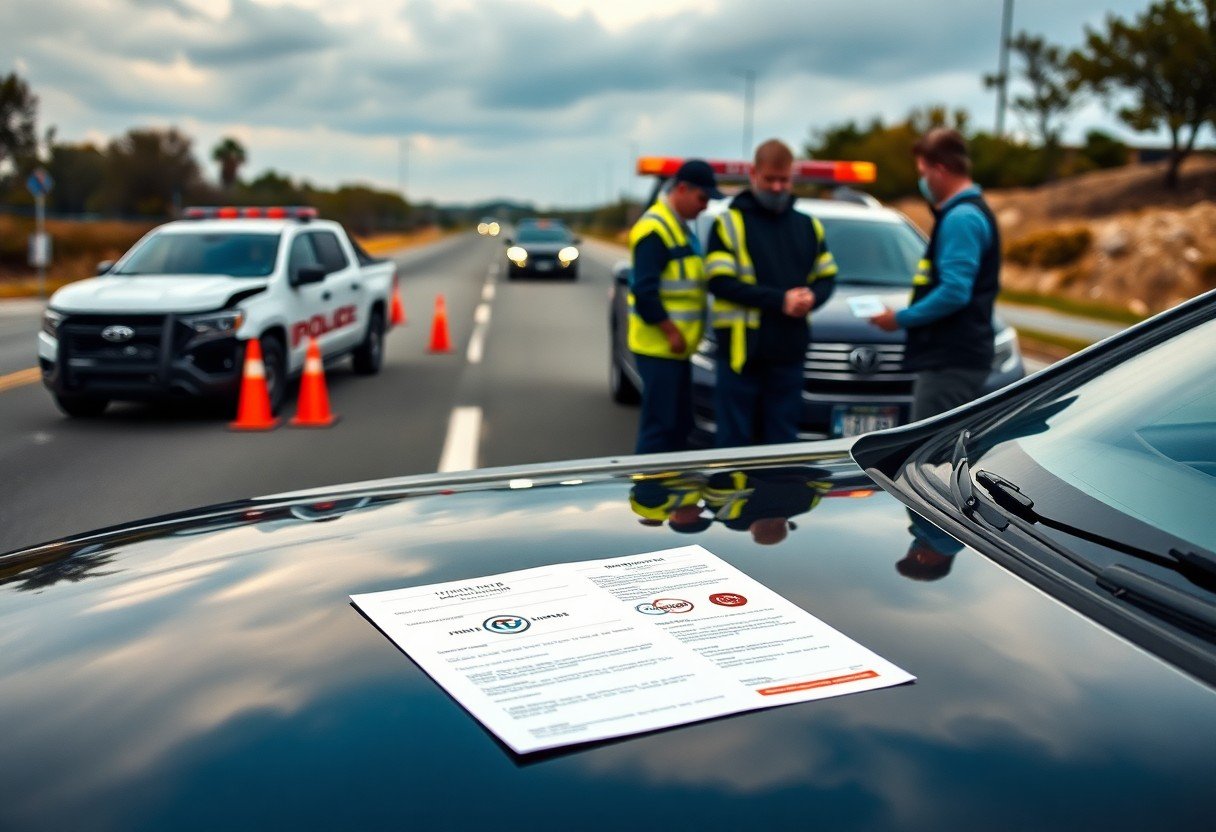
Over the course of a claim, your helmet choice, documented fit, and whether you complied with applicable safety standards often shape how liability and damages are assessed; you should preserve the helmet, take photos, seek prompt medical attention, save repair and maintenance records, and report the incident to relevant authorities. Evidence such as witness statements, police reports, and expert inspection can determine whether the helmet performed as intended and influence claim outcomes.
Key Takeaways:
- Wearing a helmet reduces the likelihood and severity of head injuries and is often considered by insurers when assessing damages.
- Proper fit, visible condition, and recognized certifications (DOT, Snell, etc.) affect both protection and claim credibility.
- Prompt medical evaluation and thorough documentation (photos, medical records, police reports) link helmet use to injury outcomes and strengthen claims.
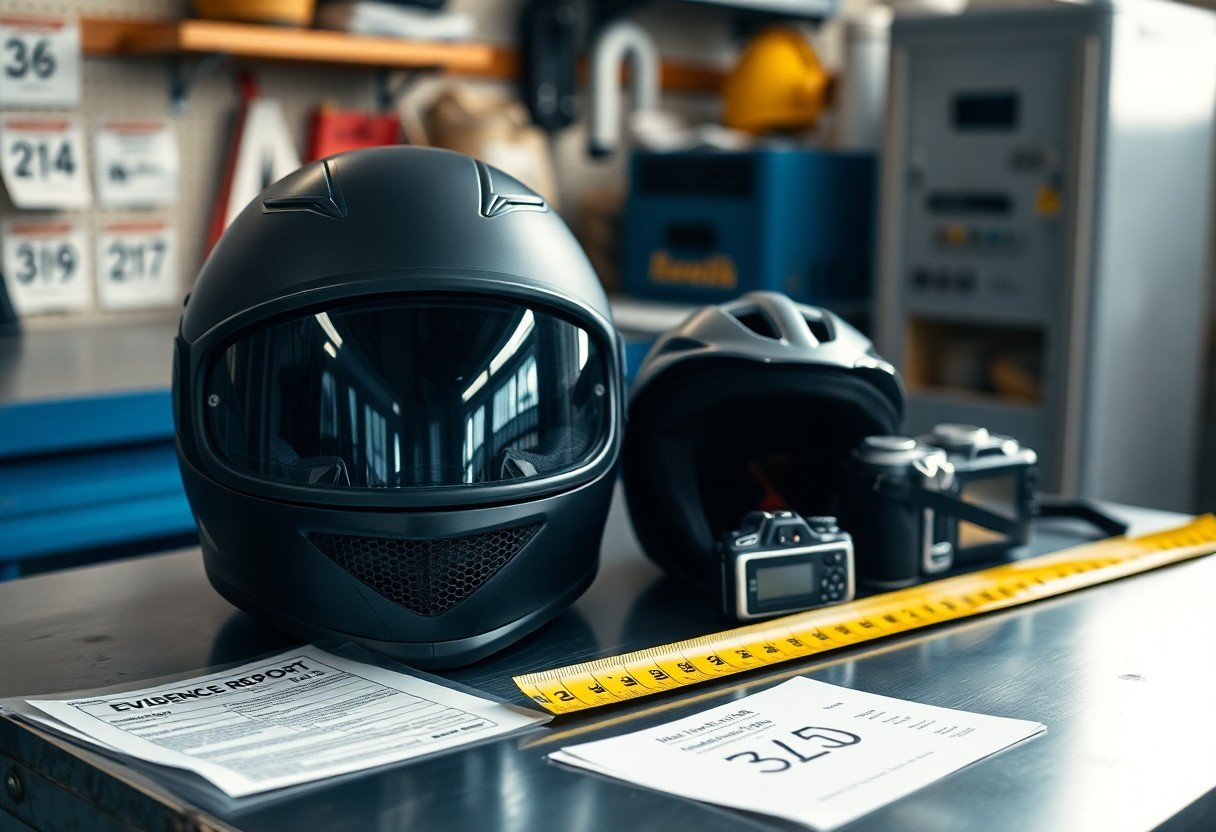
- Preserve the helmet and related gear as evidence; avoid repairing, cleaning, or discarding them until advised by an attorney or insurer.
- Defects, improper maintenance, or aftermarket modifications can create product-liability or comparative-fault issues that influence compensation.
Understanding Helmet Types
You need to match helmet form to the riding you do: full-face for max frontal and chin protection, open-face for visibility and urban convenience, modular for touring flexibility, off-road for ventilation and peak protection, and half-shell for short-trip comfort. Manufacturers often trade weight (900-1600 g) for features like integrated sun visors or advanced liners. Recognizing how those trade-offs affect impact performance and injury claims can change your choice after an incident.
- Full-face: best for high-speed crashes and facial protection.
- Modular: combines touring comfort with occasional open-face use.
- Off-road: larger EPS liners and peaks for roost protection.
- Half-shell: minimal coverage, common in low-speed urban use.
- Recognizing which compromise you accept helps document suitability in a claim.
| Full-face | Complete coverage, chin bar, used in sport and track riding |
| Open-face | Good visibility, less chin protection, common for scooters |
| Modular | Flip-up chin bar, heavier by ~100-300 g, popular with tourers |
| Off-road | Ventilated EPS, extended visor, optimized for impacts at varied angles |
| Half-shell | Lightweight, minimal lateral/vertical protection, suited for brief urban trips |
Types of Helmets
You should differentiate by intended use: sport helmets prioritize aerodynamics and multi-density EPS, touring helmets add noise control and integrated visors, commuter helmets focus on ventilation and price ($50-$400), adventure helmets balance off-road features with street comfort, and e-bike helmets may combine MIPS-like rotation control with lighter shells. Knowing which category your helmet fits aids evidence assessment after a crash.
- Sport: stiff shells, tight fit, designed for high-G impacts.
- Touring: noise reduction, long-ride comfort, heavier liners.
- Commuter: ventilation and affordability, often DOT-only certified.
- Adventure: hybrid protection for on/off-road scenarios.
- Knowing the category clarifies expected protection and warranty/claim limits.
| Sport | High-speed stability, multi-density EPS, aerodynamic |
| Touring | Comfort features, integrated visors, longer wear periods |
| Commuter | Lightweight, cost-effective, urban visibility |
| Adventure/Dual-sport | Compromise shell, removable liners, off-road ready |
| E-bike/Urban | Lower-profile shells, some with enhanced rotation control |
Certification and Safety Standards
You should check labels and ratings: DOT (FMVSS 218) in the U.S., ECE 22.06 in Europe (updated to include oblique/rotational tests), Snell (voluntary, higher-energy lab standard), and SHARP (UK star rating 1-5 based on independent testing). Manufacturers typically affix tags inside the helmet; keep photos and serials for claims.
Standards differ in test methods and pass thresholds: DOT mandates basic impact, penetration, and retention checks; ECE 22.06 adds oblique impact and evaluates rotational acceleration; Snell focuses on repeatable high-energy impacts and often results in stiffer liners; SHARP reports numerical performance so you can compare models (e.g., 3 vs 5 stars). When you document an injury claim, cite the helmet’s certified standard, label location, and any post-crash damage photos to strengthen the technical argument about expected protection.
Helmet Effectiveness in Injury Prevention
You can quantify protective benefit: bicycle-helmet meta-analyses show roughly 50-60% reduction in head injury risk, while motorcycle-helmet data associate about 37% lower mortality and ~69% fewer head injuries; you’ll also see reduced skull fractures and shorter hospital stays in helmeted riders when trauma registries are analyzed.
Statistical Analysis of Helmet Use
Case‑control and cohort studies typically report adjusted odds ratios of about 0.3-0.6 for head injury in helmeted versus unhelmeted riders, but you must account for confounders like speed, alcohol, and rider behavior; large datasets (FARS, hospital registries) allow stratified multivariable models to isolate helmet effects by vehicle type, impact angle, and severity.
Factors Affecting Helmet Performance
Fit, chin‑strap tension, and correct positioning determine whether energy is directed into the liner; you should weigh certification (DOT, ECE, Snell), age, prior impacts, shell stiffness, liner density, and rotational-mitigation systems (e.g., MIPS) when assessing expected protection, and note manufacturers’ replacement guidance after a crash or every 3-5 years.
- Fit: you need minimal lateral movement and even contact across the brow to ensure the liner engages on impact.
- Certification: you should check the label for the applicable standard for your activity and region.
- Materials and design: dual-density EPS, thicker shells, and slip‑plane systems affect linear and rotational force attenuation differently.
- After a significant impact or visible damage, you must replace your helmet immediately.
Oblique-impact lab tests indicate rotational-mitigation systems can reduce angular acceleration by about 10-30% in controlled comparisons, and you should prefer helmets evaluated under protocols that include angular metrics; real-world studies also show that a hard crash can compress EPS foam and degrade multi-impact performance, informing replacement decisions.
- Care: you should clean liners per manufacturer guidance to avoid degrading comfort and fit.
- Inspection: you must look for hairline cracks, crushed foam, or loose hardware during routine checks.
- Storage: you should avoid prolonged UV exposure and high heat that weaken shell and liner materials.
- After 3-5 years of regular use, plan on replacing the helmet even if it shows no obvious crash damage.
Common Injuries and Claims
Types of Injuries Linked to Non-Use
- Traumatic brain injury (concussion to severe TBI)
- Skull fractures and intracranial hemorrhage
- Cervical spine and neck injuries
- Facial fractures and dental trauma
- Lacerations, road rash, and soft-tissue damage
| Traumatic brain injury | High medical costs, rehab, long-term cognitive impairment |
| Skull fracture | Surgery, ICU stays, increased mortality risk |
| Cervical spine injury | Risk of paralysis, long-term care, lost earnings |
| Facial fracture | Reconstructive surgery, dental replacement, scarring |
| Lacerations/road rash | Infection risk, grafts, cosmetic claims |
Assume that not wearing a helmet can substantially raise your odds of severe head trauma-studies often show helmets reduce serious head injuries roughly 50-70%-and that increased injury severity translates to larger claims for medical expenses, lost wages, and long‑term care when you pursue compensation.
Legal Aspects of Injury Claims
You must prove duty, breach, causation, and damages; helmet non‑use is typically introduced as evidence of comparative fault and can reduce your recoverable damages. Statutes of limitations for personal injury often run 2-3 years (some jurisdictions extend to 6), and a few states still apply contributory negligence rules that may bar recovery entirely if you’re found at fault.
You should expect insurers and defense counsel to focus on causation-whether your injuries would have occurred or been less severe with a helmet-so secure medical records, helmet condition, crash photos, and witness statements early. Expert testimony (neurosurgeons, accident reconstructions) is frequently decisive; in settlement talks you may see offers reduced by 20-50% under comparative allocations, while local helmet statutes or citations can influence negotiations and potential fines.
The Role of Education and Awareness
Effective education links facts to action: studies show campaigns that pair school-based lessons with free helmet distribution can raise use by 20-50%. You can leverage targeted messaging, local data, and clinician counseling to shape perceptions about risk and proper fit. For injury claims, documentable outreach and measurable program metrics strengthen evidence that you or your community took reasonable steps to prevent harm.
Promoting Helmet Use
Start with access: free or discounted helmets plus certified fitting sessions remove barriers and increase uptake. Behavioral tactics-commitment pledges, social-norm messaging, and visible role models-boost adoption; one field trial reported a 35% increase after celebrity endorsements and school pledges. You should pair hands-on training, repair clinics, and clear signage to sustain higher rates.
Community Initiatives and Programs
You can join or create programs like Safe Routes to School, local bike rodeos, and hospital outreach to engage families directly. Grant-funded voucher schemes and partnerships with bike shops cut costs, while law-enforcement education (not just ticketing) increases compliance. Evaluation consistently shows multi-component initiatives outperform single interventions in raising helmet use.
Operationally, map high-risk corridors and schools, set measurable targets (helmet use rates, number of fittings), and partner with schools, trauma centers, and nonprofits. Clinicians can write helmet prescriptions tied to vouchers, and program metrics-baseline observations, follow-up at 6-12 months, plus ED data-let you demonstrate impact to funders and in injury-claim contexts.
Helmet Legislation and Compliance
When you evaluate liability and damages, federal and state statutes shape how helmet use factors into a claim; the CDC reports helmets reduce death risk by about 37% and head injury by 69%. In many cases, failure to comply becomes a defense point for insurers and defendants – see Motorcycle Helmet Laws Impact on Safety and Injury Claims for deeper analysis of law-to-outcome connections.
Current Laws Across Regions
Across the U.S., 19 states plus the District of Columbia enforce universal helmet laws while remaining states often limit requirements to riders under a certain age (commonly 17-21). Internationally, most European and many Asian and Australasian jurisdictions mandate helmets for all riders, which you should factor into comparative-law analyses and cross-border incident reviews.
Enforcement and Accountability
Police officers and state troopers typically cite helmet violations on the scene; penalties frequently range from under $100 to several hundred dollars and may include license points. Your nonuse can be documented in crash reports and later used to support negligence or reduced damages claims.
In civil litigation, courts apply comparative-negligence or statutory-fault rules: if you’re found partly at fault for not wearing a helmet, your recoverable damages may be reduced proportionally. You should preserve the helmet, medical records, photos, and witness statements immediately, because insurers commonly rely on statutory noncompliance to justify lowered settlements.
Future Trends in Helmet Design
You’ll see helmet evolution driven by rotational-impact mitigation, integrated electronics, and advanced materials; examples include MIPS low-friction liners, Koroyd energy-absorbing tubes, and WaveCel-style cellular liners already used by major brands. Regulatory shifts like ECE 22.06 (which added oblique testing in 2023) and consumer metrics such as Virginia Tech’s STAR rating (introduced 2016) are steering manufacturers to blend proven mechanics with sensor-enabled crash alerts and bespoke fit systems from 3D printing.
Innovations in Technology
Manufacturers are stacking solutions: you can get helmets with MIPS or SPIN to reduce rotational forces, Koroyd or D3O to manage linear energy, and embedded crash sensors that alert emergency contacts. Lab comparisons report rotational acceleration reductions varying widely-roughly 10-50% depending on design and impact vector-so you’ll want models tested in oblique impacts. Expect more adaptive liners, 3D-printed lattice cores for tailored damping, and Bluetooth-integrated sensors becoming standard in commuter and motorbike ranges.
Impact of Research on Safety Standards
When you follow research, you’ll notice standards shifting: ECE 22.06 now requires oblique impact assessments and rotational metrics, while Virginia Tech’s STAR rating uses combined linear and rotational scoring to rank bicycle helmets. In contrast, the U.S. CPSC bicycle standard still focuses mainly on linear impact tests, so manufacturers often adopt higher internal benchmarks or third-party ratings to meet consumer expectations and litigation pressures.
Deeper studies using finite-element brain models (e.g., Wayne State-style simulations) and metrics like BrIC have quantified how rotational kinematics map to axonal strain, influencing test development. You should check whether a helmet’s lab data reports peak rotational velocity, angular acceleration, or STAR-equivalent scores, since those specific measures now guide both voluntary industry requirements and the stricter homologation steps seen in recent ECE updates.
Summing up
Considering all points you should know that wearing a helmet can affect both safety and legal outcomes; insurers and courts assess helmet use, helmet fit and condition, compliance with laws, and medical records when determining liability and compensation. You should document the incident, preserve the helmet, seek prompt medical care, and get legal advice to protect your claim, because causation and comparative fault are often decisive.
FAQ
Q: Does wearing a helmet affect my ability to make an injury claim?
A: Wearing a helmet can influence a claim in two main ways: it may reduce the severity of head injuries, which affects the damages sought, and it can be evidence of taking safety precautions. Insurers and defense counsel will evaluate helmet use when assessing causation and mitigation of damages, but wearing a helmet does not automatically bar recovery if another party’s negligence caused the incident.
Q: How do helmet laws and regulations change the legal outcome?
A: Jurisdictions with mandatory helmet laws can create legal consequences if a claimant violated the statute; that violation may be used to reduce recovery under comparative negligence or to rebut certain damage claims. In contrast, absence of a helmet law does not eliminate the possibility that a judge or jury will consider failure to wear a helmet as evidence of negligence or failure to mitigate harm.
Q: What types of evidence about helmet use are most important for a claim?
A: Key evidence includes photographs from the scene, medical records noting helmet use or lack thereof, eyewitness accounts, police reports, and the helmet itself preserved after the incident. Expert reports (e.g., accident reconstruction, biomechanical or helmet safety experts) that address impact dynamics and helmet performance are also often decisive in proving causation and damage extent.
Q: Can not wearing a helmet reduce the compensation I receive?
A: Yes. Not wearing a helmet can be used by defendants to argue comparative negligence or failure to mitigate damages, potentially reducing award amounts proportionally under comparative-fault rules. The extent of reduction depends on jurisdictional law, the facts about how the injury occurred, and expert opinions about whether the helmet would have prevented or lessened the injury.
Q: What should I do with the helmet and other evidence after an accident?
A: Preserve the helmet in the same condition, avoid repairing or cleaning it, photograph it with timestamps, keep all medical records and treatment invoices, and preserve clothing and repair bills for involved vehicles. Notify your attorney and insurer promptly; they can arrange formal chain-of-custody procedures and independent testing if needed to evaluate helmet performance and support your claim.