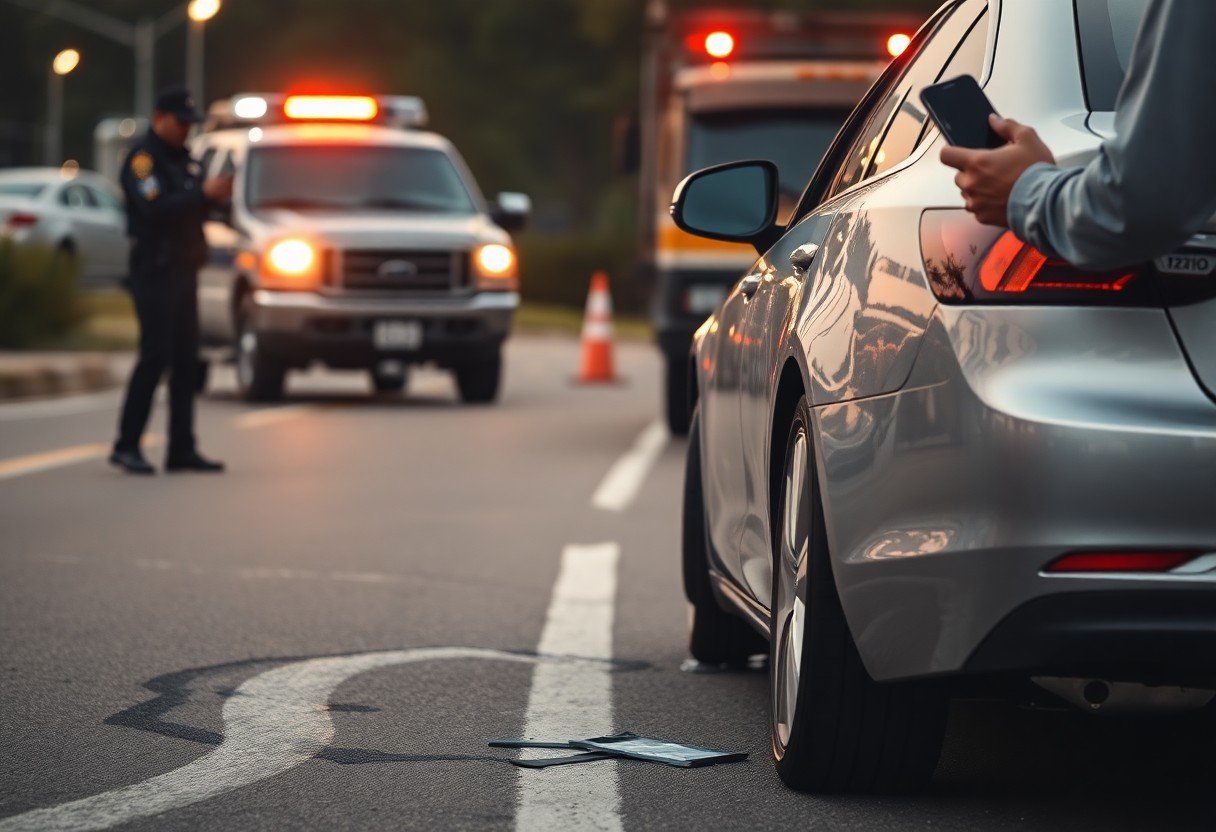
Over the course of a hit-and-run, you should prioritize safety, call police, gather witness information and photographic evidence, and seek medical attention even for minor injuries; after reporting the incident, you can explore insurance options such as uninsured motorist coverage, collision coverage, and rental reimbursement while consulting your insurer and an attorney to protect your claims and rights.
Key Takeaways:
- Stop if safe, check for injuries, move to a safe location, and call emergency services if anyone is hurt.
- Call the police and file a hit-and-run report; obtain the report number and the responding officer’s name.
- Document the scene with photos/videos, note damage, time, location, direction of travel, any plate or partial plate, nearby cameras, and witness names/contacts.
- Seek medical attention promptly for any injuries and preserve all medical records and bills for claims.
- Notify your insurer right away; ask about uninsured/underinsured motorist (UM/UIM) and collision coverage, provide the police report and evidence, and consult an attorney for serious injuries or disputed claims.
Understanding Hit-and-Run Accidents
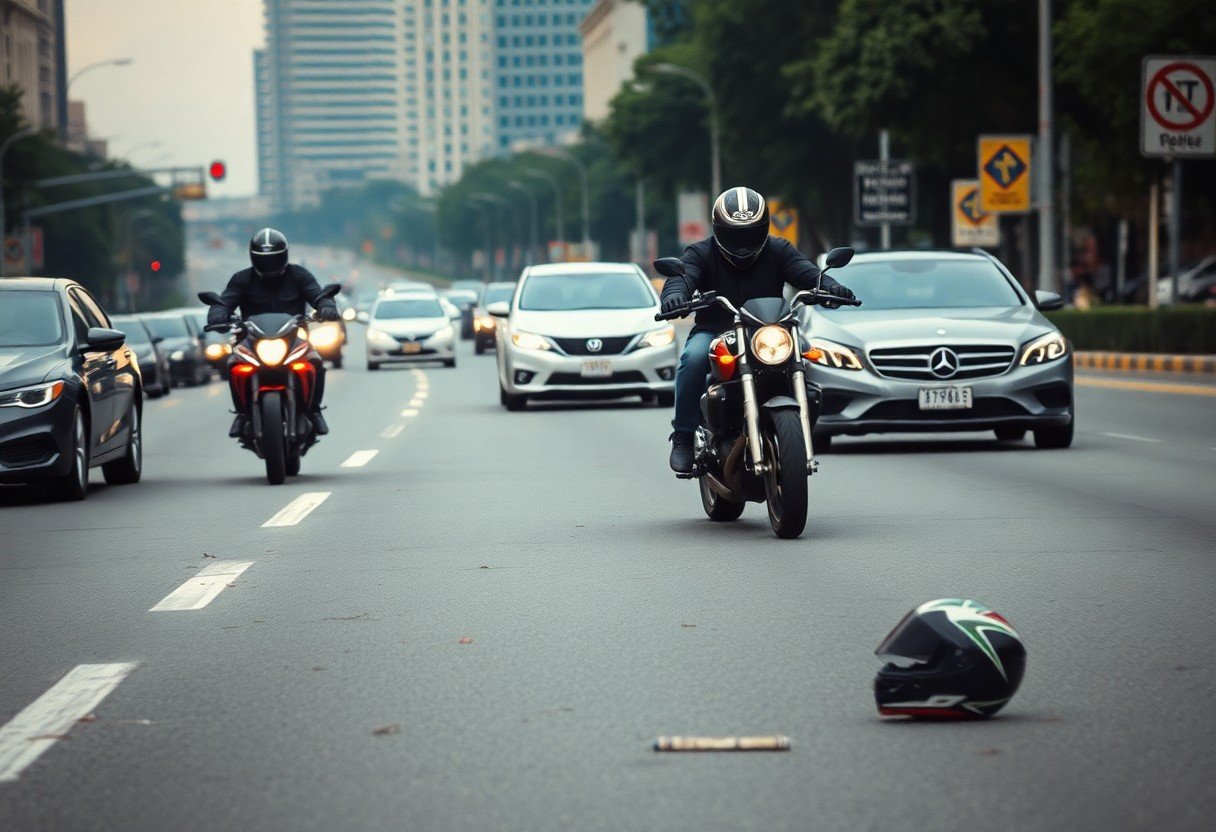
When a driver leaves the scene, you confront evidence gaps, delayed medical attention, and insurance hurdles; courts treat hit-and-run differently based on injury severity, with penalties ranging from fines to jail. You should act fast: surveillance footage is often retained for 24-72 hours, witness statements lose clarity quickly, and timely photos of damage and surroundings boost the chance of identification and a successful claim.
Definition of Hit-and-Run
A hit-and-run occurs when a motorist involved in a collision fails to stop, exchange information, render reasonable aid, or report the crash as required by law; obligations vary by state but generally require you to remain at scene or report serious injury immediately. If someone is hurt, leaving can elevate charges to a felony and trigger license suspension, fines, and possible jail time.
Common Causes and Scenarios
You most often encounter hit-and-runs after low-speed parking-lot impacts, late-night urban collisions, or incidents involving intoxicated or uninsured drivers who flee to avoid arrest or financial responsibility. Drivers with suspended licenses, outstanding warrants, or stolen vehicles also commonly bolt. You should note that pedestrian and cyclist collisions at night disproportionately involve fleeing drivers, especially at poorly lit intersections.
Investigations frequently rely on a mix of witness reports, traffic and business surveillance, license-plate reader (LPR) data, and vehicle-part evidence like paint transfers or broken lights; you can help by photographing debris, skid marks, and nearby cameras, and by obtaining witness contact details-these steps often reduce investigation time from weeks to days in municipal cases.
Immediate Steps to Take After a Hit-and-Run
Get out of traffic and assess the scene within the first few minutes: move to a safe spot, check yourself and passengers for bleeding, breathing problems, or altered consciousness, call 911 for any medical or imminent-danger situations, then document time, exact location or nearest intersection, vehicle direction, color, make/model, and any plate fragments; use your phone to take multiple photos and videos of damage, positions, and surroundings before anything is moved.
Assessing Injuries and Damage
If someone is bleeding heavily, unconscious, or showing signs of a head/neck injury, call 911 immediately and avoid moving them unless there’s immediate danger; for minor cuts and bruises you can photograph wounds, record symptoms and the time they appeared, document visible vehicle damage from several angles, note loss of parts (mirror, bumper piece), and log the odometer and VIN if you can safely access them-this evidence helps medical providers and insurers later.
Contacting Authorities
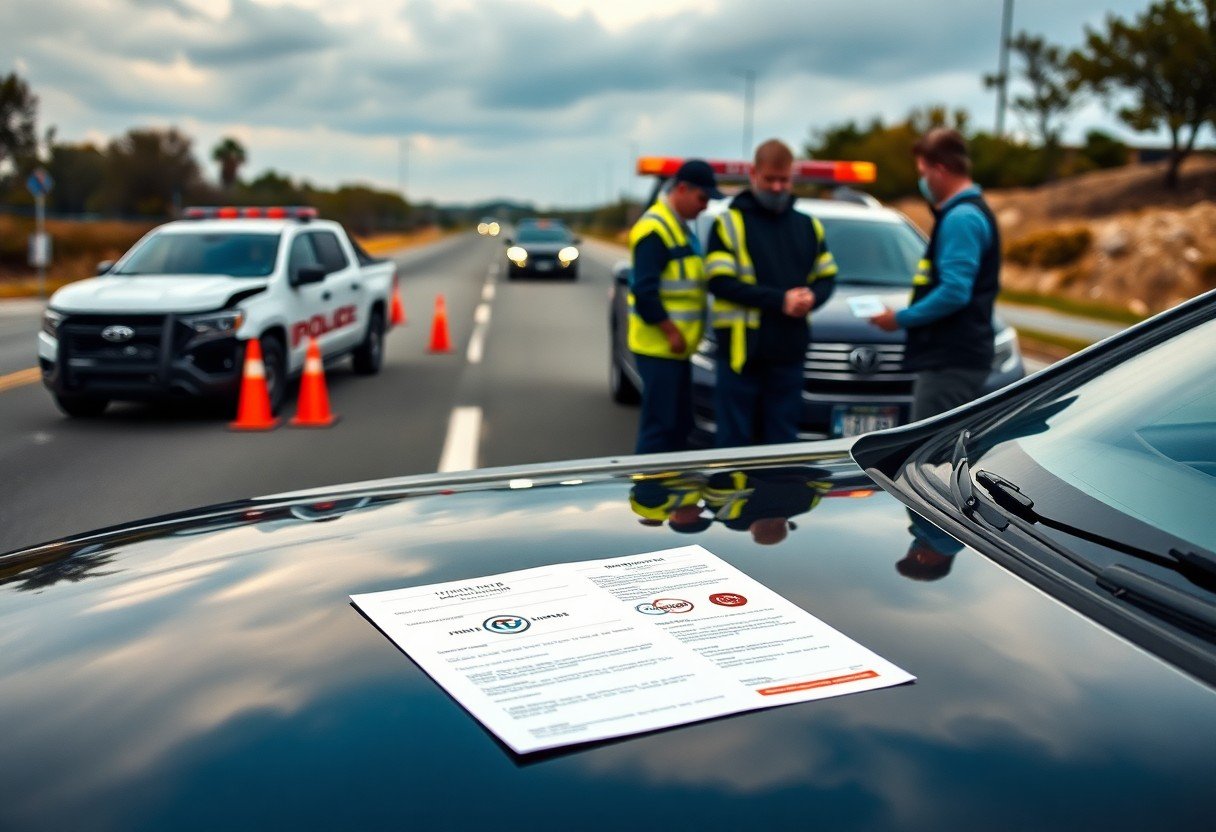
Call 911 for any injuries or ongoing danger; if uninjured and no traffic hazard, use the non‑emergency police number to report the hit‑and‑run and request an officer-provide the exact location, time, vehicle description, direction of travel, partial plate letters/numbers, and witness names; ask for the officer’s name and the incident/case number so you can reference it for insurance and follow‑up.
When officers arrive or when filing the report, request a copy or the report number and the investigator’s contact info, and ask whether nearby traffic cameras, doorbell or business surveillance will be checked-many departments can query ALPR databases or camera footage within 24-72 hours; you’ll need the police report number for uninsured/underinsured motorist claims and to meet most insurer timelines, so confirm how and when you’ll receive the report.
Collecting Information
Gathering Witness Statements
Ask witnesses for full name, phone, email and a brief written or recorded account of what they saw; try to collect at least two independent statements when possible. If someone heard the impact or saw the plate number (for example, “7BXK321”) note verbatim quotes and their vantage point-standing on the sidewalk 10-15 feet away is different from driving by. You should timestamp each statement and note how long after the crash it was given (ideally within 24-48 hours).
Documenting the Scene
Photograph the scene from multiple angles-aim for 6-10 images including wide shots, close-ups of damage, skid marks, debris, and visible license plates; capture street signs, traffic signals, and the nearest cross-street to establish location. Use video while narrating locations and directions, and keep your phone’s GPS on so photos include coordinates. You should also note weather, lighting, and traffic conditions in a short written log.
For more persuasive evidence, include a scale in photos (a tape measure or a shoe) to document distances such as a 10-15 foot gap from curb to debris, and take a 20-30 second walkthrough video naming key details aloud. Screenshot any nearby CCTV camera locations or business addresses and save map coordinates; then email the full set of photos and video to yourself and to police to create a timestamped record. Insurers often accept claims faster when you supply a sequence of labeled files (e.g., “2026-01-14_frontwide.jpg,” “2026-01-14_plate_close.jpg”) plus a short damage summary.
Reporting the Incident
Filing a Police Report
If anyone is hurt, call 911 immediately; for non‑injury incidents contact local police via the non‑emergency line. Give the officer the exact location, time, vehicle make/model/color, license plate or partial plate, direction of travel and the photos you took of the damage. Ask for the incident or case number, the officer’s name and badge number, and request a copy of the report-these documents and witness contacts strengthen your claim and the investigation.
Notifying Your Insurance Company
Notify your insurer as soon as possible-many policies require notice within 24-72 hours. Provide the police report number, photos, witness names, and any dash‑cam or surveillance links. Ask whether your uninsured motorist property‑damage (UMPD) or collision coverage applies and what deductible you’ll face (typical ranges are $250-$1,000). Also confirm rental reimbursement and immediate authorization for tow or temporary repairs if needed.
Prepare and submit documentation: the police report number, time‑stamped photos, witness statements, surveillance or dash‑cam files, tow receipts, repair estimates and medical bills. Your insurer will often assign an adjuster within 24-48 hours who may inspect the vehicle or authorize a shop. If the fleeing vehicle isn’t located, ask about filing a UMPD/uninsured motorist claim, how subrogation might recover your deductible, and request written confirmation of your claim number and next steps.
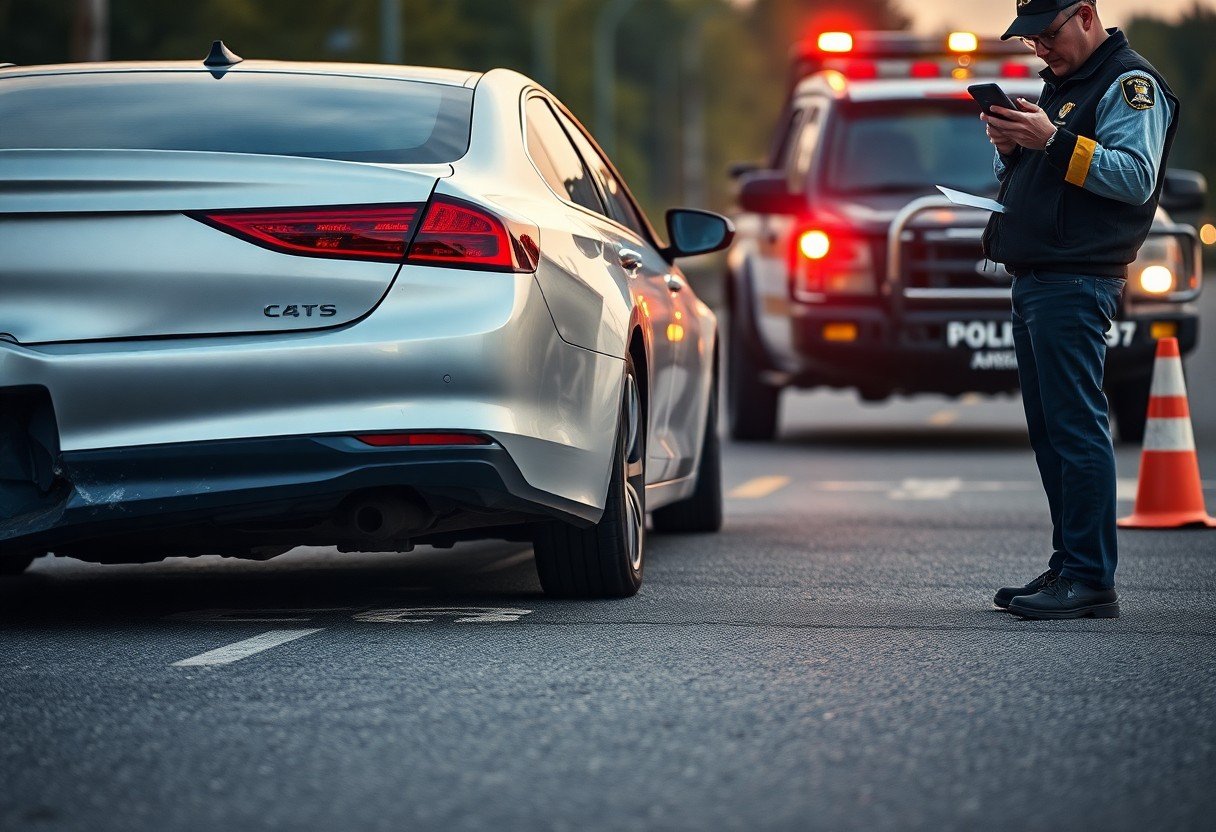
Insurance Options for Hit-and-Run Incidents
You can pursue several insurance paths after a hit-and-run: uninsured motorist (UM) coverage, collision coverage, rental reimbursement, and legal expense endorsements. Around 12% of drivers lack insurance, so UM matters for both medical and property claims. File a police report immediately and notify your insurer-deductibles commonly run $500-$1,000, and your policy deadlines for notice often determine whether a claim is accepted.
Uninsured Motorist Coverage
If you carry uninsured motorist bodily injury (UMBI), your medical bills and lost wages can be paid up to your policy limits (e.g., $25,000/$50,000); uninsured motorist property damage (UMPD) covers vehicle repairs in some states. For example, with UMPD and a $500 deductible, a $2,500 repair yields about $2,000 from the insurer. You must provide the police report and photos to support the hit-and-run UM claim.
Collision Coverage and Other Options
Collision coverage pays for damage to your vehicle regardless of fault, minus your deductible, so if repairs cost $4,000 and your deductible is $1,000, the insurer typically pays $3,000. Additional options like rental reimbursement, gap insurance, and legal expense endorsements can cover interim transportation, loan shortfalls, and attorney fees if you pursue recovery or face disputes with your carrier.
Insurers will usually subrogate-seek recovery from the at-fault driver-so you may initially pay the deductible but get it back if the driver is identified. Filing promptly with a police report improves recovery odds; if the other driver remains unidentified, expect limited subrogation success and prepare to absorb the deductible or rely on UMPD/collision benefits. Check policy limits and how claims affect your premium before filing.
Legal Considerations and Rights
After you report the crash and seek care, you should be aware of legal timelines and evidence needs that affect both criminal and civil outcomes; collect witness names, photos, and any dashcam footage, then review guidance like Steps to Take After a Hit-and-Run Accident for procedural steps to strengthen police and insurance claims.
Potential Legal Actions
You can pursue criminal charges against the fleeing driver and a civil claim for compensation; criminal penalties range from misdemeanors for minor property damage to felonies when injury occurs, and civil statutes of limitations typically fall between 2-6 years depending on state. You should ask the prosecutor about restitution, check for enhanced penalties like license suspension, and discuss filing a personal injury suit if damages exceed insurance limits.
Understanding Your Rights as a Victim
You have the right to a copy of the police report, to submit evidence to law enforcement, and to file claims with your insurer or under uninsured/underinsured motorist coverage; victims’ compensation programs may cover medical bills and lost wages in some states, and you should consult an attorney to protect your claim and meet filing deadlines.
To enforce those rights, obtain the police report number and request all investigative updates, preserve medical records and receipts for liens, and provide your insurer prompt notice-failure to cooperate can jeopardize coverage. You should also demand preservation of surveillance footage from nearby businesses within 7-30 days where footage is routinely overwritten, document exact timelines (when you reported, when you notified insurers), and consider a consultation that can identify evidence gaps, calculate full economic and non-economic losses, and advise whether to pursue restitution or civil litigation.
Summing up
To wrap up, you should report the hit-and-run to police and seek medical attention, document damage and witness information, and notify your insurer immediately; use your collision or uninsured motorist coverage if applicable, and keep all records and photos to support your claim. If injuries or disputes arise, consult an attorney to protect your rights and maximize recovery.
FAQ
Q: What immediate steps should I take after a hit-and-run?
A: Ensure your safety and the safety of others by moving out of traffic if possible; call emergency services for medical help and to report the incident; note the exact location, time, direction of travel, vehicle description (make, model, color), partial or full license plate if available; take photos and video of vehicle damage, skid marks, road debris, and the surrounding scene; collect contact information from witnesses and ask them to stay if they will; obtain a police report number and the responding officer’s name; seek medical evaluation even for minor injuries to document any harm; notify your insurer promptly and preserve any physical evidence and electronic data such as dashcam footage and phone videos.
Q: How can I collect useful evidence if the other driver fled the scene?
A: Use your phone to capture wide and close-up photos of vehicle damage, road position, debris, paint transfer, broken parts, and any marks showing direction of travel; record short video clips that include surrounding landmarks for location verification; check for surveillance cameras on nearby buildings, traffic cameras, or doorbell cameras and ask businesses or homeowners for footage; get witness names, phone numbers, and written statements if possible; note the time, weather, traffic conditions, and any identifying features of the offending vehicle (unique stickers, dents, aftermarket parts); preserve electronic evidence like dashcam files with timestamps and avoid editing them; provide all collected evidence to police and your insurer to assist identification and claims handling.
Q: What should I tell the police and my insurance company when reporting a hit-and-run?
A: Give factual, concise information: your location, time, description of the other vehicle, direction it fled, photos and videos, witness contact details, and a list of injuries and visible vehicle damage; share dashcam or surveillance footage and any parts found at the scene; provide the police report number to your insurer and a copy of the report when available; do not admit fault or speculate about who caused the collision-limit statements to what you observed; ask your insurer which coverages may apply and whether you should obtain repair estimates or seek medical documentation for treatment costs.
Q: Which insurance coverages typically apply to hit-and-run accidents and how do they work?
A: Common coverages that can apply are: uninsured motorist bodily injury (UMBI) for injuries when the other driver is unknown or uninsured; uninsured motorist property damage (UMPD) for vehicle damage from an unidentified vehicle (availability varies by state); collision coverage, which pays for repairs regardless of fault but is subject to your deductible; personal injury protection (PIP) or medical payments (MedPay) for medical expenses irrespective of fault (state-dependent); rental reimbursement for a temporary replacement vehicle while yours is repaired; your insurer may pursue subrogation to recover costs if the other driver is later identified. Coverage limits, deductibles, and the availability of UMPD/UMBI differ by state and policy-review your declarations page and contact your agent for specifics.
Q: What are my options if the at-fault driver is not found or lacks insurance?
A: File a claim under your uninsured motorist (UM) coverage if you have it; if you have collision coverage, file a claim and pay your deductible for repairs, then ask your insurer about pursuing recovery if the other driver is identified later; use PIP, MedPay, or health insurance to cover medical costs and seek reimbursement through UM or subrogation if applicable; keep the police report and all medical and repair records for claims and potential litigation; if coverage limits are insufficient or your insurer denies coverage, consult an attorney experienced in hit-and-run or uninsured motorist claims to evaluate litigation, arbitration, or bad-faith options; report the incident to the Department of Motor Vehicles if your state requires it and observe deadlines for filing claims and lawsuits under applicable statutes of limitations.