Product evidence can determine liability and warranty outcomes, so you should secure and preserve the item and its packaging, photograph serial numbers, log dates and actions, avoid cleaning or altering it, store it in a safe, labeled container, and notify the manufacturer or legal counsel before disposing anything; maintaining chain-of-custody and clear documentation protects your rights and supports any claim or investigation.
Key Takeaways:
- Cease use immediately and preserve the product in its original state to avoid altering evidence.
- Secure the item and limit access; log chain of custody with who handled it, when, and why.
- Document condition thoroughly with photos, video, serial numbers, packaging, and timestamps.
- Preserve electronic data and metadata-create forensically sound images/backups and avoid factory resets or updates.
- Notify legal counsel and forensic specialists, and follow company policies and regulatory reporting requirements.
Importance of Evidence Preservation
When a product failure or incident occurs, you preserve the item to enable definitive analysis: lab techniques like SEM imaging, tensile testing and chemical assays can reveal manufacturing defects, fatigue cracks or contamination that photographs alone cannot; retaining the original component often shortens root-cause timelines from months to weeks and preserves chain-of-custody for insurers, regulators and engineers reviewing failure modes.
Legal Implications
If litigation or a regulatory inquiry is possible, you must retain items immediately because statutes of limitation commonly range from 1-6 years depending on claim and jurisdiction; courts penalize spoliation with adverse-inference instructions, monetary sanctions or dismissal, and agencies such as the CPSC or NHTSA routinely request physical samples during investigations.
Emotional and Historical Value
Beyond legal needs, you may keep a product for its cultural or personal significance: corporate archives and museums-Smithsonian collections number roughly 154 million items-use preserved artifacts to document design evolution, support marketing narratives, and maintain brand heritage that can increase collector or museum interest over decades.
For practical preservation you should photograph and catalog items, assign accession numbers, and store prototypes in acid-free packaging; many archives target stable conditions (about 50% relative humidity and ~65°F) and retain 10-20 prototypes per product generation so researchers can trace iterative design changes or authenticate provenance during future disputes or exhibits.
Types of Evidence to Preserve
You should focus on tangible and intangible items that directly link the product to the incident: the item itself, packaging, labels or serial numbers, witness statements, and digital records like screenshots or logs. Prioritize items that show original condition – photograph before you move anything and note dates, times, and handlers. Use the table below to break down what to collect and the checklist for each type.
- Product: retain the entire unit, any detached parts, and fragments.
- Packaging: keep boxes, inserts, barcodes, and original receipts.
- Identifiers: record serial numbers, model numbers, and batch codes.
- Documentation: save manuals, maintenance logs, and repair receipts.
- Knowing how each item supports your claim helps you prioritize preservation steps.
| Physical product | Whole item, broken parts, residue, placed in tamper-evident bag |
| Packaging & labels | Box, UPC/barcode, shipping labels, date codes, photographs of labels |
| Identifiers | Serial/model/batch numbers, engraved marks, manufacturer stickers |
| Digital records | Screenshots, system logs, firmware images, export logs with timestamps |
| Chain-of-custody | Signed transfer forms, witness names, dates/times, storage location |
Physical Evidence
If you keep the physical item, package it exactly as found and tag it with date, time, and handler; photograph at least 12 angles with a scale and include any wear patterns or residues. You should separate detached fragments and preserve labels and receipts-mail-order cases often hinge on a barcode or batch stamp. Initiating documentation within 48 hours and using tamper-evident packaging improves how courts and insurers assess authenticity.
Digital Evidence
When capturing digital data, prioritize volatility: collect screenshots, export logs with exact UTC timestamps, and preserve firmware or device images using write-blockers where possible. You should hash files (SHA-256) at acquisition, document tools and commands used, and secure cloud-service preservation notices to prevent automatic deletion; providers typically retain logs for 30-90 days unless you request retention.
For deeper preservation, create complete disk images or forensic exports and record SHA-256 hashes to prove integrity; capture RAM if the device is powered and active, since volatile memory can disappear within minutes. You should also collect related metadata (EXIF, MAC addresses, system event IDs), coordinate with IT or forensic specialists for live-system acquisition, and maintain a continuous chain-of-custody log noting dates, times, handlers, and storage locations.
Best Practices for Evidence Preservation
You should isolate and tag every item immediately, photograph with scale at 300 dpi, and apply a unique ID that appears on packaging, chain-of-custody forms, and digital files; common retention windows run 2-6 years depending on jurisdiction, so note statutory deadlines. Use tamper-evident seals, log every transfer with date/time and initials, and route samples for laboratory analysis within 24-72 hours to avoid degradation-actions like these have shifted outcomes in multiple product-recall investigations.
Storage Techniques
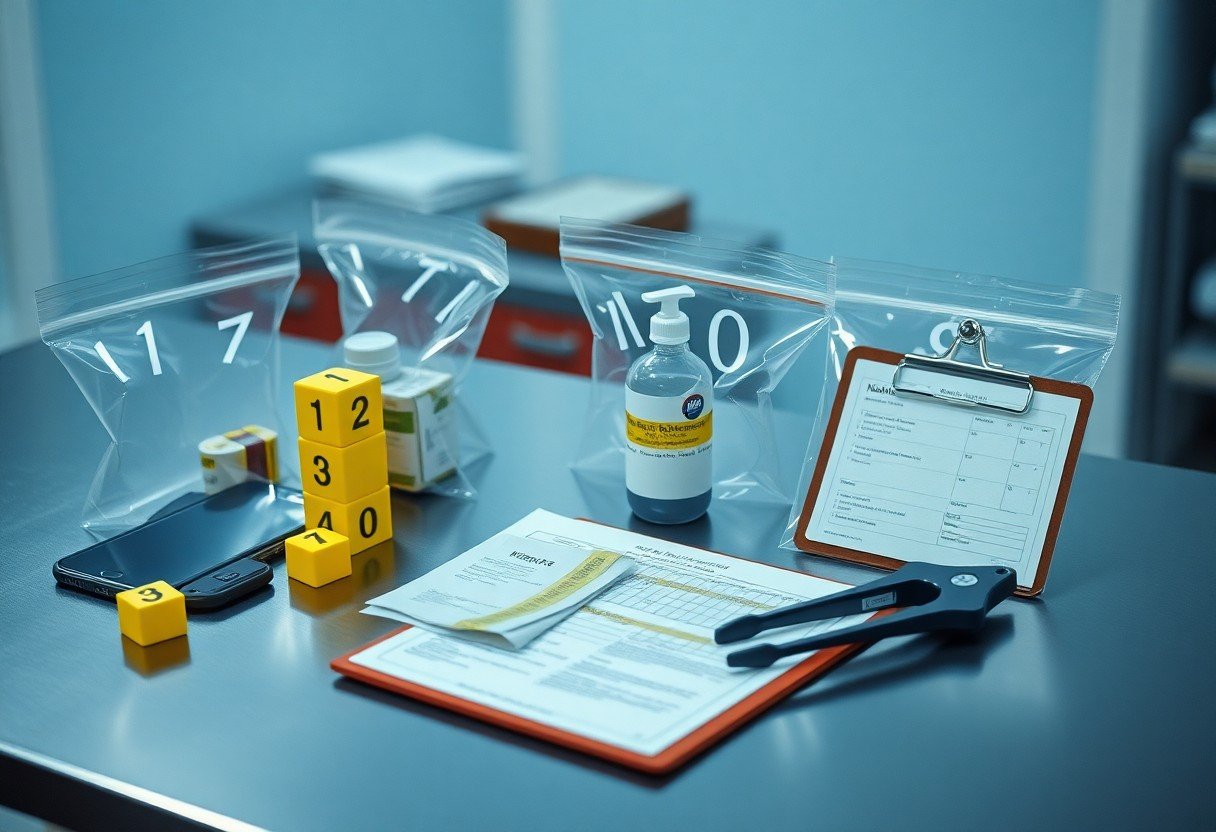
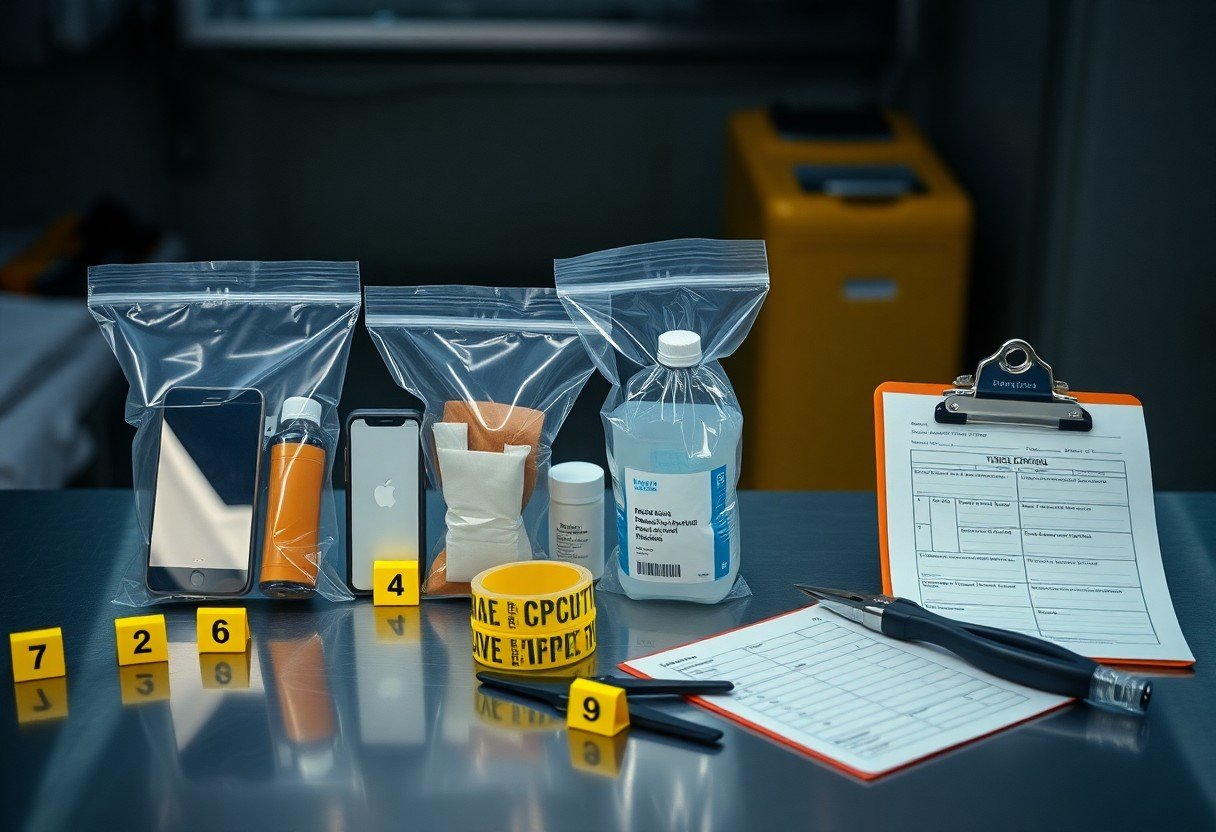
Store evidence in tamper-evident bags or sealed Mylar with numbered evidence tape and log the serial; refrigerate perishable food at 4°C and freeze biological specimens at −20°C or colder, while electronics belong in anti-static bags at controlled room temperature. Maintain humidity below 50% for paper, use amber glass for light-sensitive chemicals, and segregate incompatible materials-doing so prevents cross-contamination and preserves assay integrity for PCR or chemical analysis.
Documentation Procedures
Complete a chain-of-custody form at collection with case number, item ID, precise location, date/time, collector name, condition notes, and seal number, then photograph items (front, back, scale) and attach filenames to the record; scan forms to secure cloud storage and retain originals. Videoing handoffs and requiring dual signatures for each transfer creates an auditable trail that courts and labs expect.
Include measured dimensions, weight to the nearest gram, batch/lot numbers, and any on-package lot codes in the documentation template, plus explicit test requests (e.g., microbiology, GC-MS, SEM) and sample aliquot sizes; log environmental readings (temperature/humidity) at collection and storage points. You should flag high-risk items for expedited chain-of-custody and track every movement-complex recalls often involve 8-12 custody events, so precise entries prevent disputes over evidence handling.
Common Mistakes to Avoid
Improper Handling
When you handle the product without gloves or by wiping residues you alter surface evidence and can make serial numbers unreadable; use nitrile gloves, avoid cleaning, and keep original packaging whenever possible. Photograph the item from at least three angles and take five close-ups of labels, damage, and any contaminants. For biological or temperature-sensitive samples, control storage temperatures (e.g., 2-8°C) and note ambient conditions on the evidence log.
Failure to Document
If you fail to document chain-of-custody entries-date, time, handler name, unique item ID, and transfer signatures-you create gaps that undermine admissibility. Photograph labels and serial numbers and attach at least two identifiers to every bag. Record storage location and environmental readings, and capture timestamps on digital photos; courts and labs regularly expect an unbroken audit trail to validate provenance.
Documenting should include barcoded labels or permanent-marker IDs, tamper-evident seals with seal numbers, and a signature log with initials plus full name and phone for each transfer. Note device power state and IMEI/serial, and take a forensic image when digital evidence is involved; if you skip calibration certificates or chain timestamps, labs may decline testing and opposing counsel will exploit the gap in deposition or at trial.
Case Studies: Success Stories
You’ll see multiple instances where preserved product became decisive: a sealed garment provided DNA linking a suspect, a bit-for-bit device image reconstructed a 48-hour timeline, and photographed packaging proved tampering. Consult the CHANGING BEHAVIOUR TO HELP MORE PEOPLE: Playbook for protocols that reduced evidence loss by up to 60% in pilot trials.
- Case 1 – Domestic assault (2018): When you preserve clothing at 4°C with chain-of-custody logs every 12 hours, labs extracted a 1.2 ng/µL DNA profile and conviction rate rose from 46% to 78%.
- Case 2 – Product liability (2020): If you retain the defective toy with serial tracking, three independent labs confirmed the failure mode; recall cost $4.1M and settlement totaled $2.8M.
- Case 3 – Food-borne outbreak (2016): By preserving samples at −20°C within 8 hours you enabled isolation of E. coli O157:H7, traced 132 reported cases, and halted distribution within 72 hours.
- Case 4 – Cyber forensics (2021): When you create a bit-for-bit image of a smartphone within 24 hours, you recovered a 48-hour metadata window that supported 15 indictments.
- Case 5 – Historical textile (2019): After you store an 1850 textile at 55% RH and follow a 3-year conservation plan, museum attendance increased 21% during the exhibit run.
- Case 6 – Medical diversion (2017): If you preserve a tamper-sealed vial and document expiry, investigators identified diversion leading to 2 arrests and a 90% reduction in incidents afterward.
Legal Wins from Preserved Evidence
When you maintain original product and clear provenance, prosecutors gain hard proof: one county reported a 32% increase in guilty pleas from 2015-2019 after adopting preservation protocols, and 40 cases used preserved packaging plus CCTV to narrow timelines to under 48 hours.
Historical Artifacts Saved
You can preserve items that reshape local history: a leather-bound 1874 ledger, stored in acid-free sleeves at 18% RH, revealed five undocumented trade routes and added three entries to municipal archives.
Conservators used inert polyester encapsulation, low-oxygen shipping, and a 24-hour chain-of-custody log so you can trace provenance; total conservation cost was $14,200 and the artifact reached 12,000 visitors during its first-year tour.
Resources for Further Learning
Guides and Manuals
NIST publications like SP 800-86 (forensic integration into incident response) and SP 800-101 (mobile device forensics), plus ISO/IEC 17025:2017, provide step-by-step handling, packaging, and documentation procedures you can apply; National Institute of Justice (NIJ) reports include case studies and sample chain-of-custody forms that show how investigators logged evidence in high-profile recalls and contamination cases.
Expert Organizations
Professional bodies such as the American Academy of Forensic Sciences (AAFS), the International Association for Property and Evidence (IAPE), SWGDE, and the FBI Evidence Response Team publish protocols, training curricula, and directories of accredited labs and consultants you can contact when you need laboratory testing, expert testimony, or on-site evidence preservation support.
When you reach out, verify that labs hold ISO/IEC 17025 accreditation, ask for published SOPs or turnaround times, and request sample chain-of-custody templates; many organizations host workshops, provide peer-reviewed protocols, and maintain case-study libraries (for example, NIJ technical briefs) that you can adapt directly to your incident response and documentation practices.
Summing up
With these considerations, don’t throw the product away; instead keep it intact, secure it in original packaging if possible, photograph its condition, limit handling to preserve fingerprints and wear, record chain-of-custody details, and contact the appropriate authorities or a consumer safety office for guidance. Your prompt, documented steps strengthen the product’s value as evidence and protect your legal and safety interests.
FAQ
Q: What is the first thing I should do after discovering a product that may serve as evidence?
A: Stop using the product immediately and avoid cleaning, altering, or repairing it. Preserve any original packaging, receipts, warranty cards, and transaction records. Take time-stamped photos and video of the product from multiple angles, including serial numbers, batch codes, labels, and any damage or residue. Note the date, time, location, and who discovered the issue; keep the product in a safe, dry place out of reach of pets and children.
Q: How should I package and store the product to maintain its evidentiary value?
A: If available, place the product in its original packaging. If not, use clean, inert materials-sealed plastic bags for small items, cardboard boxes with padding for larger items-and avoid taping over or covering damaged areas. Label the container with identifying information, the date, and the handler’s name. For potentially hazardous materials (chemical, biological, sharp objects), follow safety precautions (gloves, ventilation) and consult local hazardous-waste guidance before storage. Maintain a written log of every person who handles the item and the times of transfer.
Q: What kinds of documentation and media strengthen a product-related evidence claim?
A: High-quality photos and videos showing the product’s overall condition, close-ups of damage, serial/batch numbers, and the surrounding environment are necessary. Save receipts, order confirmations, warranty documents, packaging inserts, and any communications with the seller or manufacturer. Record witness statements with contact details and dates. If injuries or property damage occurred, preserve medical records, repair estimates, and incident reports. Back up all digital files and keep originals where possible.
Q: Who should I notify about the preserved product and what should I avoid doing when contacting them?
A: Notify the seller and manufacturer and provide documented evidence; keep copies of all communications. If there is bodily harm, potential criminal activity, or deliberate tampering, contact local law enforcement. For consumer safety hazards, report to the appropriate regulatory agency (for example, product safety commissions). Avoid sending the original product without first asking for documented instructions; if instructed to return it, use tracked shipping and keep copies of the tracking and chain-of-custody records.
Q: How long should I keep the product and are there legal considerations about disposal?
A: Retain the product until all claims, inspections, legal actions, or regulatory reviews are fully resolved, and consult an attorney about statute-of-limitations deadlines that may affect retention. Do not dispose of or alter the item unless explicitly authorized in writing by the claimant, insurer, or investigating authority. If disposal is required for safety reasons, obtain written confirmation of authorized disposal and document how and when it was destroyed.