
Over the course of a surgical complication, you need clear documentation: request operative reports, anesthesia records, nursing and recovery notes, consent forms, medication and implant logs, imaging and pathology results, and all post-operative communications. These records help you identify deviations from standard care, establish timelines and responsible parties, and support informed decisions about investigation or legal action.
Key Takeaways:
- Operative report and surgical counts – documents the exact procedure, findings, techniques used, and instrument/sponges counts to identify intraoperative errors or retained items.
- Anesthesia record – shows medications, airway management, vital signs and timing to evaluate anesthesia-related complications and perioperative events.
- Informed consent and preoperative evaluation – verifies risks and alternatives were explained, patient capacity, indications and baseline conditions to assess appropriateness and consent validity.
- Nursing, PACU and medication administration records – track postoperative status, wound/drain notes, vitals and medication timing to detect delays, omissions or deterioration.
- Imaging, pathology, equipment/device logs and incident/communication reports – correlate findings, confirm diagnosis, identify device failures or adverse events, and document clinician communications and handoffs.
Understanding Surgical Errors
Definition of Surgical Errors
You should treat surgical errors as preventable deviations from the intended operative plan that result from technical mistakes, communication failures, or system-level breakdowns; they range from minor complications to sentinel events that require reporting and often lead to additional procedures, prolonged hospitalization, or litigation, so your review of operative notes, anesthesia records, and incident reports helps establish what went wrong and why.
Common Types of Surgical Errors
You will most often see wrong-site/wrong-patient surgery, retained surgical items, anesthesia-related mishaps, postoperative hemorrhage, and surgical-site infections; retained items occur in roughly 1 in 1,000-5,500 procedures, while wrong-site events remain a frequent sentinel event cited by accrediting bodies.
- Wrong-site/wrong-patient: failure in verification or marking before incision.
- Retained items: incomplete counts or missing radiographs during closure.
- Anesthesia errors: dosing mistakes, airway events, or monitoring failures.
- Hemorrhage: inadequate hemostasis or vessel injury during dissection.
- Perceiving gaps in the checklist or handover that led to the error is crucial for reconstruction.
| Wrong-site/wrong-patient | Often follows poor time-out practices; leads to reoperation and high litigation risk |
| Retained object | Textiles or instruments missed on count; may present days later with pain or infection |
| Anesthesia complications | Hypoxia, aspiration, or medication errors; requires review of anesthesia record and monitoring logs |
| Postoperative hemorrhage | Can cause shock and re-exploration; check intraop notes, transfusion records |
| Surgical-site infection | Increases LOS and readmissions; correlate with antibiotic timing and sterile-field breaches |
You should analyze each error type against the record trail: for wrong-site events compare pre-op consent, marking documentation, and time-out notes; for retained items cross-check instrument counts, intraoperative x-rays, and OR staff logs; for anesthesia issues inspect drug administration records and monitoring strips to recreate timelines and pinpoint deviations.
- Match operative notes to consent forms to detect scope or procedure mismatches.
- Use count sheets and postoperative imaging to confirm or refute retained items.
- Review anesthesia flowsheets and drug logs for dosing and timing anomalies.
- Correlate nursing handoff notes and PACU records with intraop events.
- Perceiving how documentation gaps map to clinical outcomes allows you to target specific records to request.
| Operative note | Step-by-step account of the procedure, critical for identifying technical errors |
| Anesthesia record | Drugs, doses, vitals, and events that contextualize intraop instability |
| Instrument and sponge counts | Count sheets and reconciliation notes used to detect retained items |
| Intraoperative imaging | Fluoroscopy or x-rays confirming instrument position or missed foreign bodies |
| Nursing and PACU notes | Handoffs, post-op status, and complications timeline for reconstructing postoperative care |
Importance of Medical Records
Your medical record is the chronological evidence of what happened before, during, and after surgery: operative notes, consent forms, anesthesia logs, nursing documentation, imaging, and pathology. You can use timestamps to establish when antibiotics were given, which implants were used, and whether postoperative orders matched the care delivered. Under HIPAA you have a right to access these records within 30 days, and missing or inconsistent entries often point to the exact process failures that led to adverse outcomes.
Role of Records in Legal Proceedings
When you pursue a claim or defend against one, records are the primary documentary proof judges, juries, and insurers examine: operative reports, consent forms, nursing notes, medication administration records, and device logs. You should expect requests for original signatures, time-stamped entries, and communication threads; gaps or late entries weaken credibility. Chain-of-custody for electronic records and audit trails often determine whether a document is admissible and persuasive in settlement negotiations or trial.
Enhancing Patient Safety and Quality of Care
Reviewing records lets you pinpoint system failures-missed antibiotic windows, absent time-outs, or inconsistent postoperative monitoring-and act on them. For example, WHO surgical safety checklist implementation has been associated with roughly a 30% drop in complications, and records show whether checklists and perioperative antibiotic timing (typically within 60 minutes before incision) were followed. You can use that evidence to drive specific corrective actions.
Digging deeper, you can aggregate charts to run quality analyses: track surgical-site infection rates by surgeon or device, correlate antibiotic timing to outcomes, and identify recurring documentation errors that precede adverse events. You should use root-cause analysis and morbidity & mortality reviews informed by chart data to design interventions-such as standardizing checklist prompts in the EHR or mandating implant serial numbers in operative notes-which have been shown in multiple health systems to reduce preventable complications and shorten time to corrective policy changes.
Key Records to Request
Request operative reports, anesthesia records, nursing and PACU notes, consent forms, implant logs, pathology and radiology reports, and medication administration records; these often reveal timing discrepancies, implant serial numbers, and divergent accounts of events. You should get complete chart copies-most hospitals keep records 5-10 years-and ask for raw monitor strips and imaging DICOM files when timing or device function is in question.
Surgical Notes and Reports
Ask for the full operative report, which should list date/time, primary and assistant surgeons, procedure code, incision, findings, estimated blood loss (e.g., EBL 300 mL), complications, and implants with lot/serial numbers. You can compare the documented steps against the consent and postop notes to spot deviations such as an unplanned procedure or undocumented repairs that often indicate an error or omission.
Anesthesia Records
Obtain the anesthesia record showing start/stop times, airway management, ASA status, agents and doses (for example, 200 mg propofol, 100 mcg fentanyl), vital-sign trends, urine output, and intraoperative events like hypotension or desaturation. You should review time-stamped vitals and drug administrations to identify temporal links between medication dosing and adverse events.
Also request raw monitor strips, the medication administration log, and the anesthesia provider’s narrative note; those often reveal transient hypoxia, rapid BP drops, or dosing errors missed in the summary. You can calculate dose-per-weight (e.g., 2 mg/kg vs 20 mg total) and cross-check fluids and vasopressors to assess whether standard protocols were followed during the incident.
Consent Forms
Get the signed consent form showing the specific procedure, listed risks and alternatives, date/time, provider name, and patient or surrogate signature; note if a translator or witness was used. You should check whether the consent matches what was performed-an example mismatch is consent for “laparoscopic cholecystectomy” while an open procedure was done without documented discussion.
Examine the consent for completeness: did it list the common and serious risks, alternatives, and potential for conversion or additional procedures? You can compare the language against institutional templates and current standards to see if omissions-such as failing to document discussion of blood transfusion risk or ligation of nearby structures-might indicate inadequate informed consent.
How to Request Medical Records
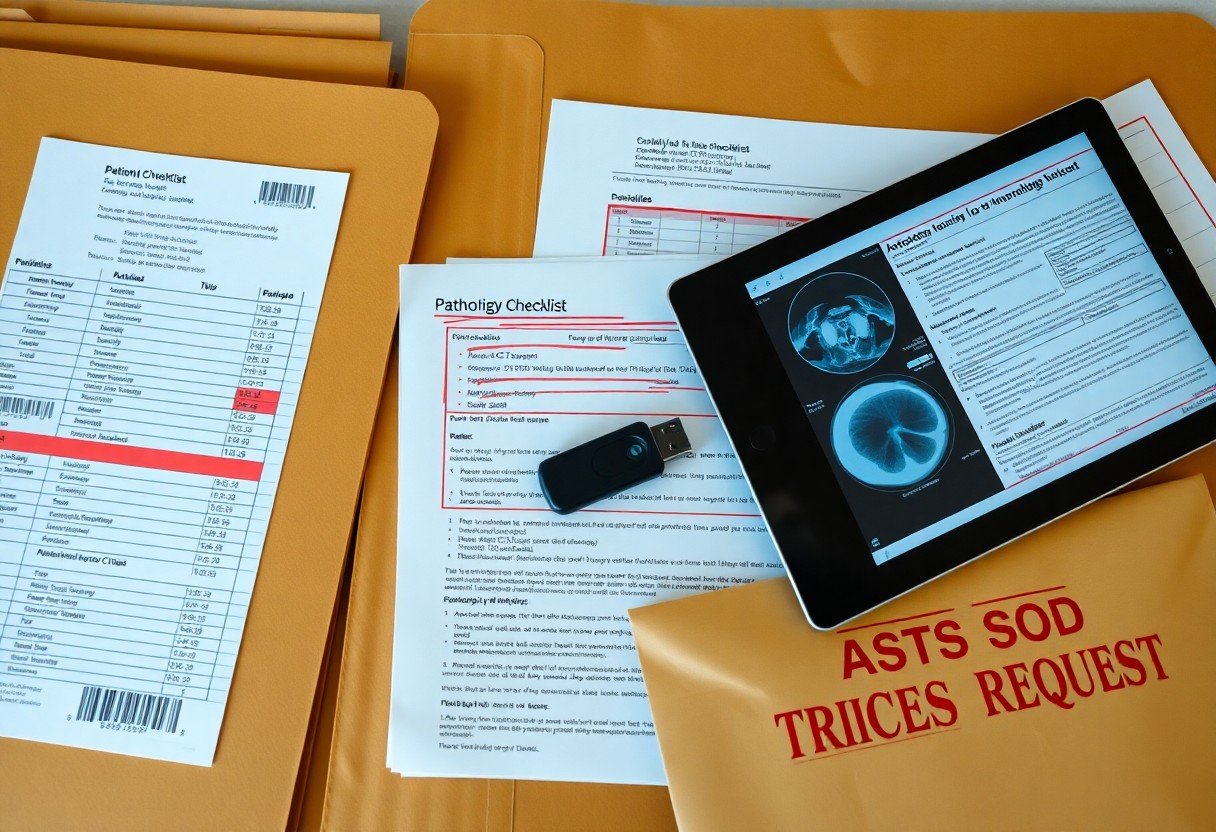
You should request operative reports, anesthesia records, nursing notes, instrument counts, consent forms, pathology and imaging; these often show where errors occurred. Under HIPAA providers must respond within 30 days (one 30‑day extension allowed), and you can ask for certified copies for litigation. For context on common surgical mistakes see What Are the Most Common Types of Surgical Errors?.
Legal Considerations
You must balance HIPAA access with litigation needs: HIPAA gives you access rights and allows providers 30 days to comply, but malpractice statutes of limitation typically run 1-3 years from discovery depending on state law. Preserve originals and avoid altering charts to prevent spoliation claims; if records are incomplete you can subpoena them during discovery. Courts often favor time‑stamped, certified records when assessing surgical error allegations.
Steps to Obtain Records
Start by completing the provider’s release form, attach government ID, specify date range and exact documents (operative report, anesthesia record, imaging), and indicate electronic or certified copy. Pay any reasonable, cost‑based fee and keep proof of submission. Follow up within two weeks; if no response, escalate to the hospital records office or file an OCR complaint. For litigation, secure a subpoena if voluntary production stalls.
If you need faster access, use the hospital’s patient portal or request DICOM images via secure transfer; ask specifically for time‑stamped anesthesia logs, instrument count sheets and intraoperative communication notes-these often reveal discrepancies. Send requests by certified mail or upload authorizations to the records portal, log all contacts and dates, and demand an itemized fee breakdown if charges seem excessive so you can dispute them promptly.
Analyzing Records for Surgical Errors
Start by reconstructing a minute-by-minute timeline from anesthesia records, operative notes, nursing flow sheets, PACU charts, and medication administration records; compare incision, anesthesia induction, extubation and documented complications. You should cross-reference instrument and sponge counts with the operative note and radiology reports-for example, a retained sponge often appears as a radiopaque marker on immediate post-op x-ray. Flag any unexplained gaps, inconsistent times, or missing signatures for deeper review.
Identifying Discrepancies
Cross-check specific items: consent form (procedure, side), surgeon’s operative note (technique, laterality), anesthesia record (drugs, doses, times), pathology (specimen ID), and radiology (pre/post images). For example, if the operative note documents a left oophorectomy but pathology reports ovarian tissue labeled “right,” you have a clear discrepancy affecting causation and identity of injured anatomy.
Engaging Medical Experts
You should retain board-certified clinicians-surgeons, anesthesiologists, OR nurses, radiologists, and pathologists-to opine on standard of care, causation, and documentation. You can expect expert review to require 5-15 hours and written reports or affidavits; typical hourly review rates range $200-400 and deposition rates $300-600, though fees vary by specialty and region.
You should provide experts with a consolidated, chronological bundle: redacted medical records, imaging in DICOM format, operative videos or photos, instrument/sponges count sheets, pathology slides or reports, and a short fact timeline. Allow 2-6 weeks for a substantive report-often 5-15 pages-and budget for 8-20 hours of combined review, report drafting, and deposition prep; plan to obtain at least one rebuttal expert if the defense produces opposing opinions.
Preventing Future Surgical Errors
Insist on system-level changes: mandatory pre-op verification, universal surgical time-outs, and standardized checklists. You should ask whether your facility uses the WHO Surgical Safety Checklist-implementations have reduced complications by up to 36% in multicenter studies-and whether barcode patient IDs and digital instrument tracking are in place. Also verify routine root-cause analyses and transparent reporting after events, since hospitals with these practices show faster corrective-action cycles and fewer repeat errors.
Improving Communication and Protocols
Adopt structured communication tools like SBAR or I‑PASS for handoffs, formal briefings before incision, and debriefs after closure. You can require an OR whiteboard that records roles, implants, and counts; studies of structured handoffs show error reductions in the 20-30% range. Push for monthly compliance audits, action-item tracking from morbidity meetings, and electronic checklists that force verification of critical steps before proceeding.
Training and Education Initiatives
Prioritize simulation-based and team training: mandate high-fidelity simulation for rare crises, crew-resource-management sessions for teamwork, and credentialing that asks for 10-20 supervised cases for complex procedures. You should insist on annual skills refreshers and routine video-based coaching, because deliberate practice with structured feedback shortens learning curves and reduces intraoperative technical errors.
Delve deeper into training by implementing validated assessment tools (OSATS), procedure-specific competency checklists, and objective metrics such as time to critical steps and error counts. You can require faculty proctoring, blinded video review with structured feedback, and quarterly multidisciplinary simulation drills that recreate catastrophic events (massive hemorrhage, airway loss). Programs using these components typically show measurable skill gains and performance improvement within 6-12 months.
Summing up
Presently you should request operative reports, anesthesia and nursing records, consent forms, imaging and pathology reports, medication and monitoring logs, and discharge summaries so you can pinpoint deviations from standard care, establish timing and causation, verify informed consent, and document harm for corrective action or legal review. These records give you a comprehensive, objective foundation to assess what happened, who was involved, and what steps are needed to prevent recurrence or pursue remedy.
FAQ
Q: What core medical records should I request after a suspected surgical error?
A: Request the complete operative report, anesthesia record, preoperative evaluation and history and physical, informed consent forms (including any addenda), nursing progress and post‑anesthesia care unit (PACU) notes, medication administration records (MAR), vital sign flow sheets, post‑operative orders, daily progress notes, discharge summary, laboratory results, all imaging and radiology reports (with original DICOM files if possible), pathology reports, implant/device logs and serial/lot numbers, instrument count sheets, incident reports, transfer records, and emergency response or resuscitation documentation. Also ask for communications (emails, pages) about the case, EHR audit logs showing who accessed or modified records, and any operative video or intraoperative photographs. These items provide a complete timeline, technical details, and evidence of deviations from expected care.
Q: Why are the operative report and anesthesia record particularly important?
A: The operative report contains the surgeon’s description of the procedure, findings, steps taken, estimated blood loss, complications, and whether counts were correct. It establishes what was planned versus what was actually done. The anesthesia record logs airway management, medication doses and timing, hemodynamic events, vital sign trends, and anesthesia techniques; it can reveal intraoperative instability, medication errors, or delayed recognition of problems. Comparing both records helps identify discrepancies, undocumented adverse events, or omissions that indicate error or substandard care.
Q: What should I look for in nursing notes, MARs, and instrument count sheets, and why do they matter?
A: Nursing notes and MARs document post‑operative assessments, pain control, wound checks, vital sign trends, medication administration times and doses, and nursing responses to deterioration. Gaps, inconsistent timing, or undocumented assessments can indicate missed escalation. Instrument count sheets record pre‑ and post‑procedure counts of sponges and instruments; discrepancies can signal retained foreign bodies. Together these records show recognition and response to complications, adherence to protocols, and whether handoffs and monitoring met standards.
Q: Why request imaging, pathology, and implant/device documentation, and what specific details matter?
A: Pre‑operative imaging and intraoperative fluoroscopy clarify the indication and guide procedural decisions; post‑operative imaging can detect retained items, malpositioned implants, hematomas, or organ injury. Pathology reports confirm diagnoses, margins, and whether tissue expected to be removed actually was. For implants or devices, request insertion logs, manufacturer lot and serial numbers, device labels, and any instructions for use. Those details are crucial for proving mechanism of injury, linking device failure to harm, identifying recalled components, and supporting claims about wrong-site or incomplete procedures.
Q: How do I request these records, what form should the request take, and what obstacles might I face?
A: Submit a written medical records request or HIPAA authorization to the hospital’s Health Information Management/Medical Records department specifying the complete date range, treating providers, and requested document types; request certified, unredacted copies and original media for images or video. Ask for EHR audit logs and metadata (timestamps). Send a preservation/preservation of evidence letter to the facility and treating clinicians to prevent destruction. Be aware that peer‑review, quality assurance, or morbidity & mortality records may be privileged or withheld; if so, counsel can seek subpoenas or court orders. Expect copying fees and state statutory response times; if records are delayed or redacted, escalate through the hospital legal/risk department or involve an attorney to obtain compelled production and chain‑of‑custody documentation for admissibility in litigation.