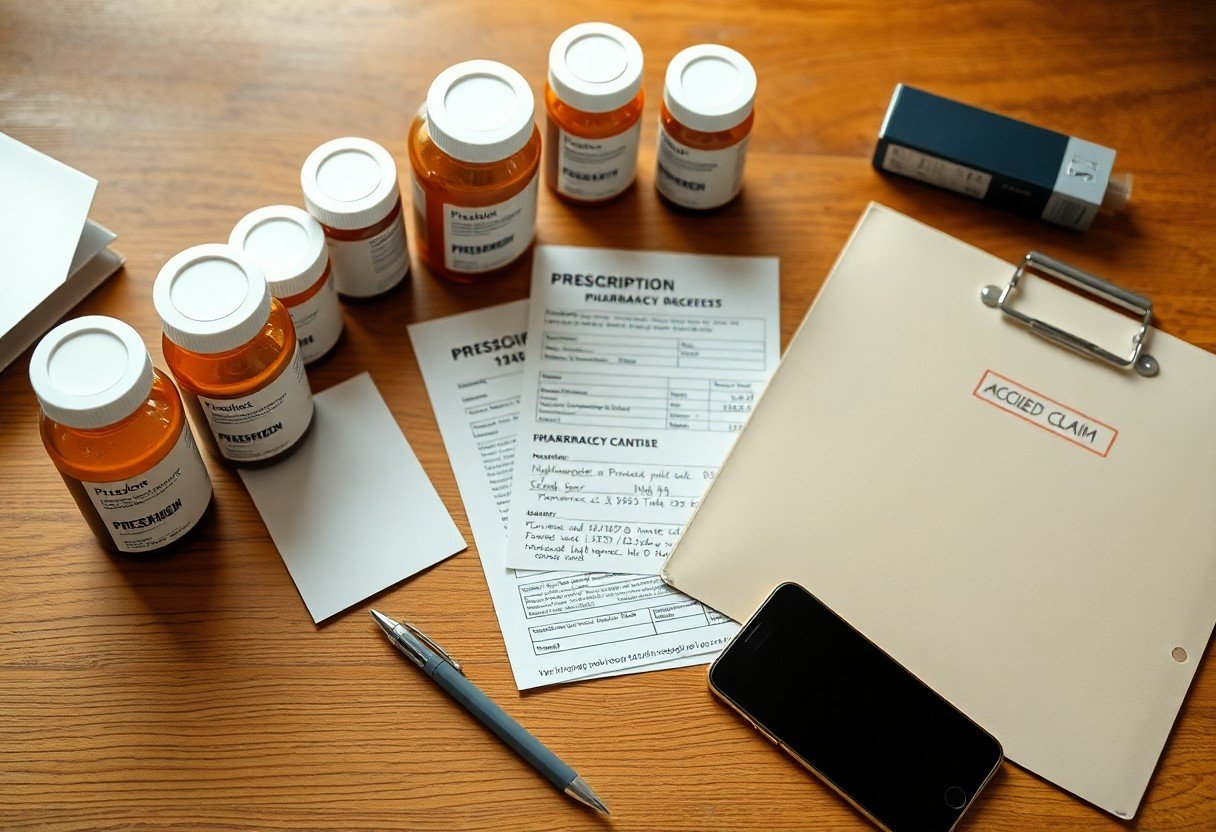
Many insurers and courts expect you to keep pharmacy receipts, itemized bills, prescription labels, dosage instructions, and proof of payment to support claims for treatment-related expenses after an accident.
Key Takeaways:
- Itemized pharmacy receipts that list patient name, medication name, dosage, quantity, date dispensed, unit price, total paid, and copay.
- Prescription labels and packaging bearing patient name, prescribing physician, date dispensed, and NDC to verify what was prescribed and when.
- Explanation of Benefits (EOBs) and insurance statements showing insurer payments and remaining balances; include proof of out-of-pocket payments such as credit card or bank statements.
- Prescribing orders, prior-authorization approvals or denials, and pharmacist notes that document medical necessity and coverage decisions.
- Receipts for over-the-counter medications, medical supplies, mail-order shipping, and a record of refills and ongoing medication costs for future claims.
The Legal Importance of Maintaining Prescription Records
Keep prescription receipts, pharmacy labels, and medication lists to show the treatments you received, amounts you paid, and prescribing details; those documents strengthen your claim and help insurers and lawyers verify ongoing care.
Proving the Nexus Between Injury and Treatment
Collect dated receipts and prescriptions so you can link medicines to specific injuries and physician notes, showing a clear medical nexus between the accident and your treatment.
Quantifying Total Economic Damages for Settlement
Document every prescription cost, copay, and refill to calculate your total out‑of‑pocket medical expenses when preparing a settlement demand or negotiating with insurers.
Include pharmacist invoices, insurance explanations of benefits, and estimated future medication costs so your attorney and economic expert can quantify past and projected medical losses for settlement calculations.
Primary Pharmacy Documentation to Save
Keep copies of primary pharmacy documents such as receipts, invoices, and labels; you can use them to support claims and show prescriptions filled, dosages, and payment details.
Detailed Itemized Receipts and Invoices
Collect itemized receipts and invoices from every pharmacy visit; they should show medication names, quantities, dates, and costs so you can prove expenses and link treatment to the accident.
Pharmacy-Provided Medication Information Sheets
Request pharmacy-provided medication information sheets for each prescription so you have documentation of dosage, side effects, and administration instructions that explain medical necessity and treatment impact.
Save the medication sheets that list active ingredients, dosing schedules, warnings, interactions, refill details, NDC or lot numbers, and prescribing clinician; you can pair them with receipts to demonstrate treatment specifics and potential side effects when filing claims or working with adjusters.
Substantiating Medical Necessity
Documentation that ties prescribed drugs to your accident treatment strengthens claims by showing medical necessity, duration, and expected outcomes for each medication.
Original Physician Prescriptions and Refill Logs
Prescriptions and refill logs you keep prove dosages, start dates, and continuous use, giving insurers clear evidence that medications were prescribed for accident-related injuries.
Clinical Notes Linking Medication to Accident Injuries
Clinical notes your provider writes should state the injury, rationale for each drug, and observed response, directly connecting medication to the accident in your medical record.
Your provider’s detailed notes help you document timing of symptoms, alternatives considered, and why a specific medication was chosen; include dated entries, signed assessments, and any follow-up comments to strengthen causal and necessity arguments.
Best Practices for Organizing Medical Evidence
Organize all prescription labels, pharmacy receipts, and itemized medical bills by date and type so you can support claims and reimbursement.
Maintaining a Chronological Expense Journal
Track each medication expense, appointment, and related cost in a dated journal you update immediately, noting purpose, provider, and payment method so you can present a clear timeline to insurers or lawyers.
Digital Backups and Secure Cloud Storage
Scan prescription labels, receipts, and explanations of benefits, then upload encrypted copies to cloud storage you control, tagging entries by date and type for quick retrieval during claims.
Ensure you create PDFs of prescriptions, receipts, and EOBs, name files with date and description, and keep a mirrored folder structure for medical, pharmacy, and transportation costs. Use OCR-enabled scans so you can search entries, enable two-factor authentication, and keep an offline backup on an external drive. Share secure links with your attorney and maintain records until claims and appeals are fully closed.
Avoiding Documentation Errors in Personal Injury Claims
Keep organized copies of prescriptions, receipts, pharmacy printouts, and payment records so you can prove dates, dosages, and costs when filing your claim.
Risks of Relying Solely on Insurance Summaries
Insurance summaries often omit out-of-pocket payments and one-time purchases, so you should keep original receipts and explanations of benefits to substantiate the total you paid.
Handling Cash Transactions and One-Time Purchases
Pay cash for prescriptions? Get a dated, itemized receipt that lists the product, price, pharmacy name, and a contact method so you can support reimbursement claims.
If you paid in cash, insist on an itemized, dated receipt naming the medication or supply and price; photograph the product and packaging, record the seller’s contact information, and ask the pharmacy to print a duplicate or provide a written affidavit so you can bridge gaps when insurance summaries fall short.
Summing up
Drawing together, keep original prescription labels, itemized pharmacy receipts showing medication name, dosage, date, quantity and price, proof of payment and insurance EOBs, receipts for OTC or delivery charges, and prescription orders tied to your treatment so you can support claims and reimbursement.
FAQ
Q: Which prescription-related receipts should I keep after an accident?
A: Keep pharmacy receipts that show the patient name, date, medication name, dosage, quantity dispensed, and total amount paid. Retain itemized receipts for over-the-counter medications bought to treat accident-related symptoms. Save prescription labels and pill bottles that list the drug name, dosage, prescription number, and NDC when present. Obtain and keep Explanation of Benefits (EOB) statements from your insurer showing what was billed and what was paid. Preserve receipts for durable medical equipment, medical supplies, mail-order deliveries, and any fees or shipping charges tied to prescriptions.
Q: How long should I keep prescription receipts and records after an accident?
A: Keep all prescription receipts and related records until your personal injury claim is fully resolved and any appeals or reimbursement issues are closed. Typical state statutes of limitations for personal injury range from two to six years, so retain records for at least that period after settlement. Preserve tax-related documentation for up to seven years if you plan to claim medical expenses on tax filings. Ask your attorney or insurance adjuster for specific retention guidance based on your jurisdiction and case details.
Q: What information should be on a receipt to be useful for a claim?
A: Receipts should include the patient name, date of service or purchase, medication name, strength, quantity dispensed, and National Drug Code (NDC) when available. Include the prescriber’s name, prescription number, pharmacy name and address, and the billed amount with any copay shown. Itemized invoices that separate medication cost from dispensing or administrative fees strengthen your documentation. EOBs and pharmacy printouts that match receipts provide additional verification.
Q: What if I lost the original receipt or it lacks details?
A: Request a duplicate receipt or a prescription history printout from the pharmacy; pharmacies maintain electronic records and can provide documentation. Obtain medical records from the prescriber showing the prescription, dosage, and clinical reason for the medication. Get Explanation of Benefits from your insurer and use credit card or bank statements as proof of payment when receipts are missing. Photograph medication bottles and labels and save any online order confirmations or shipment tracking for mail-order prescriptions.
Q: How should I organize and store prescription receipts for a personal injury claim?
A: Create a dedicated file-both physical and digital-for all prescription receipts, labels, EOBs, and related correspondence. Scan or photograph originals and save searchable PDFs with clear filenames that include date, medication, and cost. Maintain a spreadsheet that summarizes each expense, date, prescribing provider, and links to the scanned documents. Share your organized packet with your attorney or insurance adjuster when requested to speed review and settlement.