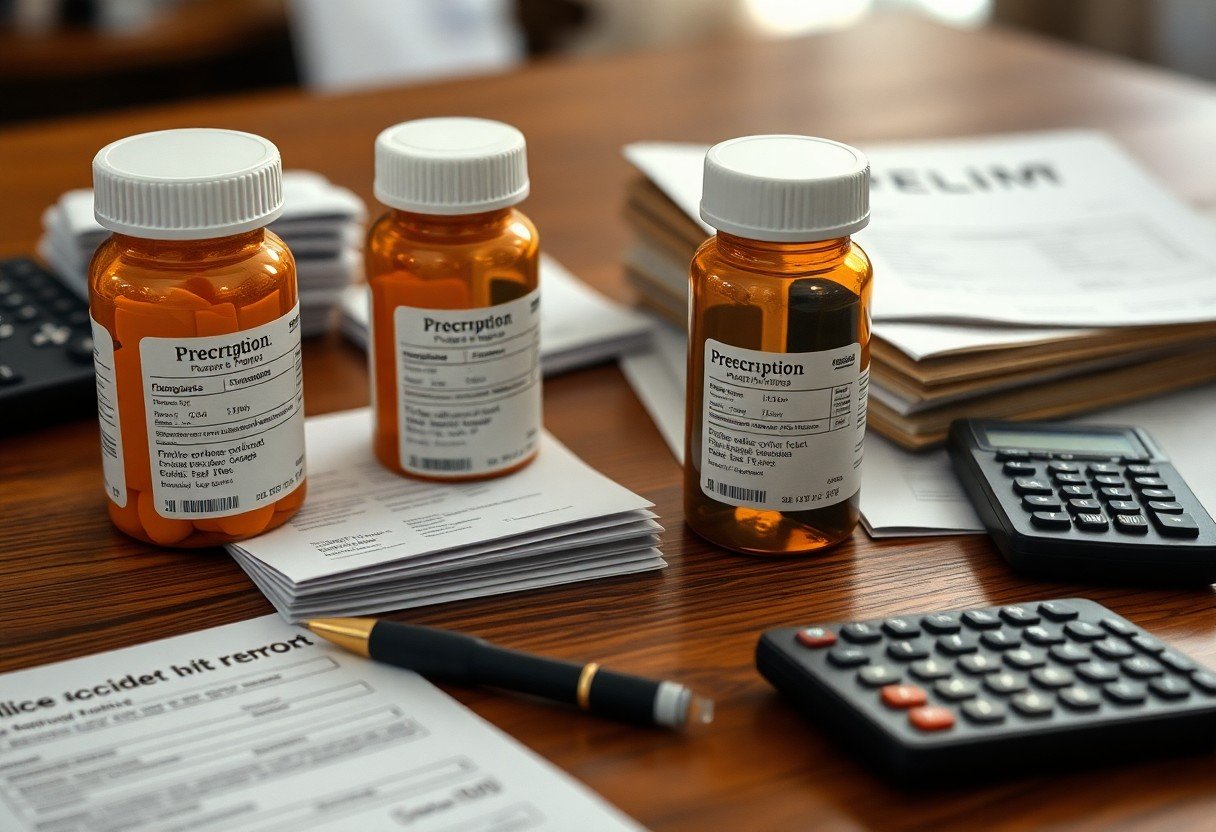
With an accident claim, you should keep all prescription receipts, pharmacy printouts, prescription labels, copayment records, and any medication-related medical notes to document costs and medical necessity for insurers or courts.
Key Takeaways:
- Physical pharmacy receipts showing medication name, dosage, date filled, quantity, price paid, and pharmacy contact information.
- Prescription labels and original packaging that display the prescriber, patient name, instructions, and NDC or Rx number.
- Insurance Explanation of Benefits (EOBs), claim summaries, and denial/approval letters that document insurer payments and your out-of-pocket responsibility.
- Proof of payment such as credit card statements, canceled checks, receipts for co-pays, or digital payment confirmations tied to the prescription purchase.
- Refill history or pharmacy printouts and electronic health record notes verifying ongoing medical need, treatment dates, and cumulative costs.
Essential Documentation for Reimbursement
Keep copies of every prescription receipt, label, and insurance claim so you can prove payment dates, medication details, and expenses when filing reimbursement claims with insurers or attorneys.
Itemized pharmacy receipts and invoices
Save itemized pharmacy receipts and invoices showing drug names, quantities, unit prices, and date of sale; insurers require line-item detail to process reimbursements quickly.
Official prescribing physician orders
Obtain signed physician orders or prescriptions that list diagnoses, medication names, dosages, and duration so you can tie treatment to the accident for claims.
Request written physician orders that include the clinical rationale, ICD diagnosis codes, and the prescriber’s signature; keep electronic copies and dated progress notes so you can substantiate medical necessity for insurers or in court.
Tracking Out-of-Pocket Medication Expenses
Keep a running log of every prescription purchase, with dates, pharmacy, dosages, and receipts so you can prove out-of-pocket losses when filing claims or negotiating settlements.
Insurance co-pays and deductibles
Save co-pay receipts and tally deductible payments so you can show what you personally paid; that evidence supports reimbursement claims and settlement calculations.
Over-the-counter medications recommended by doctors
Note any over-the-counter medications your doctor recommends and keep receipts so you can include those expenses in your claim.
Document your OTC purchases with date, brand, quantity, price, and the recommending clinician’s name; attach receipts and a short note explaining why the item was suggested. Obtain a written recommendation or prescription when possible, photograph packaging, and keep any pharmacy printouts to link purchases directly to medical advice and strengthen your case.
Maintaining a Comprehensive Medication Log
Keep a running medication log that lists prescriptions, pharmacy receipts, and refill dates; you can also link it to documentation on What to do with your Medical Bills After a Car Accident to support claims.
Recording dosage, frequency, and duration
Track each medication’s dose, timing, and prescribed duration, noting any changes you or providers make and keeping accompanying receipts to prove continuity of treatment.
Documenting side effects and recovery progress
Note symptoms, side effects, and functional improvements daily, including timestamps and dates so you can correlate medications with recovery and strengthen your medical record.
Detail timing, severity, triggers, and duration of each side effect, log photos of visible reactions, and note how symptoms affect daily activities; share entries with your provider and attach related pharmacy labels or receipts to corroborate treatment paths for insurers and attorneys.
Utilizing Digital Pharmacy Records
Digital pharmacy records let you pull prescription histories, receipt images and cost breakdowns quickly, giving clear documentation of medications, refill dates and amounts paid for accident-related claims.
Accessing patient portals for historical data
You can log into patient portals to download refill histories, verify dispensing dates and save e-receipts showing insurer payments and your out-of-pocket costs.
Requesting annual prescription summaries
Ask pharmacies for an annual prescription summary that lists each drug, prescribing provider, total cost and payment dates to compile complete evidence for legal or insurance reviews.
When you request an annual summary, provide the pharmacy your full name, date of birth and the date range, and sign an authorization if they require it; ask for itemized fields such as Rx numbers, NDC codes, fill dates, quantities, unit prices, insurer payments and your out-of-pocket amounts. Many stores will email a PDF; expect a small copy fee, and keep the emailed receipts and summary together to show chronological costs and treatment continuity for claims.
Establishing Medical Necessity for Claims
Records of prescriptions, dosages, and the prescribing provider help you tie treatment to the accident and support medical necessity for claims.
Linking medications to accident-related injuries
Evidence that your medications were prescribed for accident-related injuries-clinic notes, pharmacy labels, and provider instructions-helps you connect the drugs to your claim.
Proving the “reasonable and necessary” cost standard
Documentation of generic alternatives, quantities dispensed, and comparable insurer rates helps you demonstrate that the medication costs you incurred were reasonable and necessary.
Collect detailed receipts, pharmacy printouts, EOBs, and provider notes showing why specific medications were prescribed; you should also include proof of payment, price comparisons to generics, and records of prior authorizations to strengthen proof that costs met the reasonable and necessary standard.
Common Record-Keeping Pitfalls to Avoid
Avoiding sloppy documentation prevents preventable denials; keep prescriptions, dated receipts, and clear labels for each medication, note purpose and prescriber, store originals plus digital backups, and tag accident-related costs separately so you can support claims quickly.
Discarding receipts for low-cost items
Keeping receipts for low-cost items matters because insurers and courts may reimburse cumulative expenses; keep each dated and linked to the prescription or treatment so you don’t lose reimbursement for costs that add up.
Relying on bank statements instead of itemized bills
Using bank statements alone can weaken your claim because they show only totals and merchant names; obtain itemized bills or pharmacy printouts that list medication names, dosages, dates, and costs for clear proof.
Request itemized pharmacy receipts, prescription labels, dispensing records, and insurer EOBs because these documents show medication name, dosage, prescribed quantity, prescribing clinician, and date-details a bank ledger never provides. You should also annotate receipts to tie each expense to the accident, keep originals plus scanned backups, and ask pharmacies for fill histories when needed to prove ongoing treatment and avoid disputes over whether costs were related to the incident.
To wrap up
Taking this into account, you should keep prescription labels, pharmacy receipts, EOBs, and medication-related medical notes and invoices to prove costs and support insurance or legal claims.
FAQ
Q: What prescription receipts and labels should I collect immediately after an accident?
A: Collect every pharmacy receipt showing date of purchase, medication name, strength, quantity dispensed, National Drug Code (NDC) or Rx number, itemized price, and proof of payment (credit card receipt or cash receipt). Keep original prescription labels and pill bottles with readable patient name, prescriber, and dosing instructions. Preserve any written prescriptions, e-prescription confirmations, and itemized invoices from specialty or compounding pharmacies.
Q: Which supporting documents connect prescriptions to my accident-related injuries for a claim?
A: Keep physician notes, discharge summaries, and prescription orders that state the medication was prescribed for injuries from the accident. Retain Explanation of Benefits (EOBs) from your insurer that show billed versus paid amounts, pharmacy communications about coverage denials or prior authorizations, and receipts for copays or assistance programs. Organize these with the corresponding medication receipts so an adjuster or attorney can verify causation and out-of-pocket costs.
Q: How long should I keep prescription receipts, labels, and related records?
A: Keep all prescription records and receipts until your insurance claim and any legal action are fully resolved. After resolution, store originals and digital copies for a period at least equal to your state’s statute of limitations for personal injury claims, commonly 2-6 years, plus additional years for tax documentation if you claimed medical expenses on returns (often three to seven years). If uncertain, keep records longer or consult your attorney.
Q: What is the best way to organize and preserve prescription cost records for a claim or lawsuit?
A: Create a chronological folder with originals and scan every document to create encrypted backups. Label digital files with date, medication name, pharmacy, and amount (for example: 2025-03-01_Oxycodone_CVS_$45). Maintain a spreadsheet that lists date, drug, dosage, Rx number, prescriber, pharmacy, amount paid, insurer payment, and outstanding balance. Photograph pill bottles and retain pharmacy printouts showing NDC and refill history.
Q: Which commonly overlooked prescription expenses should I keep receipts for?
A: Keep receipts for over-the-counter medications recommended by a provider, mail-order shipping or expedited delivery fees, compounding charges, durable medical supplies linked to medication use (syringes, inhaler spacers), specialty equipment rental, and pharmacy transfer or specialty-store handling fees. Preserve documentation of discount card savings, manufacturer copay assistance, and any out-of-pocket supplement payments so total economic loss can be properly calculated.