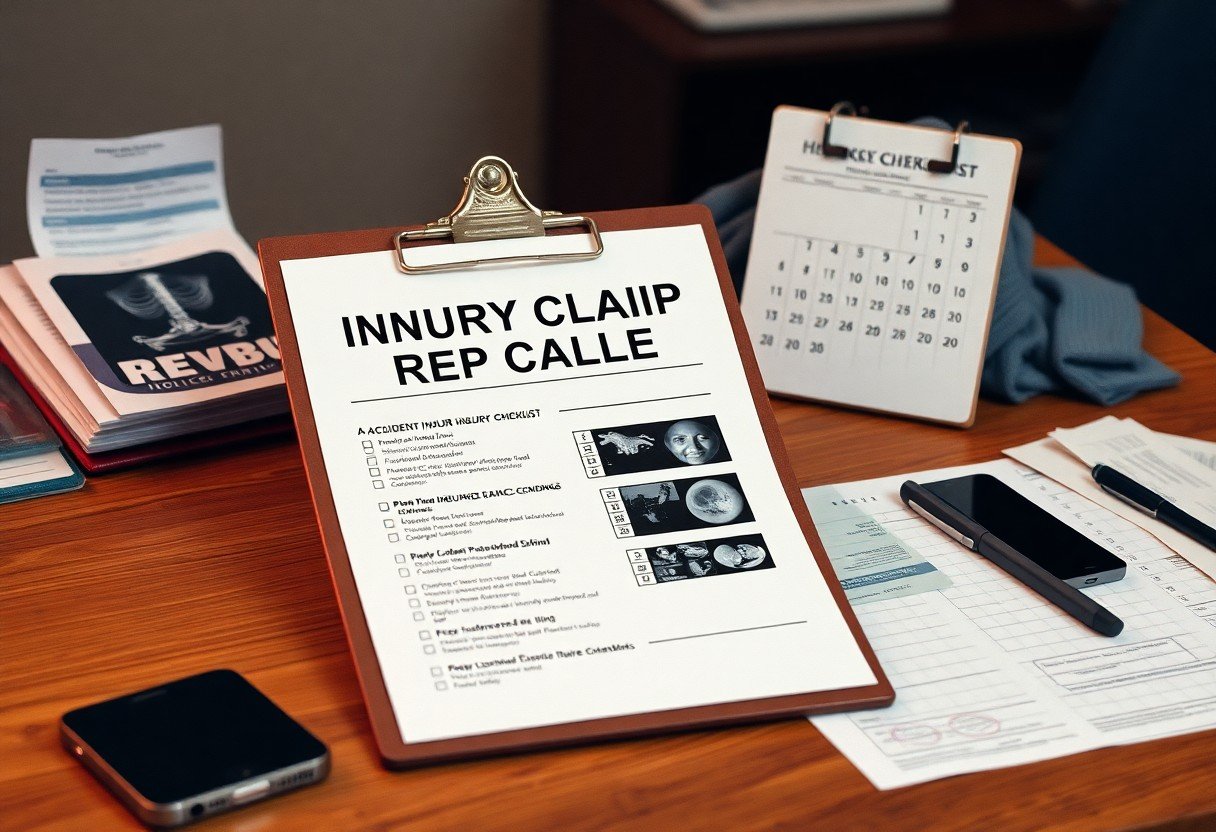
You should gather medical records, photos, witness contacts, incident reports, expense receipts, and a clear timeline, preserve evidence immediately, and consult an experienced attorney to meet Henderson claim deadlines and strengthen your case.
Key Takeaways:
- Seek immediate medical care and document diagnoses, treatments, provider names, dates, and recommended follow-up.
- Preserve physical evidence and take timestamped photos of injuries, the scene, property damage, and hazardous conditions.
- Obtain official reports and witness information: file a police/incident report and collect witness names, contact details, and written statements.
- Assemble financial documentation: all medical records, itemized bills, receipts, proof of lost wages, employment records, and insurance correspondence.
- Limit insurer communication and protect your claim: note claim numbers and adjuster contacts, avoid recorded statements without legal advice, meet filing deadlines, and consider a personal injury attorney.
Comprehensive Medical Record Management
Organize all medical records chronologically so you can show treatment timelines, diagnoses, and provider notes during claim review.
Compiling Diagnostic Reports and Treatment Plans
Collect diagnostic reports and treatment plans from every provider to support causation, timing, and recommended care in your claim.
Tracking All Healthcare-Related Invoices and Receipts
Save invoices, receipts, and billing statements to document expenses, payments, and outstanding balances for settlement negotiations.
Keep a spreadsheet listing dates, provider names, procedure codes, billed amounts, payments, and receipt scans; note payment sources and unpaid balances so you can quickly prove economic loss, spot billing errors, and present clear financial evidence during negotiations or in court.
Verification of Economic Damages
Verification requires you to compile invoices, receipts, medical bills, and employment records to substantiate monetary losses, ensuring each item is dated and linked to the incident.
Documenting Lost Wages and Impact on Earning Capacity
Gather pay stubs, employer statements, tax returns, and notes on missed shifts so you can calculate overtime, bonuses, and lost benefits to project short- and long-term earnings impact.
Cataloging Property Damage and Repair Estimates
Document photos, repair invoices, mechanic estimates, and pre-incident condition records so you can validate repair costs and depreciation for claim valuation.
Compile a detailed folder with high-resolution photos from multiple angles, a dated repair timeline, written estimates from at least two certified shops, receipts for parts and rentals, and comparison notes on recommended repairs so you can justify costs and challenge undervalued offers during settlement talks.
Quantifying Non-Economic Impacts
You should document pain, emotional harm, and lost enjoyment of life with detailed notes and evidence; consult the Personal Injury Case Checklist to ensure consistent records for your claim.
Maintaining a Daily Pain and Recovery Journal
Keeping a daily pain and recovery journal helps you record symptoms, medication effects, treatment responses, and functional limits with dates, creating credible, time-stamped evidence for your claim.
Recording Limitations on Quality of Life and Activities
Document how your injuries limit your hobbies, social life, work tasks, and daily routines, and note frequency, duration, and emotional impact for later reference.
When you track limitations, include specific examples-missed events, tasks you can’t perform, and altered routines-and quantify frequency and duration. Attach photos, calendar entries, witness notes, and any corroborating medical observations to show sustained impact beyond medical bills and test results.
Insurance and Administrative Correspondence
Organize all incoming insurance and administrative correspondence chronologically, tagging urgent items and noting dates, claim numbers, and contact names so you can access records quickly during settlement talks.
Organizing All Communication with Adjusters
Log every call, email, and voicemail from adjusters, noting date, time, representative name, and summary; keep originals and PDFs so you can prevent disputes over statements.
Archiving Official Henderson Police Accident Reports
Store the official Henderson police accident report in both physical and digital folders, labeled with the report number and date so you can easily retrieve it for claims or court use.
Obtain multiple certified copies of the report, confirm officer contact details and supplement pages, and link the report to your medical records and photos so you can strengthen timelines and liability evidence.
Nevada Legal Compliance and Statutes
Check that you follow Nevada filing rules, preserve evidence, and meet report deadlines so your claim remains eligible and defensible throughout the process.
Adhering to the Nevada Statute of Limitations
File your personal injury claim within Nevada’s two-year statute of limitations for most actions, and consult counsel promptly if exceptions or governmental claims may apply.
Understanding Comparative Negligence in Henderson Claims
Understand Nevada’s pure comparative negligence means your recoverable damages drop by your fault percentage, so gather evidence that minimizes your assigned negligence.
Document photos, medical records, witness statements, and timelines to contest fault percentages and protect the portion of damages you can still recover under Nevada’s rules.
Comparative Negligence: Key Points
| Rule | Pure comparative negligence – you can recover even if partially at fault |
| Effect on Damages | Your award is reduced by your percentage of fault |
| Evidence to Gather | Photos, medical records, witness statements, police reports, timelines |
| Claim Strategy | Dispute high fault percentages and emphasize opposing party’s actions |
Conclusion
Presently you should compile medical records, incident photos, witness contact information, insurance details, correspondence, expense receipts, and a treatment timeline so you can document injuries, prove liability, and support damages in a Henderson injury claim.
FAQ
Q: What immediate steps should I take at the Henderson accident scene?
A: Ensure safety and call 911 for injuries or hazards. Seek medical attention even if symptoms seem minor and obtain copies of emergency or clinic records. Notify police and request the incident or report number. Photograph the scene, damage, road markings, skid marks, and visible injuries. Exchange names, contact details, insurance information, and vehicle descriptions with other parties and collect witness names and statements.
Q: What medical documentation should be on my Henderson injury claim checklist?
A: Obtain and keep all emergency room records, hospital admission notes, physician reports, imaging (X-rays, MRIs, CT scans), lab results, and rehabilitation or therapy notes. Keep appointment summaries, referral letters, prescriptions, and itemized medical bills. Maintain a daily symptom and pain diary noting dates, activities, and how injuries affect function and work.
Q: What physical and digital evidence should I preserve?
A: Photograph injuries, damaged property, and the incident scene from multiple angles; save video footage captured by bystanders or business cameras. Preserve damaged clothing, safety equipment, or vehicle parts in a secure location and document their condition with photos and notes. Obtain the official police report, witness contact information, towing and repair estimates, and any available surveillance or dashcam files.
Q: Which financial and employment records are important for the claim?
A: Collect pay stubs, employer statements verifying missed work and lost earning capacity, tax returns if wage loss is claimed, and documentation of benefits received. Save receipts for medical co-pays, prescriptions, transportation to appointments, home care, and equipment purchases. Create a dated ledger or spreadsheet linking each expense to supporting documentation and purpose.
Q: When should I contact an attorney and what authorization forms will I need?
A: Contact a personal injury attorney early if liability is disputed, injuries are moderate to severe, or insurance offers appear inadequate. Provide limited medical authorization forms after consulting counsel so your attorney can gather records; do not sign full releases or give recorded statements without legal advice. Check Henderson and Nevada filing deadlines and any notice requirements to preserve your right to sue.