Key Takeaways:
- Call 911 and request law enforcement at the scene; get the responding officer’s name and the incident/case number.
- Ask the officer how and when the official crash report will be filed and obtain the report number or agency contact details.
- Use the issuing agency’s online portal or phone line to search by incident number, date, or names; many departments post reports within 24-72 hours.
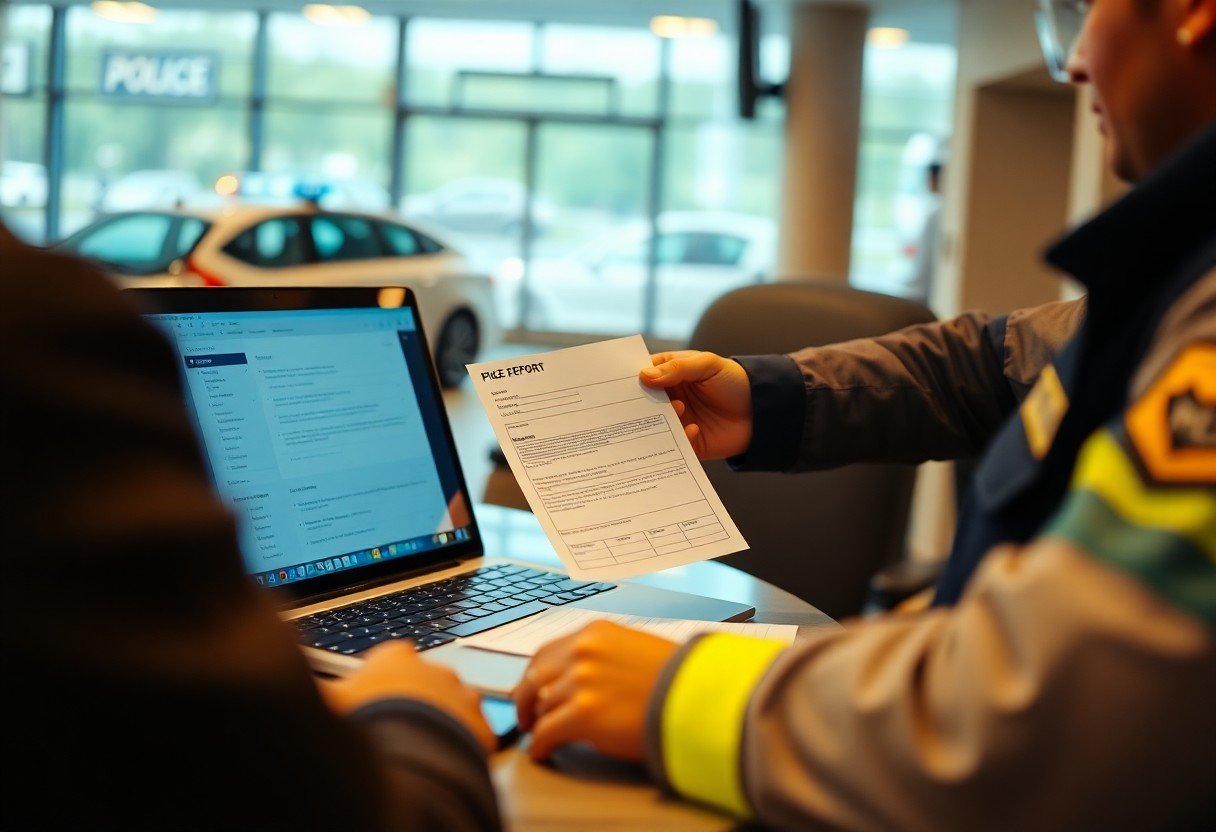
- Visit the police station or records unit in person with ID and the incident number for immediate pickup or same-day release when available.
- Provide the report number to your insurer or attorney and file a records request or pay for expedited processing if the agency’s standard release is delayed.
Immediate On-Scene Actions for Faster Processing
You should secure the scene, exchange contact and insurance details, photograph damage and positions, and collect witness names so officers can file a complete report quickly; staying calm and cooperative speeds on-scene processing and reduces follow-up delays.
Requesting a Formal Law Enforcement Dispatch
Call 911 for injuries or the non-emergency line for property-only crashes, provide precise location, vehicle descriptions, and injuries, and explicitly request an officer to file a report so you receive an incident number and faster documentation.
Securing the Preliminary Incident Report Number
Obtain the preliminary incident report number from the responding officer or dispatcher, note the officer’s name and badge number, and record the agency and time so you can reference the report when filing insurance claims or checking online records.
Keep a written copy or photo of the incident number and officer details at the scene; if no number is provided, call the non-emergency line later, ask for the records division, and request the preliminary report or a copy-online portals often allow lookup by date and names, but processing times and fees vary by agency.
Leveraging Digital Platforms and Online Portals
Online police portals let you request the report, upload photos, and pay fees so you can receive a copy faster; check processing times and confirmation emails to track progress.
Utilizing State-Sourced Electronic Databases
You can access state crash databases to download police reports directly in many jurisdictions; enter incident details or report number, pay any fees, and obtain certified copies where offered.
Third-Party Retrieval Services and Expedited Access
Third-party services can pull reports quickly for a fee, often offering expedited delivery and handling paperwork on your behalf to save time.
Using a reputable retrieval firm, you provide incident information and authorization while the service submits formal requests, monitors agency responses, and arranges secure delivery; compare fees, turnaround guarantees, licensing, and privacy safeguards so you choose a provider that meets legal and timing needs.
Essential Documentation for Immediate Release
Gather all core documents-driver’s licenses, vehicle registrations, proof of insurance, and photos or witness contact info-so you can request immediate release of the police report.
Required Identification and Verification Materials
Bring a government photo ID, the vehicle registration, and your insurance card; having printed copies or digital photos helps staff verify your identity faster when you request the report.
Payment Methods for Administrative Processing Fees
Acceptable payment methods depend on the precinct; confirm whether they accept credit or debit cards, exact cash, checks, or online payments before you arrive to avoid delays.
Check for online portals that let you pay by card to receive an electronic copy immediately, or prepare exact cash if the office only accepts in-person payments; keep a receipt for your records and insurance claims.
Coordinating with Insurance Providers for Rapid Retrieval
You should contact your insurer immediately, give claim and crash details, and request they pull the police report through their records portal or internal channels to speed retrieval and avoid delays.
Authorizing Adjusters to Access Records Directly
Grant your adjuster written authorization or a signed release so they can request the report directly from the agency, reducing back-and-forth and accelerating claim processing.
Navigating Automated Data Exchanges Between Agencies
Check whether your insurer and local agencies participate in automated exchanges; if so, confirm identifiers they need and ask your adjuster to trigger an electronic pull for faster access.
If your state or county uses automated data exchanges, records are often pushed or pulled electronically between police, DMV, and insurers, cutting wait times to hours or days. You should confirm which identifiers (report number, date, location) the system requires, verify any consent forms, and ask your adjuster to check the exchange status and request transaction IDs. If the electronic pull fails, instruct them to contact the police records unit directly and escalate for expedited processing; expect small fees and privacy checks depending on local policy.
Conclusion
Presently you can get a police report fast by calling local law enforcement, providing incident details, requesting a copy online if available, or visiting the station; keep your case number and identification ready to expedite processing.
FAQ
Q: How can I obtain the police report immediately after an accident at the scene?
A: Ask the responding officer for the incident or report number, their name, badge number, and the department contact. Request a business card or written acknowledgement if the officer can provide a short incident summary on-site. Photograph any paper notes or the officer-completed form if permitted. If officers say a formal report will be completed later, obtain the report number and expected availability so you can request the document online or at the station without delay.
Q: What are the fastest official ways to get a completed police report after leaving the scene?
A: Check the law enforcement agency’s online crash-report portal or records request page first; many departments post crash reports within 24-72 hours. Visit the records division at the police station in person with photo ID and the incident number to request an immediate copy. Contact the department’s non-emergency or records phone line and ask for a direct electronic copy or expedited pickup option. Provide the insurer’s contact or fax number so the records unit can send a copy directly when permitted.
Q: How long does it usually take for a police report to be available, and what affects that timeline?
A: Availability varies by jurisdiction and case complexity. Simple traffic crash reports often appear within 24-72 hours. Cases requiring investigation, follow-up interviews, or involvement of other agencies can take several days to weeks. High call volume, weekends, and holidays also delay processing. Requests submitted via online portals or in person tend to be fulfilled faster than mailed requests, and paid electronic delivery is usually quicker than paper mail.
Q: Can an insurance company or an attorney get the report faster than I can?
A: Yes. Insurance companies and attorneys routinely request reports directly from law enforcement or use third-party retrieval services that have existing channels with records units. Provide a signed release or claim number to speed their request. An attorney can also contact the records supervisor or file a formal public records request if typical channels are slow, which often reduces wait time compared with personal follow-up.
Q: What should I bring or provide to speed up a records request and ensure I receive the correct report?
A: Bring government-issued photo ID, the incident or report number, exact date/time/location of the crash, vehicle plate numbers, and names of involved drivers or witnesses. Have your insurance claim number and contact info ready for direct forwarding. Prepare payment for any report fees and note acceptable payment methods. If the original report has not been filed at the scene, bring photos, witness statements, and any officer contact details to help records staff locate or create the correct file quickly.