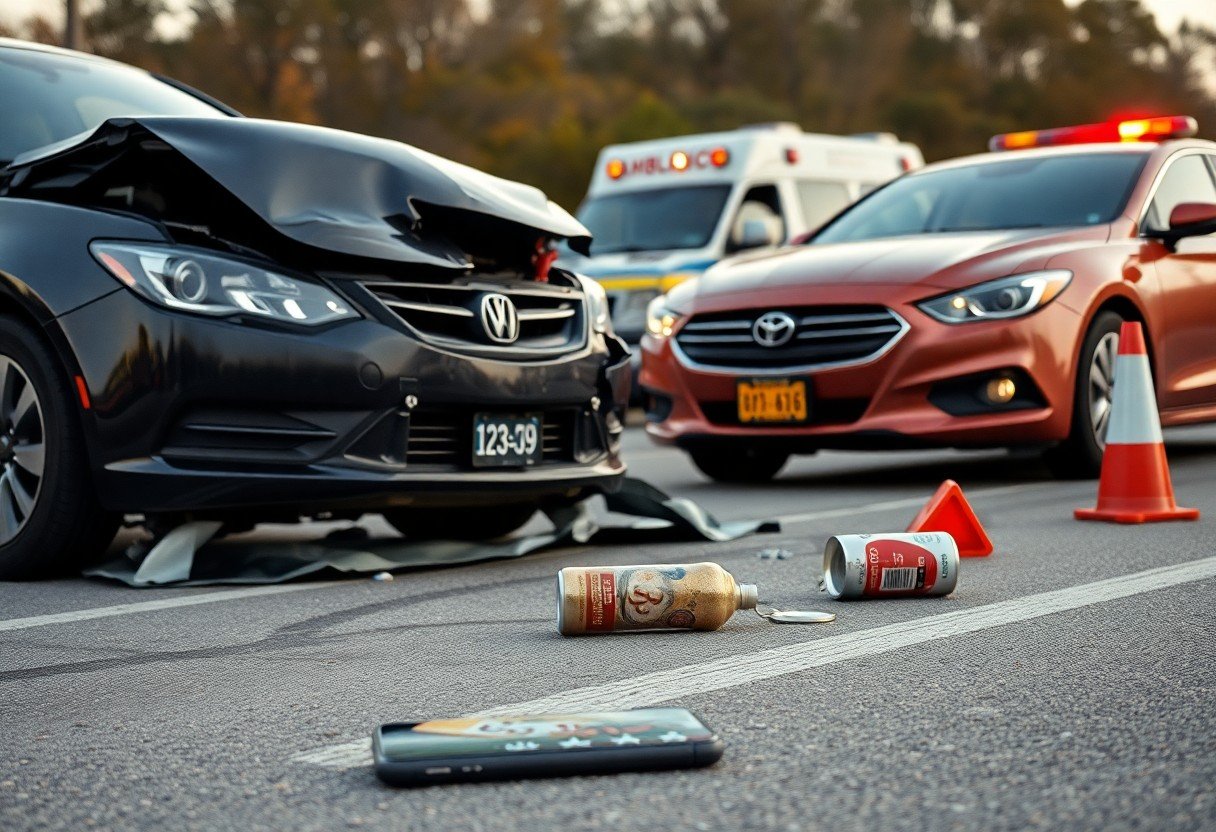
Just secure your safety, call police and medical help, and photograph the scene, vehicle damage, license plates, and injuries; collect witness names and contacts, note time, location, weather, any signs of impairment, and keep your medical and repair records for legal and insurance purposes.
Key Takeaways:
- Document exact location, date, time, weather, road conditions, traffic signals, and vehicle positions at the scene.
- Photograph and video the scene from multiple angles, including vehicle damage, license plates, skid marks, traffic signs, debris, and visible injuries.
- Collect driver and vehicle information: names, phone numbers, driver’s license numbers, license plate, vehicle make/model, insurance details, and any observable signs of impairment.
- Record law enforcement and testing details: responding officers’ names and badge numbers, incident/report number, citations, field sobriety or breath test results, and any officer statements or refusals.
- Keep medical and witness documentation: photos of injuries, emergency treatment records, hospital names and dates, witness names and contact info, and copies of dashcam or phone videos.
Immediate On-Scene Safety and Assessment
Assess the scene for ongoing hazards, move to safety, call 911 if needed, and photograph vehicle positions, damage, and skid marks while noting time and weather.
Verifying Physical Well-being of All Parties
Check yourself and others for injuries, provide first aid if trained, avoid moving anyone with suspected spinal injuries, and seek medical attention for visible trauma or loss of consciousness.
Identifying Visible Indicators of Driver Intoxication
Look for slurred speech, bloodshot or glassy eyes, the smell of alcohol, unsteady balance, delayed reactions, flushed face, or open containers; photograph and note these signs for police and your records.
Document specific observations you make: exact words the driver spoke, how they answered simple questions, and whether they struggled to keep balance or follow instructions. Photograph bloodshot eyes, disheveled clothing, open containers, vomit, and the vehicle interior, and timestamp each image. Write witness statements, collect contact info, and note lighting or road conditions. If officers arrive, record names and badge numbers and back up all digital evidence immediately to protect timestamps and your account.
Law Enforcement Interaction and Official Reporting
You should insist law enforcement documents the scene in a formal report and provide copies or a report number to support later claims; note officer observations, any breath/blood tests, and statements made at the scene.
Ensuring the Filing of a Formal Police Report
Ask the responding officers to file an official report and confirm the report’s availability so you can obtain copies for insurance and legal use.
Securing Officer Identification and Case Numbers
Collect the names, badge numbers, and the case number from each officer on scene; this information anchors your claims and tracks the investigation.
Keep photocopies or photos of badges and the patrol car identification, record the officer’s full name, rank, badge and the incident/case number; if an officer declines, note their badge plate or vehicle number and include time and officer statements. Use this for follow-up with police and to verify report filings with your attorney and insurer.
Comprehensive Visual Documentation of the Scene
Document the overall scene with wide shots and close-ups so you capture vehicle positions, debris, skid marks, and fixed landmarks for later reference and mapping.
Photographing Vehicle Positioning and Property Damage
Frame each vehicle from multiple angles; you should include license plates, odometer readings, deployed airbags, and nearby property damage to show impact points and orientation.
Capturing Environmental Conditions and Road Hazards
Capture weather, lighting, road surface conditions, signage, and visible hazards so you provide context that could explain contributory factors.
Include time-stamped photos of skid marks, puddles, oil slicks, uneven pavement, and obscured signage; you can pan video for a continuous record and note GPS coordinates or nearby addresses.
Witness Identification and Third-Party Statements
Identify witnesses and note where they stood, what they saw, and whether they appeared impaired; you should log vehicle descriptions, clothing, and any interaction with first responders for later verification.
Gathering Reliable Contact Information
Collect full names, best phone numbers, emails, and addresses, confirm spellings aloud, and ask for preferred contact times so you can reach witnesses quickly if investigators follow up.
Noting Spontaneous Declarations and Observations
Record on-the-scene statements, admissions, or exclamations you hear verbatim, identify the speaker, note time and location, and describe surrounding conditions that could affect reliability.
When documenting spontaneous declarations, write quotes exactly as spoken, note the speaker’s proximity and demeanor, record visible signs of intoxication or distraction, and capture interruptions or background noise; timestamp entries, use your phone to audio-record with consent when safe, and ask another witness to corroborate details to increase the statement’s usefulness in investigation or court.
Medical Evaluation and Symptom Tracking
Document your medical evaluation, noting diagnoses, tests, medications, and discharge instructions, photograph visible injuries and treatment sites, and save all reports while following this How to Collect Evidence After a Drunk Driving Accident? checklist for evidence preservation.
Recording Immediate Physical Complaints and Injuries
Note any pain, dizziness, headaches, blurred vision, or numbness you feel, record the time and severity, and photograph visible wounds for later comparison.
Preserving Emergency Room and First Responder Records
Obtain copies of ambulance reports, ER intake forms, tests, and discharge summaries, and ask how to request official records for your claim.
Keep written proof of who treated you, timestamps, medication administered, and any scene notes; submit written requests for records promptly, track request numbers and fees, and store digital scans and originals in a secure folder for your attorney and insurance.
Detailed Log of Financial Impacts
Compile a precise record of every cost tied to the crash-medical bills, vehicle damage, towing, rental cars, and communications with insurers-pairing each item with dates and receipts to support later claims.
Tracking Out-of-Pocket Expenses and Vehicle Repairs
List receipts, repair estimates, parts invoices, and rental bills with vendor names, dates, and brief descriptions so you can prove actual expenditures during claims and repairs.
Documenting Employment Disruptions and Lost Income
Record missed shifts, sick or vacation time used, paystubs showing lost wages, and any employer notes or return-to-work correspondence to substantiate wage-loss claims.
Collect a signed employer statement detailing hours missed, wage rate, and any modifications to duties; obtain copies of pay stubs, W-2s, and schedules showing your typical earnings. Keep doctor’s notes that tie your absence to the crash and any vocational assessments for reduced earning capacity. Calculate lost income by comparing pre-crash average pay to actual post-crash earnings, documenting your math and assumptions.
Final Words
To wrap up, you should document the scene, injuries, vehicle damage, witness contact information, officer names and report numbers, photos and videos, insurance details, and medical records, plus your own notes about symptoms and statements.
FAQ
Q: What photos and videos should I take at the crash scene?
A: Photograph the overall scene from multiple angles to show vehicle positions and surrounding landmarks. Capture close-ups of vehicle damage, license plates, airbags, broken glass, skid marks, traffic signals, and road signage. Record short videos walking the scene to capture distances, lighting, and any dynamic elements a still photo might miss. Include timestamps and keep original files without editing.
Q: What identifying and contact information should I collect from other drivers and witnesses?
A: Collect full names, phone numbers, addresses, driver’s license numbers, vehicle makes/models, license plate numbers, and insurance details from all drivers involved. Ask witnesses for names, phone numbers, email addresses, and a brief written or audio statement describing what they saw. Note the responding officer’s name, badge number, agency, and incident or report number for later reference.
Q: What injury and medical details should I document immediately after the crash?
A: Note visible injuries, pain locations, and any symptoms such as dizziness, headaches, or numbness, with the exact time each symptom appeared. Photograph injuries and damaged clothing as soon as possible and preserve the clothing in a paper bag if instructed by medical personnel. Seek medical evaluation promptly and keep all medical records, emergency room notes, imaging, prescriptions, and bills as documentation of treatment and injury progression.
Q: What roadway, environmental, and vehicle evidence should I record at the scene?
A: Sketch or photograph the relative positions of vehicles, point of impact, lane markings, skid marks, debris, and traffic control devices. Record weather conditions, lighting (day/night), road surface (wet, icy, potholes), and any obstructions or construction in the area. Note vehicle settings such as headlight status, hazards, and whether airbags deployed, and measure or estimate distances between key points when possible.
Q: How should I preserve official records, tests, and other evidence for insurance or legal use?
A: Obtain the police report number and a copy of the accident report as soon as it is available, and note the responding officer’s contact information. Request copies of any breath, blood, or field sobriety test results and document whether the other driver consented to or refused testing. Save all photographs, witness statements, medical records, repair estimates, and communications with insurers; avoid altering original digital files and consider sending records to an attorney or trusted third party for safekeeping.