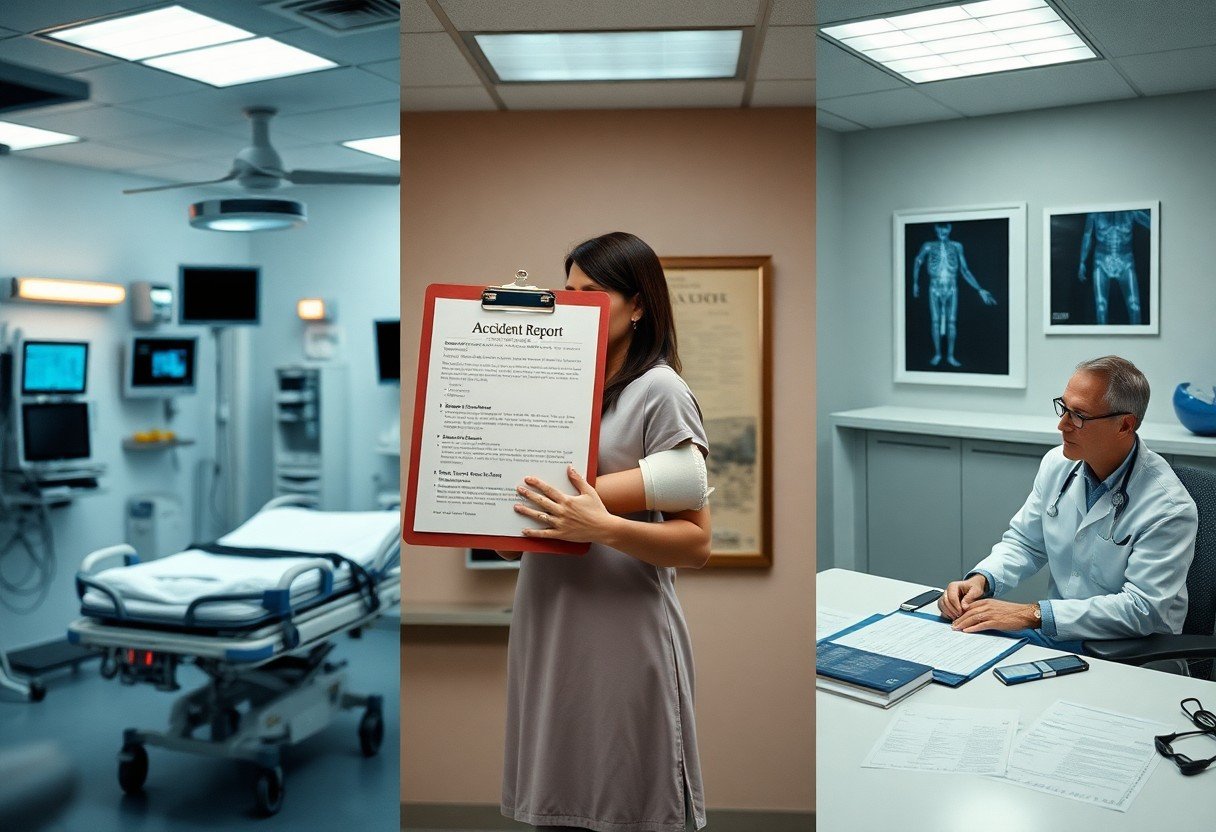
With an ER visit you receive immediate life-saving care and comprehensive trauma documentation; urgent care records non-life-threatening injuries, and primary care documents follow-up and long-term treatment so you can prove consistent timelines and medical necessity for claims.
Key Takeaways:
- ER visits address life-threatening or severe injuries and generate immediate, time-stamped records and often comprehensive imaging that carry strong weight in accident claims.
- Urgent care visits treat non-life-threatening injuries quickly and produce exam notes and limited testing; these records support claims but are generally viewed as less authoritative than ER documentation for major trauma.
- Primary care visits document ongoing treatment, symptom progression, referrals, and functional limitations that help establish causation and long-term impact after an accident.
- Imaging, specialist consults, and objective findings documented close to the injury date strengthen legal and insurance cases; delayed evaluation or missing tests can weaken proof.
- Consistent, contemporaneous notes, preserved prescriptions, work restrictions, and clear timelines between injury and visits are necessary for effective accident documentation.
Emergency Room (ER) Documentation: Prioritizing Acute Trauma
Emergency care documents how clinicians stabilize you, record time‑stamped vitals, treatments, and focused exams, creating a contemporaneous medical record that supports injury timelines and legal claims.
Immediate Triage and Objective Clinical Findings
Triage quickly assesses your stability, documents Glasgow Coma Scale, wounds, and neurovascular status, producing objective findings to substantiate acute harm.
High-Resolution Imaging as Forensic Evidence
Imaging such as CT and MRI provides objective, dated evidence of fractures, hemorrhage, and soft‑tissue injury that you can use in claims and investigations.
Radiology reports and DICOM images give you timestamped, high‑resolution proof of internal injuries; request copies or original disks, obtain detailed radiologist interpretations noting location, size, displacement, and contrast findings, and secure sequential studies or 3D reconstructions to show progression or healing, which strengthens causation and temporal links for insurers and tribunals.
Urgent Care Centers: Documentation for Minor to Moderate Injuries
Urgent Care centers document minor to moderate injuries with concise notes, photos, and basic treatment records you can use for initial claims and follow-up care.
Speed of Record Generation and Initial Assessment
You typically receive an intake note, exam findings, and discharge instructions within hours, which supports quick claim filing and immediate referrals if needed.
Limitations in Specialized Diagnostic Reporting
On-site testing at urgent care is limited, so reports often omit advanced imaging interpretations and specialist opinions you may need for complex injury claims.
Because urgent care focuses on rapid stabilization and basic diagnostics, you might need ER records or specialist reports for MRI results, surgical notes, or detailed prognosis insurers often request.
Primary Care Physicians: Longitudinal Records and Causation
Primary care records document health trends before and after an accident, so you can link new symptoms to prior conditions and strengthen causation claims with consistent, dated notes from a trusted provider.
Establishing Baselines through Pre-existing Medical History
Your pre-existing records establish baselines for pain, mobility, and chronic issues, giving you objective comparison points to show what changed after the incident.
Documenting Long-Term Recovery and Residual Impairment
Ongoing primary care visits track recovery milestones, treatment responses, and lingering deficits, helping you document residual impairment for insurance or legal proceedings.
Track serial visit notes, objective findings, and ordered tests so you can build a timeline that ties initial trauma to ongoing symptoms. Include specific functional limits, treatment plans, specialist reports, and progressive assessments to show persistence or resolution of injuries over months.
Comparative Analysis of Medical Coding and Billing Evidence
Comparative Evidence
| Coding Evidence | Billing Evidence |
|---|---|
| ER E/M levels, procedure codes, timestamps | Itemized charges, CPTs, modifiers |
| Clinical notes showing acuity and decision-making | Claims data showing billed intensity and frequency |
Clinical coding and billing present different evidence sets for you: ER notes document urgency and procedures, outpatient records summarize follow-up care, and billing line items show billed intensity and modifiers adjust perceived treatment necessity.
ER Level-of-Service Codes vs. Outpatient Billing
ER level-of-service codes capture your acuity and resource use, while outpatient billing focuses on scheduled evaluation and procedure codes that often portray lower immediate urgency to adjusters.
Impact of CPT Coding on Insurance Adjuster Evaluations
Billing CPT codes give you a shorthand for procedure complexity, prompting adjusters to request full records when codes indicate advanced services or multiple procedures.
You should expect adjusters to cross-reference CPT codes with documentation: high-level codes and modifiers trigger scrutiny of operative reports, anesthesia time, imaging, and physician decision-making notes; gaps between billed codes and chart detail can lower claim valuation or cause denials, so accurate linkage of codes to documented services speeds resolution.
Legal Admissibility and Weight of Facility Records
Medical records from ER, urgent care, and primary care carry varying evidentiary weight; you should prioritize ER documentation for serious injuries while comparing urgent care notes for continuity. See ER vs Urgent Care After a Car Accident in Missouri for specifics.
The Authority of Specialist Referrals in Personal Injury Claims
Specialist referrals can strengthen causation when you follow up and the specialist documents consistent links; courts often give more weight to formal referrals and specialist reports than to brief urgent care entries.
Consistency of Statements Across Different Care Settings
Consistency of your statements across ER, urgent care, and primary care records affects credibility; you should match dates, symptoms, and treatment details to avoid disputes.
When you keep symptom descriptions, onset times, and prior health disclosures uniform across providers, insurers and judges have less basis to argue preexisting conditions or inconsistent reporting. You should review all records with your attorney, request corrections for errors, and obtain detailed specialist opinions to tie treatment timing and necessity directly to the accident.
Strategic Documentation Practices for Accident Victims
You should document injuries immediately, prioritizing detailed visit notes, diagnostic tests, and consistent follow-ups to support claims and clarify treatment timelines.
Timeliness of Initial Visit and Continuity of Care
Attend an initial medical visit within 72 hours when possible, and maintain regular follow-ups so records show continuity, symptom progression, and treatment decisions.
Securing Full Electronic Medical Records (EMR) for Litigation
Request complete EMR exports, including notes, imaging, timestamps, orders, and metadata, to preserve contemporaneous evidence for attorneys and insurers.
Obtain full EMR files, request raw DICOM images and audit logs, and secure provider notes with timestamps and signatures; include signed release forms and chain-of-custody documentation so counsel can authenticate records, spot omissions, and use metadata to verify timelines and treatment consistency.
Conclusion
Presently ER visits document severe injuries with immediate imaging, detailed notes, and stronger legal standing; urgent care documents minor-to-moderate injuries with faster, less comprehensive testing; you should use primary care for follow-up and ongoing records that support long-term claims and continuity of care.
FAQ
Q: How do the purposes of ER, urgent care, and primary care visits differ when documenting an accident?
A: Emergency departments treat life-threatening or serious injuries such as head trauma, major fractures, chest injuries, and uncontrolled bleeding. ED documentation emphasizes triage times, comprehensive exams, imaging and lab findings, procedures performed, and discharge or admission summaries that clearly link injuries to the accident. Urgent care centers handle urgent but non-life-threatening problems like sprains, minor fractures, deep lacerations, and uncomplicated contusions; their records contain exam findings, basic imaging results, procedure notes (stitches, splints), and return-to-work notes. Primary care offices focus on continuity and follow-up care, recording baseline health status, ongoing symptoms, treatment plans, referrals, and documentation of how an injury evolves over time.
Q: What differences should I expect in the medical records each setting produces?
A: ED records usually include triage notes, time-stamped vital signs, detailed history of present illness, focused and complete physical exams, emergency imaging and lab results, procedural and operative notes, medication administration records, and clear discharge or admission instructions. Urgent care notes generally include a problem-focused history, exam, point-of-care X-ray or ultrasound if available, procedure details, prescriptions, and instructions for follow-up or specialist referral. Primary care records consist of SOAP-style progress notes, medication and problem lists, longer-term treatment plans, referrals, and documentation of symptom progression or response to therapy.
Q: Which visit carries the strongest weight for insurance claims or legal cases about an accident?
A: Emergency department visits often carry the strongest weight for claims that depend on immediate, objective evidence because ED notes commonly contain time-stamped assessments, diagnostic imaging, lab results, and procedures that corroborate acute injury. Urgent care documentation can support claims for less severe injuries when ED level care was not required or when the patient sought care promptly after the incident. Primary care records strengthen claims that require proof of ongoing disability, causation over time, or long-term treatment needs by documenting continuity, specialist referrals, and responses to therapy.
Q: How does the timing of care affect the quality of accident documentation?
A: Prompt medical evaluation after an accident produces stronger documentation linking the injury to the event because early records capture acute signs, objective test results, and immediate treatment. Delayed presentation can still be documented, but insurers or courts may question causation if there is a long gap without medical attention. Follow-up visits, specialist reports, and consistent treatment notes help establish continuity and support claims when initial care was brief or when symptoms develop or worsen over time.
Q: What should I bring to a visit and what should I request from providers to maximize documentation for a claim?
A: Bring government ID, insurance cards, a clear account of how the accident happened, photos of injuries and the scene, a list of current medications, prior medical records relevant to the injured area, and contact information for witnesses. Request copies of all records, including triage notes, full ED or urgent care reports, imaging and lab reports, procedure notes, prescriptions, work-restriction letters, and referral or specialist reports. Ask the clinician to document the mechanism of injury, the timeline of symptoms, objective findings, and any recommended follow-up; obtain time-stamped discharge summaries or visit summaries when available.