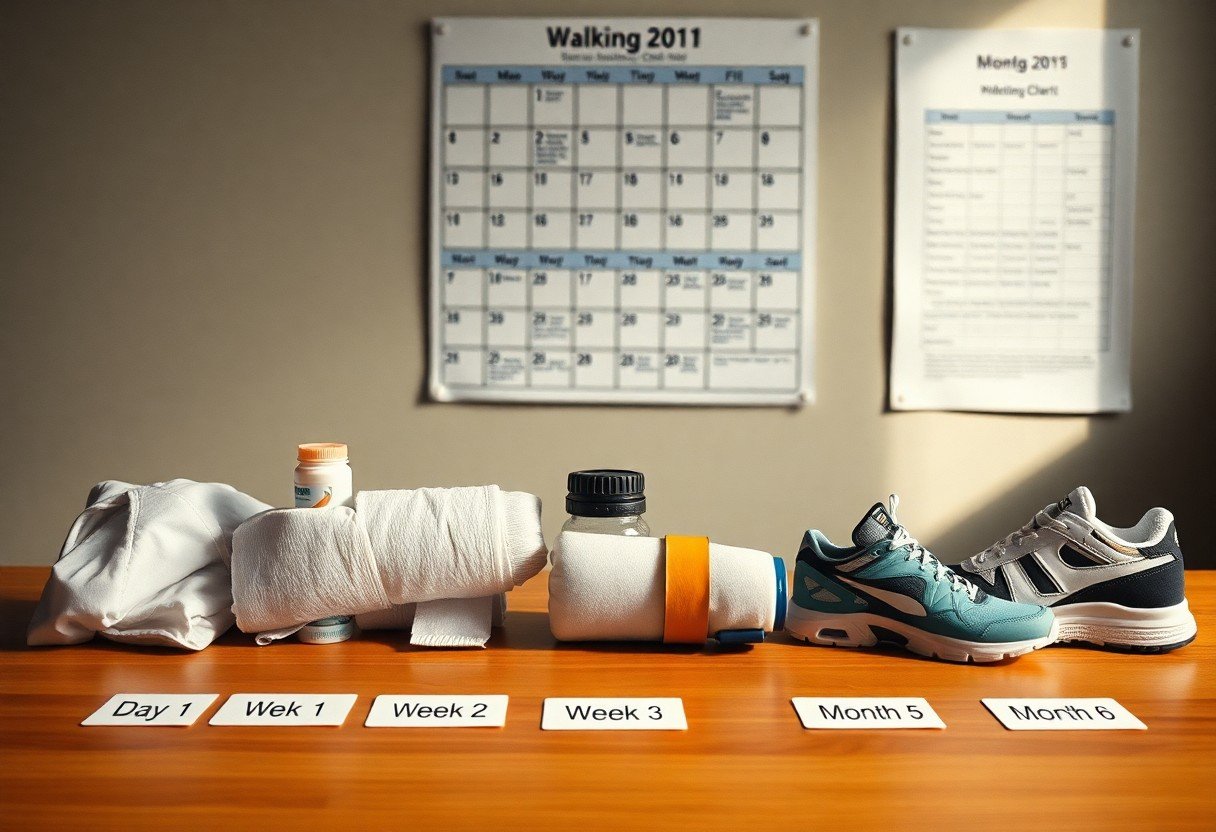
You can expect an initial acute phase of pain and swelling, a rehabilitation phase of guided therapy and gradual activity return, then ongoing recovery focused on strength, mobility, and prevention; timelines vary by injury severity, age, and treatment adherence.
Key Takeaways:
- Acute phase (0-72 hours): inflammation, pain, and swelling are dominant; rest, ice, compression, elevation, and medical assessment are recommended.
- Subacute/reparative phase (3 days-6 weeks): tissue repair starts and gentle mobility plus controlled loading guided by a clinician support recovery.
- Remodeling phase (6 weeks-6+ months): strength and function return over weeks to months; progressive rehabilitation increases load, endurance, and coordination.
- Individual factors such as injury severity, age, comorbidities, nutrition, and adherence to therapy determine the overall timeline.
- Warning signs that require re-evaluation include worsening pain, numbness, fever, increased swelling, or loss of function.
Recovery Windows Based on Injury Severity
Severity dictates typical timelines: you can expect mild injuries to heal in days to weeks, moderate injuries across weeks to months, and severe injuries requiring surgery or prolonged care; your age, health, and treatment choices shape the exact window.
Grade I: Mild Strains and Sprains
Mild strains often resolve within a few days to two weeks if you rest, ice, compress, and step back into activity; you will usually regain function with progressive rehabilitation and basic home care.
Grade II: Partial Tears and Moderate Trauma
Moderate injuries typically take four to twelve weeks, and you will need targeted rehab, possible immobilization, and phased loading to rebuild strength and restore range while monitoring pain and swelling.
You should expect diagnostic imaging, an individualized rehab plan, and therapy focused on controlled loading, neuromuscular retraining, and progressive strengthening; occasional bracing or minor procedures extend timelines, and frequent reassessment guides your safe return to activity.
Grade III: Complete Ruptures and Fractures
Severe ruptures and displaced fractures often require surgery and a multi-month recovery, where you will face immobilization, progressive loading, and structured rehabilitation to restore strength and function.
Surgery stabilizes the injury, then you will follow staged rehab: initial protection and pain control for weeks, gradual range-of-motion and strengthening over months, and longer functional training; healing milestones and imaging determine when you can resume high-impact activities.
Estimated Timelines by Tissue Type
This overview breaks down common healing windows so you can align expectations with tissue-specific biology, typical inflammatory and remodeling phases, and practical rehab milestones that clinicians use to guide progression.
Muscle Tissue Regeneration
Muscle injuries often recover faster than connective tissues; you can expect mild strains to improve in days to weeks, while significant tears may require months of progressive loading and targeted therapy to regain full strength and range.
Bone Union and Consolidation
Bone healing follows staged biology; you may see clinical union by six to twelve weeks, but full radiographic consolidation and load-bearing strength frequently take several months up to a year depending on fracture and treatment.
Factors such as age, smoking, metabolic health, fracture pattern, and fixation method affect how quickly you progress from union to consolidation; appropriate stability and graduated weight bearing typically speed recovery compared with unstable or compromised situations.
Tendon and Ligament Healing Rates
Tendon and ligament repairs heal slower than muscle; you should expect sprains to recover over weeks, whereas complete ruptures or repairs commonly need three to nine months before high-demand activities are safe.
Rehabilitation protocols, protection periods, and progressive loading determine your functional return; biological remodeling of tendon and ligament tissue can continue for a year or more, so gradual strength and load increases are recommended.
Physiological Factors Influencing Speed of Recovery
Factors such as age, circulation, nutrition, sleep and comorbidities shape how quickly you recover. Recognizing how each element affects healing helps you set realistic timelines.
- Age and circulation
- Nutritional status
- Sleep and hormones
- Comorbidities and medications
Impact of Age and Circulation
Age lowers cellular repair rates and reduced circulation limits oxygen and nutrient delivery, so you may experience longer healing times.
Nutritional Requirements for Tissue Repair
Protein, vitamin C and zinc support collagen synthesis and immune defense, so you should prioritize them to speed tissue repair.
Micronutrients determine repair capacity: you should aim for increased protein (about 1.2-2.0 g/kg daily) and sufficient calories to avoid catabolism. Include vitamin C (75-200 mg) and zinc through diet or targeted supplements if deficient, and add omega‑3s and vitamin D for inflammation control and immune support.
Sleep and Hormonal Regulation
Sleep restores growth hormone pulses and moderates cortisol, so you will heal faster when you get consistent, high-quality rest.
Quality sleep stabilizes your endocrine rhythms: deep sleep boosts growth hormone for tissue synthesis, while poor sleep raises inflammation and cortisol that delay repair; aim for 7-9 hours nightly and consistent bedtimes to optimize recovery.
The Role of Structured Rehabilitation
Structured rehabilitation gives you a clear phased plan, combining mobility, strength, and functional retraining to reduce setbacks and guide return to activity.
Early Mobilization Protocols
Early mobilization helps you regain movement safely, reduces stiffness, and limits muscle atrophy through guided gentle activation.
Progressive Loading and Strength Building
Progressive loading lets you rebuild strength by slowly increasing resistance and volume under clinician supervision, matching tissue healing.
Through staged programs, you follow measurable progressions-initial low-load isometrics, then concentric and eccentric work, progressing to power and sport-specific tasks while monitoring pain, swelling, and functional milestones to optimize tissue adaptation and return-to-activity readiness.
Neuromuscular Re-education
Neuromuscular re-education retrains movement patterns so you restore coordination, balance, and timing that reduce reinjury risk.
You practice proprioception drills, movement pattern corrections, and reactive tasks that retrain motor control; therapists use feedback, video, and progressive challenges to rebuild safe, efficient movement for daily activities and sport demands.
Navigating the Psychological Recovery Process
Healing often tests your patience and emotions; you should monitor mood shifts, seek support, and consult resources like how long does it take your body to heal? to set realistic timelines and reduce anxiety during recovery.
Managing Expectations and Setbacks
Setbacks are common; you can adjust goals, document small improvements, and coordinate with your care team to prevent overexertion while maintaining steady progress.
Maintaining Mental Resilience During Inactivity
During inactivity, you should create short routines, use visualization, and stay socially connected to protect mood and motivation.
Structure your days with short activity windows, scheduled social check-ins, and tiny tasks so you retain purpose; you can set measurable micro-goals, use journaling and breathing exercises to manage frustration, seek professional support for persistent low mood, and celebrate incremental wins to sustain momentum despite limited physical activity.
Conclusion
Conclusively you should expect immediate treatment, days-to-weeks for pain and swelling, weeks-to-months for functional recovery, and months or longer for full healing; follow your clinician’s plan, rehabilitate consistently, and avoid premature strain.
FAQ
Q: What are the typical phases of a general injury recovery timeline?
A: Recovery commonly progresses through three phases. Acute/inflammatory phase (0-72 hours up to 7 days) features pain, swelling, and reduced function. Subacute/proliferative phase (about 1-6 weeks) involves tissue repair, reduced inflammation, and improving movement. Remodeling/maturation phase (roughly 6 weeks to 12+ months) focuses on strengthening, scar reorganization, and gradual return to full activity; timelines vary by tissue type and severity.
Q: How long do common injuries usually take to heal?
A: Timelines depend on injury type and severity. Mild ankle sprain (Grade I): 1-3 weeks; moderate sprain (Grade II): 4-8 weeks; severe sprain or complete ligament tear (Grade III) and post-surgical recovery: 3-6 months or longer. Muscle strains: mild 2-3 weeks, moderate 4-8 weeks, severe several months. Tendinopathies: weeks to many months with load management. Fractures: radiographic union often 6-12 weeks, functional recovery may take several months. Concussion symptoms commonly resolve in days to weeks, though some cases persist for months.
Q: What factors can make a recovery timeline faster or slower?
A: Individual and injury-specific factors both influence healing speed. Age, general health, presence of chronic conditions (for example diabetes), and smoking status alter tissue repair rates. Injury severity, tissue involved (bone vs tendon vs ligament vs nerve), and whether surgery is required change expected timeframes. Treatment choices, adherence to rehabilitation and activity restrictions, nutrition, sleep quality, and body composition also affect recovery.
Q: What steps help support and optimize recovery?
A: Begin with appropriate acute care such as rest, ice, compression, and elevation for the first 48-72 hours unless advised otherwise. Start controlled, pain-guided movement and progressive physical therapy to restore mobility and strength. Follow a graded return-to-activity plan and use prescribed pain management when needed. Maintain adequate protein intake, vitamin D status, and good sleep. Avoid tobacco and excessive alcohol. Consult a clinician before resuming high-risk or competitive activities.
Q: When should I see a doctor or expect complications during recovery?
A: Seek urgent care for visible deformity, inability to bear weight, severe uncontrolled pain, loss of sensation or movement, or signs of infection such as spreading redness, increasing warmth, or fever. Arrange follow-up if symptoms do not improve within expected windows for the injury type (for example no meaningful improvement after 2 weeks for a sprain). Request imaging or specialist referral when pain persists, function remains limited, or healing appears delayed. Persistent instability, chronic pain, or recurrent injuries may require surgical evaluation or a tailored long-term rehabilitation plan.