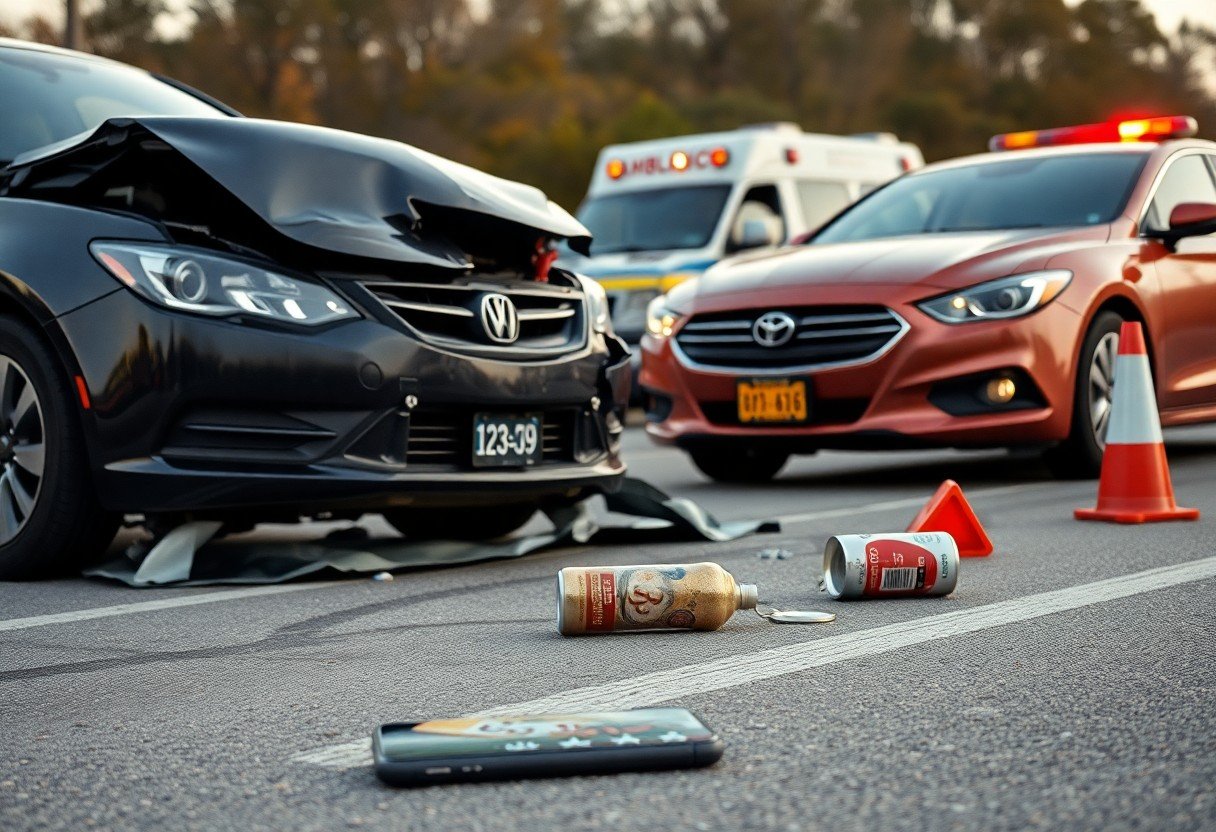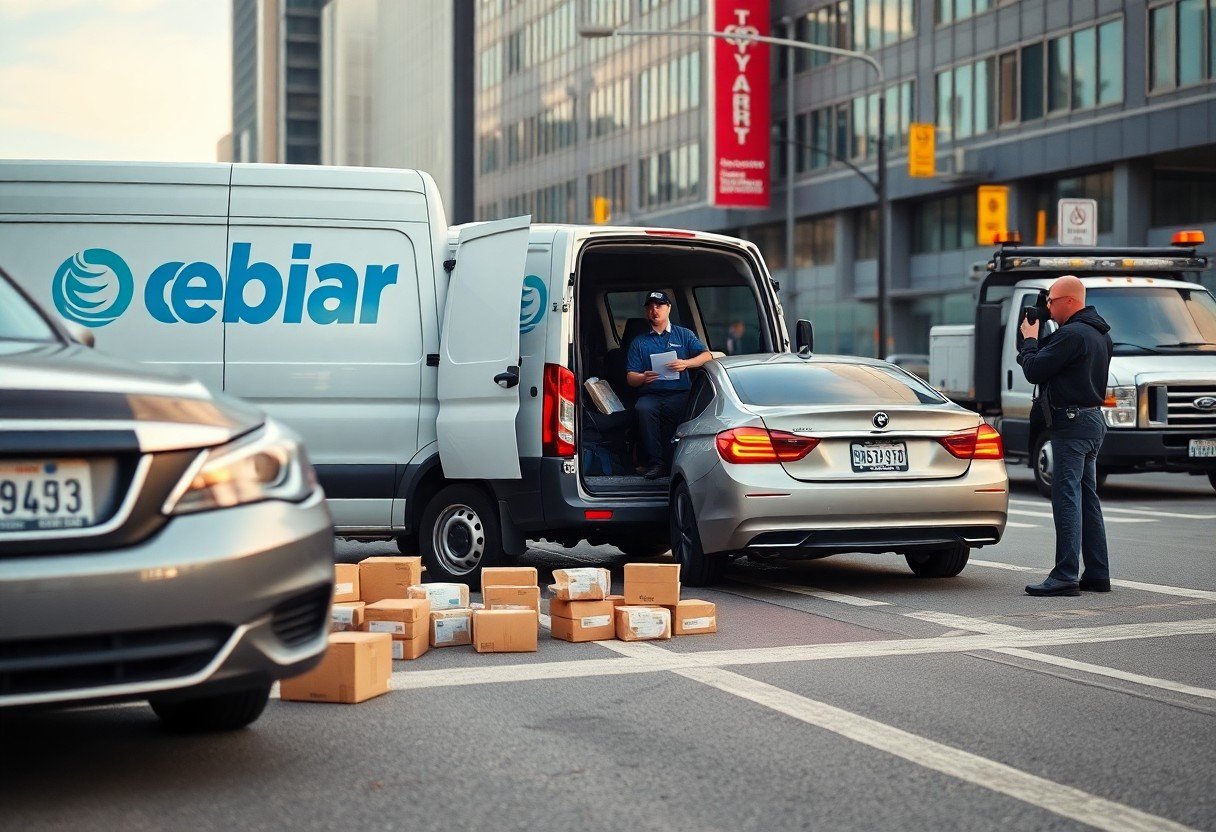
With a delivery van crash, you should know who could be at fault: the driver, their employer, the delivery company, a vehicle owner, or a parts manufacturer, and how insurance and negligence determine liability for your claim.
Key Takeaways:
- Driver can be liable if their actions-speeding, distracted driving, impaired driving, or ignoring traffic laws-caused the crash.
- Delivery company can be liable when the driver was working on the job, or if the company failed to hire, train, or supervise properly.
- Vehicle owner or the person who entrusted the van to the driver may be liable under negligent entrustment or ownership rules.
- Vehicle manufacturer or mechanic can be liable for defective parts, design flaws, or poor maintenance and repairs that led to the accident.
- Other drivers, pedestrians, or government agencies can share liability; courts allocate fault based on negligence and state comparative-fault laws.
The Principle of Vicarious Liability
Vicarious liability makes an employer responsible when you’re harmed by a delivery driver acting in the course of their job.
How Companies Are Held Responsible for Drivers
Employers can be held liable for accidents if you show the driver was performing work tasks, following company instructions, or operating under company policies at the time of the crash.
Determining if the Driver Was “On the Clock”
Ask whether the driver was on a scheduled route, carrying company goods, or using company equipment when you were injured.
Documentation and witness statements help show whether you were injured while the driver acted for work, including GPS logs, delivery records, timestamps, and dispatch messages that link the driver’s actions to company duties.
Driver Negligence and Personal Accountability
You are personally accountable when your driving choices cause a delivery van crash; insurers and courts examine your speed, attention, and compliance with laws to assign fault and damages.
Common Errors: Speeding, Distraction, and Fatigue
Speeding, distraction, and fatigue often mean you failed to exercise reasonable care, making you liable for collisions and injuries.
Cases Involving Criminal Acts or Gross Negligence
Criminal acts or gross negligence make you exposed to criminal charges and larger civil awards beyond ordinary negligence.
If prosecutors allege DUI, reckless driving, or intentional harm, you can face jail time, license suspension, and punitive damages in civil court; your insurer might refuse coverage, increasing your personal exposure.
Corporate Negligence in Fleet Management
Companies may be liable when you suffer harm because fleet policies or oversight fail; corporate negligence appears if management ignores vehicle maintenance, hours-of-service rules, or driver discipline. See Who Is Liable in a Delivery Driver Accident?
Failure to Perform Adequate Background Checks
Hiring drivers without proper background checks exposes you to risks from past reckless behavior or license suspensions, and courts may hold the employer responsible for negligent hiring.
Inadequate Training and Safety Supervision
Training gaps and weak supervision can make you a target for accidents when drivers lack defensive-driving skills or route procedures, creating employer liability.
Supervisors must ensure you receive consistent, documented training on vehicle inspections, load security, fatigue management, and route-specific hazards; lack of written programs or missed refresher courses strengthens claims against the company. If you can show repeated complaints, ignored safety audits, or routine shortcuts, that pattern helps prove the employer knew training was inadequate yet continued to assign drivers to the road.
Vehicle Maintenance and Mechanical Failure
If a mechanical defect causes a crash, you can hold parties responsible based on who neglected maintenance, ignored warning signs, or failed to follow inspection schedules.
The Company’s Duty to Inspect the Fleet
You can hold the company liable when it skips inspections, ignores repair logs, or pressures drivers to use unsafe vans; obtain maintenance records and policies to prove breach.
Liability of Third-Party Repair Shops and Manufacturers
Your claim against repair shops or manufacturers depends on proving defective parts, negligent repairs, or failure to warn about hazards, often requiring expert inspection and product tracing.
Evidence you gather should include repair invoices, parts numbers, technician statements, and manufacturer recall history; expert analysis will tie the flawed part or workmanship to the crash and strengthen your case.
The Impact of Employment Status
Employment status affects who pays after a crash: if you were on duty as an employee, your employer’s insurance often covers you; if you’re classified as an independent contractor, you may have to rely on your own policy or the van owner’s coverage.
Employees vs. Independent Contractors
Employees often give you a stronger claim against the employer’s insurance after an accident, while independent contractors may face denial of employer liability and need to use personal or hired-vehicle policies.
Navigating Claims with Gig Economy Apps
App-based platforms assign different insurance tiers; if you were logged into the app and accepting jobs, you usually get temporary app coverage, but gaps can leave you personally exposed.
If you use gig apps, check which app insurance applies during each status: offline, available, en route, or delivering; your own policy may exclude commercial activity, so you should report the crash to both insurers, preserve trip logs and GPS, and consult a lawyer if coverage is denied.
Loading and Cargo Responsibilities
When you load a van, follow weight limits, secure items, and obey carrier policies; failures can make you, your employer, or the shipper liable for accidents, cargo loss, or fines.
Liability for Improperly Secured Loads
If you fail to properly secure cargo, liability may fall on you, your employer, or the loading company based on negligence, training, and inspection records.
Risks Associated with Overloaded Delivery Vans
Should you overload a van, braking and handling suffer, tires and axles are stressed, and increased rollover or load-shift risks raise the likelihood of accidents and liability.
You face longer stopping distances, higher chances of tire blowouts, uneven wear, and premature suspension failure when loads exceed ratings. Inspect weight tickets, document load distribution, and keep maintenance and training records, since regulators, insurers, and courts will use that evidence to apportion fault between you, your employer, and shippers.
Conclusion
The driver, the delivery company, a vehicle maker, or a third party may be liable after a delivery van crash; you should gather evidence, report the accident, and consult an attorney to protect your claim.
FAQ
Q: Who can be held liable after a delivery van accident?
A: Potentially liable parties include the van driver, the delivery company that employed or contracted the driver, the registered owner of the van, a maintenance or repair shop that failed to fix a defect, the vehicle manufacturer for a dangerous part, another motorist who caused the crash, and a government body if a road defect played a role. Liability depends on who acted negligently or who had a legal responsibility that they failed to meet, and on evidence showing that their conduct caused your injuries or loss.
Q: Will the delivery company be responsible for what the driver did?
A: The delivery company can be responsible when the driver is an employee acting within the scope of work. Legal doctrines like respondeat superior make employers liable for employees’ negligent acts during deliveries. If the driver is an independent contractor, the company is less likely to be automatically liable, but the company can still be sued for negligent hiring, training, supervision, or for controlling the work in ways that make the contractor imperatively an employee.
Q: Can the van owner, leasing company, or repair shop be liable?
A: Yes. The registered owner can be liable if they negligently entrusted the vehicle to an unfit driver or failed to maintain it. A leasing or rental company may be responsible if it kept control over maintenance or ignored known safety defects. A mechanic or repair shop can be liable for faulty repairs or missed defects that contributed to the crash.
Q: What if a third party or a road defect caused the crash?
A: A negligent third-party driver is commonly held responsible for causing a crash. A defective vehicle part can lead to a product liability claim against the manufacturer or distributor. A dangerous road condition or missing sign can create liability for the city, county, or state, although government claims often face special notice rules and limited time windows for filing.
Q: How do I prove who is liable and what compensation can I pursue?
A: Prove liability by collecting evidence: police reports, photos, witness statements, dashcam or delivery logs, employment records, vehicle maintenance and inspection records, and medical bills. Hire experts if needed to show mechanical failure or driver impairment. Available compensation can include medical expenses, lost wages, property damage, pain and suffering, and in some cases punitive damages for reckless conduct. Be aware of your state’s statute of limitations for filing claims and preserve evidence and insurance information as soon as possible.