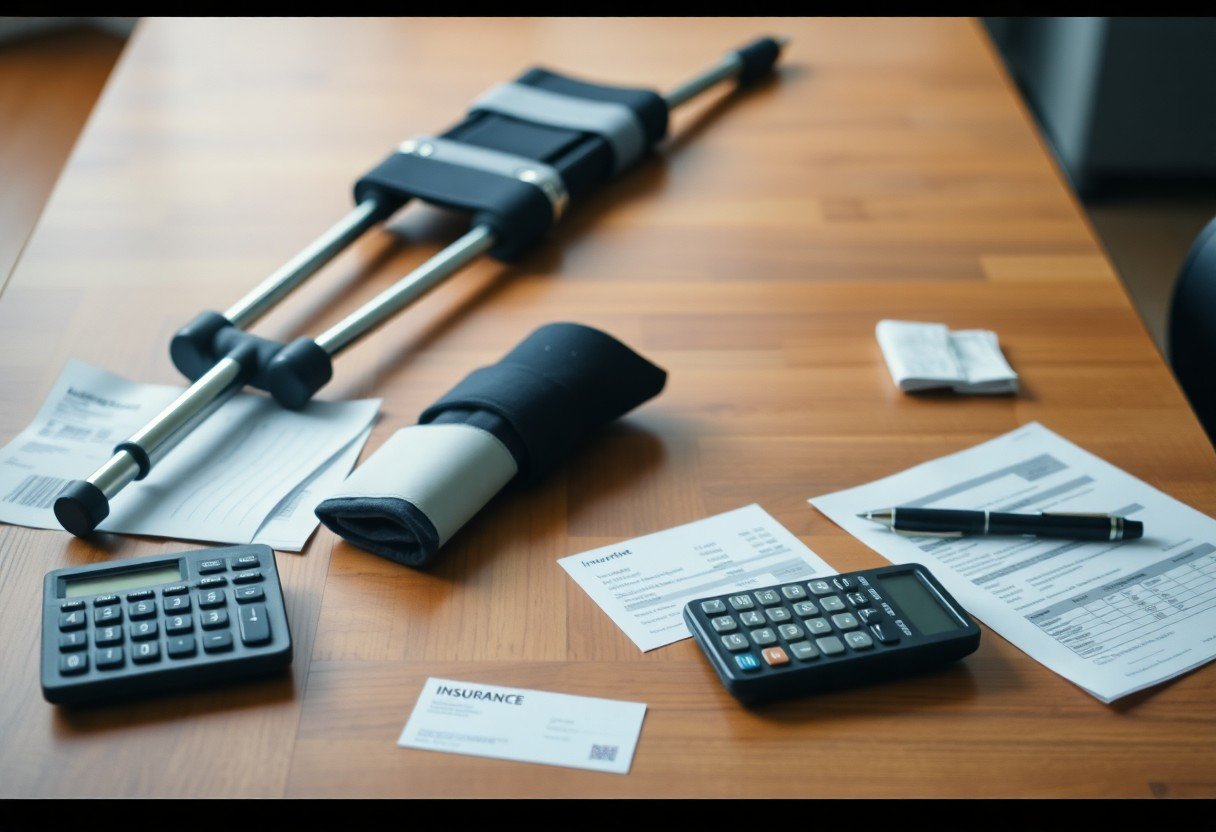
It’s wise to document all medically necessary items you buy or rent-braces, crutches, supports, fittings, repairs, and receipts-so you can substantiate claims, track expenses, and ensure reimbursement or tax deductions.
Key Takeaways:
- Item details: document product name, model/serial number, manufacturer, size, and prescribing clinician or prescription.
- Cost breakdown: record purchase price, rental fees, co-payments, insurance payments, and outstanding balances or payment plans.
- Proof and dates: keep receipts, invoices, proof of payment, order and delivery dates, and supplier contact information.
- Related charges: log fitting, customization, shipping, maintenance, repair costs, and charges for accessories or consumables.
- Replacement and depreciation: note expected lifespan, replacement schedule, warranty coverage, and projected future costs for reimbursement.
Categories of Qualifying Medical Supports
You should record each support category-braces, crutches, walkers, splints, and compressive supports-listing purchase or rental dates, prescriptions, provider details, and medical necessity to ensure accurate reimbursement and claims.
Orthopedic Braces and Joint Stabilizers
Orthopedic braces and joint stabilizers require documentation of the device model, prescribing clinician, date dispensed, fitting notes, and why you need it for treatment or recovery.
Mobility Aids, Crutches, and Walkers
Mobility aids, crutches, and walkers should be logged with supplier invoices, rental agreements, prescription details, and notes on how you use them for daily function or recovery.
Document sizing, custom modifications, accessory items like cushions or tips, repair receipts, and clinician instructions so you can justify cost, prove medical necessity, and separate reimbursable equipment from general comfort purchases.
Establishing Proof of Medical Necessity
Document the medical need for braces, crutches, or supports with clear diagnoses, treatment timelines, and links between device and functional limitations so payers see why each item was prescribed for your care.
Physician Prescriptions and Referrals
Ask your physician to write specific prescriptions or referrals naming the device, duration, expected benefit, and diagnosis code to strengthen coverage decisions.
Detailed Letters of Medical Necessity (LMN)
Include an LMN that explains functional limits, prior conservative treatments tried, and why the device is medically required for your recovery.
Provide specific clinical details in the LMN: objective exam findings, imaging or test results, measurable impairments, expected duration of need, and how the device will restore function or prevent further injury; include treatment goals, follow-up plans, and any contraindications to alternatives so reviewers can assess necessity based on your documented medical status.
Financial Documentation for Tax Deductions
Document receipts, prescriptions, and supplier invoices for braces, crutches, and supports so you can substantiate medical expense deductions and calculate totals exceeding the IRS threshold.
IRS Criteria for Deductible Medical Expenses
IRS permits deductions when medical equipment is prescribed to treat a diagnosed condition, and you can show necessity with a prescription, medical note, or supplier statement supporting the claim.
Record-Keeping for HSA and FSA Eligibility
For HSA/FSA claims, keep itemized receipts showing date, provider, amount, and a clear description of braces, crutches, or supports so your plan administrator can approve reimbursement.
Keep digital copies of receipts, prescriptions, and supplier statements; annotate each file with date, medical purpose, and any insurance reimbursements, retain denied claim correspondence, and store records for at least three years so you can substantiate HSA/FSA eligibility or tax audit inquiries.
Documenting Maintenance and Accessory Costs
Track routine maintenance, cleaning supplies, pad replacements, and battery expenses so you can justify outlays and support reimbursement claims.
Repair Expenses and Replacement Parts
Record repair labor, replacement parts, shipping, and diagnostic fees to show total recovery costs for braces, crutches, and supports.
Customization and Fitting Fees
Include orthotic molding, custom padding, fitting sessions, and adjustment appointments as billable items when documenting personalized device costs.
Ask providers for itemized invoices detailing time spent, materials used, and the rationale for custom components; these documents substantiate medical necessity for insurers and clarify out-of-pocket responsibilities. If measurements or digital scans are involved, include their costs, plus any follow-up fitting or modification charges, so you can present a complete cost history for appeals or tax deductions.
Legal Documentation for Personal Injury Claims
Your records should list every brace, crutch, or support you buy or rent, with dates, providers, and costs, so your claim shows accurate medical expenses.
Comprehensive Out-of-Pocket Expense Logs
Track receipts, insurance explanations, and mileage for fittings or deliveries, and note who prescribed the device to back up your claims.
Impact of Equipment Costs on Settlement Valuation
You show how equipment expenses raise settlement value by documenting purchases, rentals, repairs, and expected future needs for the judge or insurer.
Detail each item’s cost, date, supplier, whether rented or purchased, medical prescriptions, fitting notes, and expected replacement schedule. Use receipts, invoices, insurance EOBs, and physician statements to tie devices to your injury. Calculate cumulative past costs and reasonable projected future expenses, discounting as needed, and present totals clearly to support a fair settlement adjustment.
Conclusion
So you should document each brace, crutch, and support you use, including rental or purchase receipts, manufacturer and model, dates of use, medical prescriptions, insurance claims, and repair or replacement costs, so you can substantiate medical expenses and reimbursement.
FAQ
Q: What types of medical equipment costs should I document for braces, crutches, and supports?
A: Document direct purchase costs for the device itself, including braces, crutches, walkers, ankle/foot orthoses, back supports, and custom-molded orthotics. Record fees for custom fitting, adjustments, and professional services provided by orthotists or prosthetists. Include rental charges for temporary devices when purchases were not made, and bills for repairs, replacement parts, or upgrades. Capture related spending such as special footwear, straps, pads, compression garments, shipping and handling, and any consumables required for safe use. Preserve estimates and quotes for future replacement if the device has a known lifespan or will require scheduled replacement.
Q: What specific documentation should I keep to prove costs and medical necessity?
A: Keep itemized receipts and invoices showing dates, vendor names, descriptions, model numbers, unit prices, and totals. Retain the prescribing clinician’s notes or a written prescription specifying the device type, medical justification, and recommended duration of use. Save insurance Explanation of Benefits (EOBs), claim forms, and correspondence that list billed amounts, allowed amounts, and patient responsibility. Maintain photographs of the device, serial numbers or labels, and documentation of any custom measurements or casts used to produce a custom device. Store payment records such as credit card statements, canceled checks, or bank transfers that match invoice amounts and dates.
Q: How should I document rental and temporary equipment costs differently from purchases?
A: Maintain rental agreements or contracts that state daily, weekly, or monthly rates, start and end dates, and total charges. Track invoices and payment receipts for each billing period and note any credits, prorations, or late fees. Record return receipts or confirmation that the equipment was returned in acceptable condition to avoid disputes over replacement charges. If rental transitioned to purchase, keep documentation of the conversion, any credit applied, and a final settlement invoice. Log communications with the rental company about delivery, pickup, or issues that affected rental duration or cost.
Q: What supporting records strengthen a claim for out-of-pocket equipment expenses in an insurance or legal setting?
A: Provide clinician letters or medical records that tie the device to a specific diagnosis, functional limitation, and prescribed course of treatment. Include comparative quotes showing why a particular device or custom option was selected when multiple options existed. Attach repair and maintenance logs demonstrating ongoing need or unexpected failures that caused additional expense. Submit expert reports from orthotists, physical therapists, or treating physicians who can explain necessity, expected lifespan, and reasonableness of cost. Present a clear timeline linking injury or diagnosis, prescription, purchase/rental dates, and usage to establish causation and reasonableness of expenses.
Q: How should I organize and present equipment cost documentation for a claim, medical record, or legal case?
A: Create a single binder or digital folder organized by device and then chronologically by date. Begin each device section with a summary page listing total out-of-pocket costs, rental periods, and replacement history. Include tabs or digital bookmarks for prescriptions, invoices, payment records, EOBs, clinician notes, photographs, and correspondence. Generate an itemized spreadsheet that reconciles invoices, insurance payments, and patient-paid amounts, with links or reference numbers to scanned originals. Prepare a brief cover memo that outlines key points: what was prescribed, why it was necessary, total patient expense, and where each supporting document is located.