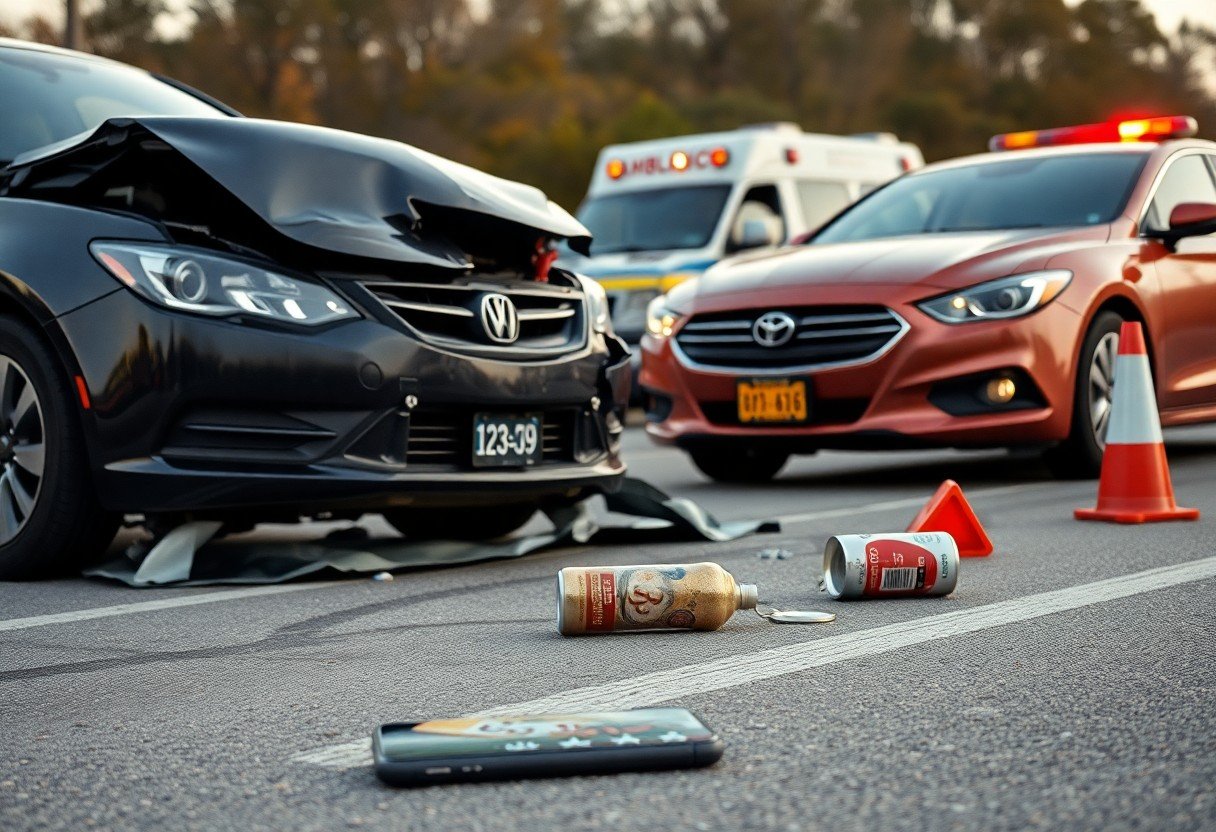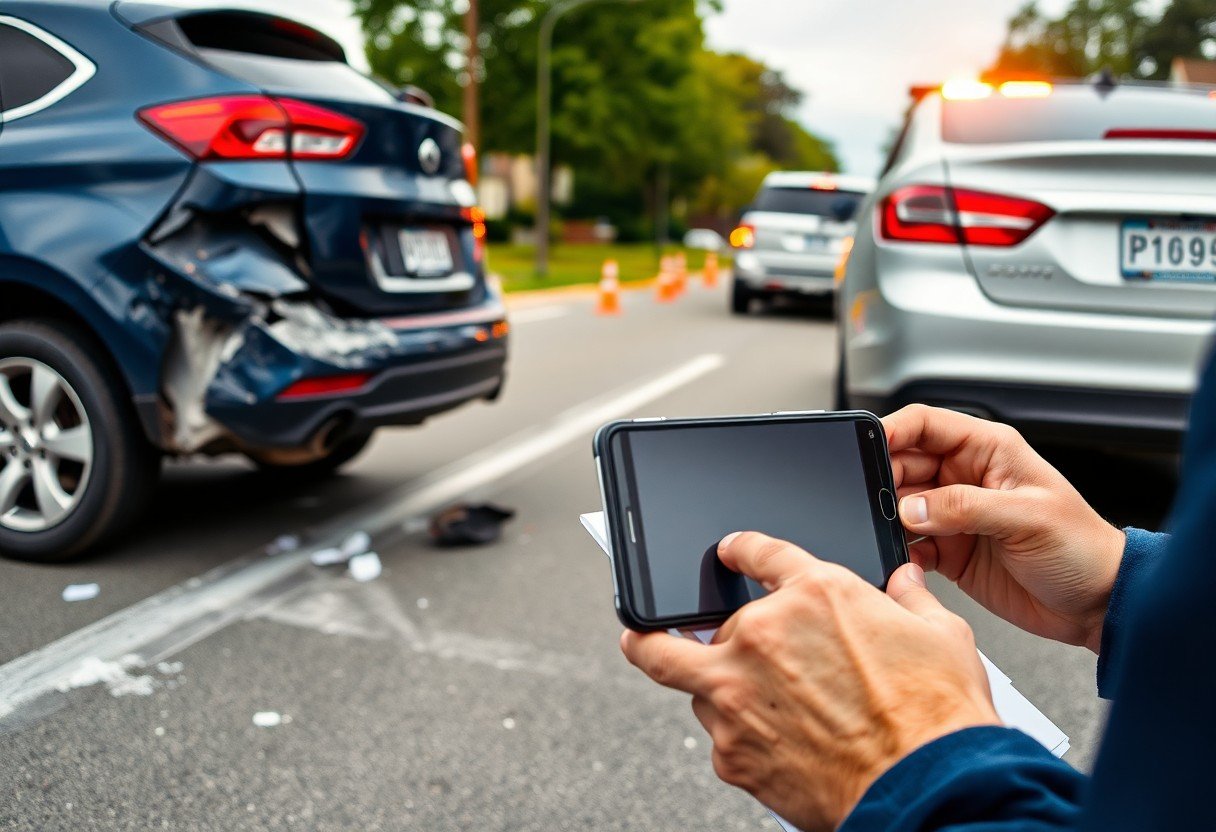
Many drivers experience rear-end collisions because distracted driving, tailgating, and sudden stops increase risk. You should document them by photographing damage, collecting witness names, recording time and location, and filing a police report to support insurance claims.
Key Takeaways:
- Driver distraction, tailgating, and sudden stops make rear-end collisions common, with low visibility and heavy traffic increasing frequency.
- Legal fault usually falls on the trailing driver, though brake failure, unexpected hazards, or negligent lead-driver behavior can affect liability.
- At the scene, photograph vehicle damage, vehicle positions, skid marks, traffic controls, road surface, and surrounding conditions from multiple angles.
- Collect names, phone numbers, insurance information, license plate numbers, witness statements, and the responding officer’s name and report number.
- Document time, date, exact location, weather, lighting, medical treatment, and repair estimates; file a police report and notify your insurer promptly.
Primary Factors Contributing to Rear-End Accidents
Drivers face frequent risks you can address:
- Distracted devices
- Tailgating
- Weather and road conditions
After a crash you should photograph damage, log witness names, and file a police report.
Distracted Driving and Technological Interruptions
Devices and notifications pull your attention off the road, so you may miss brake lights or stopped traffic; silence alerts, enable do-not-disturb, and pull over to respond when needed.
Tailgating and Insufficient Following Distances
Close following leaves you minimal reaction time when traffic slows, so increase your gap, watch brake lights early, and avoid sudden lane changes that make stopping harder.
More on Tailgating and Insufficient Following Distances
Maintaining a two-second gap at moderate speeds gives you a baseline; double that in rain, fog, or heavy traffic. If someone tailgates you, log timestamps, record dashcam video, note license plate and witnesses, and report aggressive drivers to authorities to support insurance or legal claims.
Environmental and Mechanical Influences
Road surfaces, visibility and traffic density interact to raise rear-end risk, so you should check conditions before driving, increase following distance, and document scene details when involved in a crash.
Adverse Weather Conditions and Reduced Traction
Slippery roads and reduced traction in rain, snow or ice cut your stopping margin; you should slow down, lengthen following distance and photograph road conditions at the scene.
Brake Failures and Vehicle Maintenance Issues
Brake system problems or worn components can remove your stopping power, so you should note warning lights, collect skid-mark photos and preserve maintenance records.
If you suspect brake failure, secure the scene and collect evidence: photograph pedal position, brake-fluid leaks, warning indicators and damaged lines; capture skid patterns and distances; get witness statements and obtain repair invoices or service logs to show prior issues or recent work; arrange a professional inspection to support your police report and any insurance or legal claims.
Immediate Actions for Scene Safety
Assess the scene for hazards, moving to a safe spot if needed; check on injuries, call for medical help, and keep bystanders clear while you wait for responders.
Securing the Area and Contacting Emergency Services
Move disabled vehicles out of traffic when you can, set your hazard lights and cones if available, and call emergency services with precise location, number of people injured, and any life-threatening conditions.
Exchanging Essential Identification and Insurance Data
Collect names, phone numbers, license plates, insurance companies and policy numbers from all drivers, give your information as well; show your documents, take photos of IDs and the damage, and avoid admitting fault.
Document every detail: photograph both license plates, damage angles, vehicle identification numbers, driver’s licenses and insurance cards, plus the scene-traffic signals, skid marks, and surrounding landmarks. Note exact time, date, weather, road conditions and speeds you observed. Collect witness names and statements; record their contact info and take photos of them if they consent. If police arrive, get the officer’s name and report number. If the other driver refuses to share information, photograph their plate and the vehicle and contact police. You should upload these records to your insurer and keep copies for claims or legal steps.
Comprehensive On-Site Evidence Collection
Collect clear photos, diagrams, skid-mark measurements and witness info at the scene; preserve vehicle positions and note traffic signals, weather, and timestamps so you can support claims; consult resources on Rear-End Collisions to see patterns insurers examine.
Photographic Documentation of Vehicle Damage and Road Conditions
Photograph all damage from multiple angles, include license plates and VINs, and capture road markings, debris and lighting so you provide objective visual proof for adjusters and investigators.
Identifying Independent Witnesses and Securing Statements
Locate bystanders who did not appear involved, record their contact details, note brief statements and directions they faced, and ask permission to photograph their IDs so you secure credible, independent accounts.
You should ask witnesses where they were, what they saw, and the vehicle behaviors they observed, keeping questions neutral; record audio or video of their statement, note time, exact locations and vantage points, and confirm full names and best contact methods. If possible, obtain a signed short written statement and explain how their account may be used in claims or court.
Professional Documentation and Record Keeping
File medical bills, repair estimates, photos, and correspondence chronologically so you can support claims and track progress. Keep digital backups and a concise timeline for every interaction.
The Necessity of Immediate Medical Evaluation
Seek immediate medical evaluation after a rear-end crash even if you feel fine; some injuries appear later. Your records will document injuries and help with insurance and claims.
Obtaining and Reviewing the Official Police Report
Obtain the police report promptly and verify details so you can note officer observations and statements; this official record strengthens your case and clarifies fault.
Compare the police report against your notes and photos to spot inaccuracies or missing witness information. If you find errors, contact the reporting agency to request corrections and obtain an amended report. You should record the report number, officer name and badge, and citation details, and share copies with your insurer and attorney. Online portals often let you order certified copies quickly; keep originals and digital backups for future reference.
Conclusion
Presently rear-end collisions occur frequently because drivers follow too closely, brake suddenly, or are distracted; you should document the scene with photos, note vehicle positions and damage, collect witness contact information, file a police report, and preserve medical records and repair estimates.
FAQ
Q: Why are rear-end collisions so common?
A: Rear-end collisions occur frequently because drivers often follow too closely, react too slowly, or become distracted by phones, navigation, or other tasks. Closing speed and braking distance create little margin for error when traffic slows suddenly. Heavy traffic and stop-and-go conditions increase the number of braking events, raising the chance of a driver misjudging spacing. Poor weather, low visibility, slick roads, and mechanical problems such as brake failure also increase risk. Crash mechanics add to frequency: kinetic energy grows with speed, so even minor contact at higher speeds causes damage and makes timely avoidance harder.
Q: What immediate steps should I take at the scene to properly document a rear-end collision?
A: Put safety first by moving to a safe location if vehicles are drivable and turning on hazard lights. Call emergency services if anyone is injured and request a police response for a written report when injuries or substantial damage exist. Photograph and video the full scene before vehicles are moved, capturing wide shots that show both vehicles, lane markings, traffic control devices, and nearby landmarks. Take close-up photos of damage on all vehicles, license plates, the VIN if visible, skid marks, debris, and road surface conditions. Collect names, phone numbers, addresses, and statements from witnesses, and record the other driver’s insurance and registration details. Avoid admitting fault or speculating about causes on scene. Seek medical attention even if injuries seem minor, and obtain a copy of the police report and the responding officer’s name and badge number.
Q: What types of photographic and digital evidence are most helpful for proving what happened?
A: Images that establish context are most persuasive: wide-angle shots from several vantage points that show vehicle positions, lane layout, traffic signals, and sightlines. Close-up images of damage by panel, angles that show crush patterns, and photos of skid marks and debris help reconstruct impact force and point of contact. Time-stamped dashcam or phone videos that show the moments before, during, and after impact provide continuous sequence evidence. Preserve metadata (EXIF) and back up originals to cloud storage to avoid accidental loss. Save the police report, witness contact information, traffic or security camera footage if available, event data recorder (EDR) downloads if the vehicle supports it, and cellphone records if distraction is suspected. Photograph injuries immediately and again over days or weeks to document progression.
Q: How do investigators and insurers determine who was at fault in a rear-end crash?
A: Investigators start with the general presumption that the following vehicle bears primary responsibility because drivers must maintain a safe following distance and be able to stop for hazards ahead. Exceptions arise when the lead driver makes an unexpected or illegal maneuver, intentionally brakes without reason, or when sudden mechanical failure or roadway hazards force an unavoidable stop. Police reports, witness statements, damage patterns, skid-mark measurements, EDR data, traffic camera or dashcam footage, and any phone records are pieced together to establish sequence and speeds. State laws on comparative negligence or no-fault insurance affect how blame is allocated and how compensation is handled. Consult an attorney when fault is disputed or injuries are serious, since legal counsel can obtain technical reconstructions and subpoena records.
Q: How long should I document injuries and vehicle damage, and what records should I keep for an insurance claim or legal case?
A: Track medical treatment from the first visit through full recovery or stabilization, including ER notes, primary care and specialist reports, diagnostic test results, prescriptions, physical therapy records, and all medical bills. Keep a daily symptom diary that describes pain, limitations, and activities you cannot perform. Maintain vehicle documentation such as police reports, repair estimates, final invoices, rental car bills, photos before and after repairs, and receipts for out-of-pocket expenses. Save wage-loss documentation like employer statements, payroll records, and tax documents that show income reduction. Organize files chronologically and preserve originals and copies; include dates and a brief description of each item. Report the claim to your insurer promptly, provide the documentation requested, and check statute-of-limitations deadlines in your jurisdiction to protect legal rights.