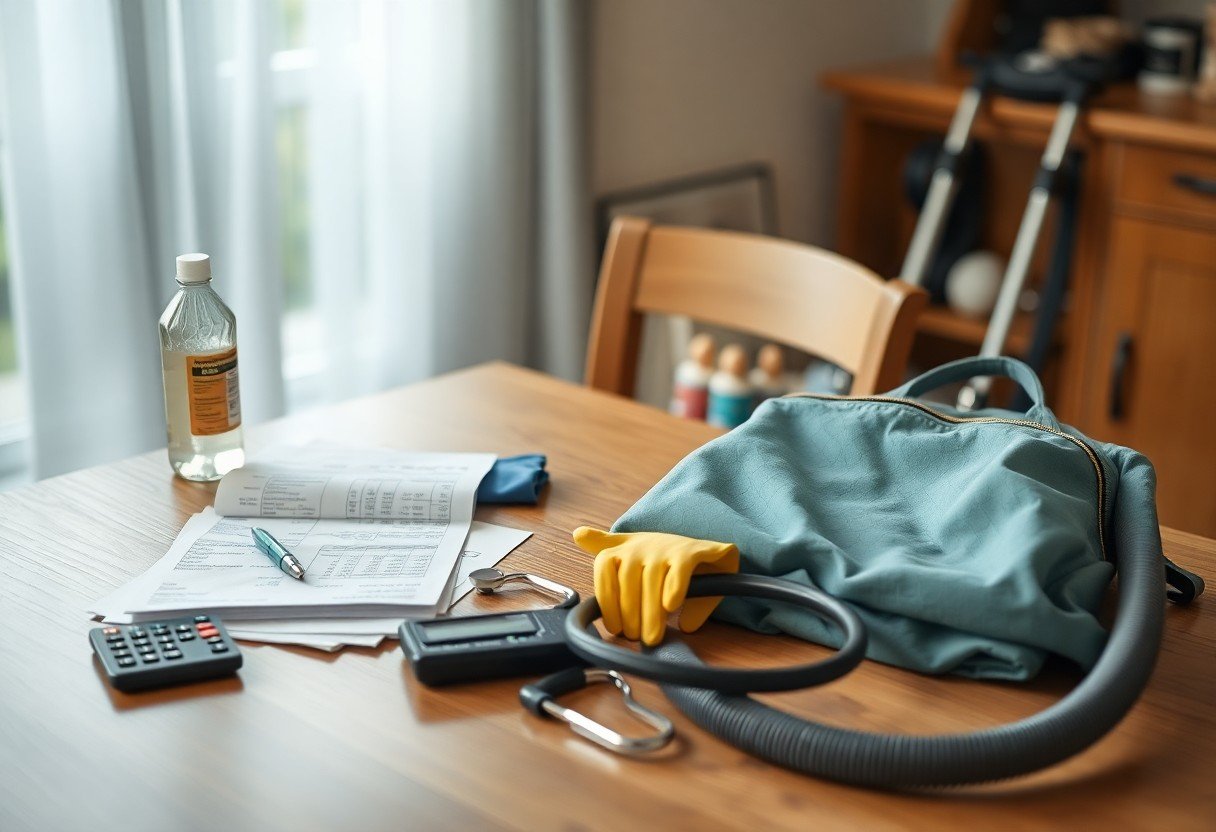
Caregiving costs for in-home caregivers, professional cleaning, and childcare should be tracked by you after an injury to document out-of-pocket expenses for recovery, support insurance claims, and pursue appropriate compensation.
Key Takeaways:
- Paid caregiver costs: track hourly rates, hours worked, agency fees, taxes, and all pay stubs or invoices.
- Unpaid caregiver time: log dates, hours, specific tasks, and apply a reasonable replacement hourly rate to document lost household services.
- Cleaning and household services: keep receipts and notes for housekeeping, meal prep, laundry, and home maintenance required because of the injury.
- Childcare expenses: save invoices for babysitters, daycare, special accommodations, and any schedule changes tied to the injury.
- Documentation and linkage: attach receipts, time logs, mileage, written estimates, and medical notes that justify the need and duration of home help.
Defining Recoverable Household Service Expenses
Recoverable household service expenses are the reasonable costs you incur to replace tasks you can no longer perform after an injury, such as caregiver fees, cleaning, and childcare; track receipts, dates, and hours to support claims and link services to your medical limitations.
Legal criteria for “replacement services”
Courts require that replacement services be necessary due to your injury, objectively documented, and not duplicative of medical treatment; keep physician notes, written service agreements, and contemporaneous invoices to meet legal standards.
Distinguishing between medical and non-medical home help
Medical home help covers tasks tied to treatment or recovery you cannot do-like wound care or therapy assistance-while non-medical help handles daily chores, shopping, and childcare that maintain household function.
You should document whether help was prescribed or recommended by a provider, record who performed the work (professional or family), note hourly rates versus market rates, and explain how the injury prevented you from performing each task; clear documentation increases recoverability and reduces disputes.
Tracking Professional Caregiving and Nursing Costs
Track your professional caregiver and nursing bills, mileage, and overtime, saving invoices and care plans for claims and reimbursement; consult Paying For Home Care: What Costs Should You Expect?
Documenting home health aide and nursing fees
Itemize hourly rates, shift lengths, agency surcharges, and any supplies you purchase so insurers and attorneys can verify your expenses.
Recording specialized rehabilitation assistance at home
Log therapy visits, restorative exercise sessions, adaptive equipment rentals, and therapist notes to show medical necessity and your costs.
Keep detailed records including dates, provider names and credentials, session durations, treatment goals, itemized invoices, rental contracts, receipts for adaptive devices, and before-and-after photos; these support claims of necessity, link costs to recovery, and help you obtain reimbursement or negotiate settlements.
Domestic Maintenance and Cleaning Expenditures
Household cleaning and maintenance expenses you hire after an injury should be tracked for reimbursement and future budgeting, with receipts, dates, and brief service descriptions.
Routine housekeeping and sanitation services
Weekly housekeeping, laundry, trash removal, and sanitizing services you pay for should be logged by provider, hours, cost, and receipt to support claims and care planning.
Seasonal yard work and heavy-duty maintenance
Seasonal yard work like mowing, snow removal, pruning, and gutter cleaning you hire must be recorded with dates, invoices, and notes about required access or special equipment.
Keep detailed records for each heavy job you contract-include contractor quotes, photos before and after, emergency call fees, equipment rental, time spent, and any refusals of service due to access or safety concerns to strengthen your documentation.
Childcare and Dependent Support Documentation
Documentation should list who provided care, dates and hours, and how services changed because of your injury, so you can support claims for compensation.
Incremental costs for childcare and babysitting
Record extra babysitting, aftercare fees, and extended daycare charges, keeping receipts and calendars so you can show the injury-driven increase in your childcare expenses.
Transportation services for school and extracurriculars
Log mileage, rideshare receipts, and paid driver hours for school runs and extracurriculars so you can justify additional transport expenses.
Include detailed route, time, and purpose for each trip, note any caregiver waiting hours, and total the monthly added costs so you can present clear, itemized evidence of transportation expenses caused by the injury.
Meal Preparation and Nutritional Assistance
Meal preparation you can’t manage after an injury should be tracked: caregiver cooking time, specialized diet meals, and fees for nutritionist or dietitian consultations you need.
Outsourced meal planning and preparation costs
Outsourced meal planning and preparation costs you hire-personal chefs, meal-kit services, or local caterers-should be logged by per-meal or hourly rates and any setup or minimum-order charges.
Delivery fees for imperative groceries and supplies
Delivery fees for imperative groceries and supplies add up quickly; track per-delivery charges, platform service fees, tips, surge pricing, and any emergency same-day premiums you incur.
Record each delivery’s date, vendor, itemized fees, tip, and membership or subscription charges so you can total recurring expenses, compare providers, and document costs for insurance or reimbursement.
Best Practices for Evidence and Record-Keeping
Organize records chronologically and store them securely so you can support claims and show clear timelines of care, cleaning, and childcare expenses.
Maintaining a daily activity and expense log
Daily logs help you document who provided care, when tasks occurred, what was done, and any out-of-pocket costs for later verification.
Verifying payments through formal invoices and receipts
Ask caregivers and service providers for itemized invoices and insist that you receive signed receipts for each payment, noting dates and payment methods.
Keep copies of bank statements, canceled checks, and electronic payment confirmations so you can corroborate invoices; label each file with provider name and service dates for quick retrieval.
Final Words
So you should track caregiver hourly rates and total hours, cleaning visits and supplies, childcare fees or missed work costs, transportation and medical equipment expenses, and all receipts and dates to support claims and calculate fair compensation after an injury.
FAQ
Q: What types of home help costs should I track after an injury?
A: Track three main categories: caregivers, cleaning, and childcare. For caregivers, record home health aide visits, personal care assistants, skilled nursing visits, and any paid family care hours; include hourly rates, dates, and tasks performed (bathing, dressing, medication reminders). For cleaning, log routine housekeeping, deep cleans, laundry services, and one-time specialty cleaning (carpet or biohazard). For childcare, track paid babysitters, nannies, extra daycare days, transportation to/from care, and any special-needs care. Also record related expenses such as mileage for helpers, cleaning supplies purchased because you could not perform chores, and short-term home modifications that enable care. Keep every receipt, invoice, timesheet, and calendar entry tied to the expense.
Q: How should I document caregiver expenses for insurance claims or legal cases?
A: Collect invoices and signed timesheets showing date, start/end times, hourly rate, and services performed. Obtain written contracts or agreements with paid caregivers and keep bank or credit card statements showing payments. Get a medical provider’s note or prescription explaining why home care was medically necessary and the expected duration. Keep caregiver contact information and, when possible, independent statements from the caregiver describing services. Photograph or video any visible care tasks when appropriate. Preserve originals and make consistent digital backups with clear filenames (date-type-provider).
Q: What evidence proves cleaning expenses were necessary because of the injury?
A: Save invoices from cleaning companies and receipts for paid cleaners or service apps, including itemized breakdowns for deep cleaning versus routine work. Keep receipts for cleaning supplies bought specifically because you could not perform chores. Take before-and-after photos showing household condition if relevant, and obtain a brief statement from your doctor indicating activity limitations that prevented you from doing cleaning. If a family member provided paid cleaning, document hours and use a reasonable local market rate to justify cost. Match cleaning frequency and cost to the period you were medically limited.
Q: How can I track childcare costs when an injury prevents me from caring for my child?
A: Keep signed invoices or contracts with babysitters, nannies, or daycare facilities showing dates, hours, and rates. Save receipts for additional childcare-related expenses such as transportation or extra meals. Maintain a childcare log showing who cared for the child, timing, and why the care was needed due to your injury; attach medical notes indicating limited parenting capacity when possible. Compare pre-injury childcare patterns to post-injury expenses to show incremental costs, and include any cancellation fees or deposits lost because of changed schedules.
Q: How do I calculate total recoverable home help costs and present them clearly to insurers or courts?
A: Create a spreadsheet listing date, category (caregiver/cleaning/childcare), provider, hours, rate, subtotal, and payment method. Add columns for supporting document filenames and medical justification references. Sum hourly charges and any related fees (taxes, agency surcharges, mileage). If unpaid family members provided care, multiply hours by a reasonable local market rate and label as unpaid caregiver value with an affidavit from the family member. Attach grouped exhibits of receipts, timesheets, medical notes, and before/after photos. Provide a concise cover summary that shows total claimed amount, time period, and the medical basis for each category when submitting to an insurer or attorney.